Donald Trump’s long-standing promise to use import tariffs to try to revive the US steel and aluminum industry was opposed by US economists, labor experts, and even the industries themselves—but the White House did it anyway. As a result, over 146,000 Americans will lose their jobs, economists estimate.
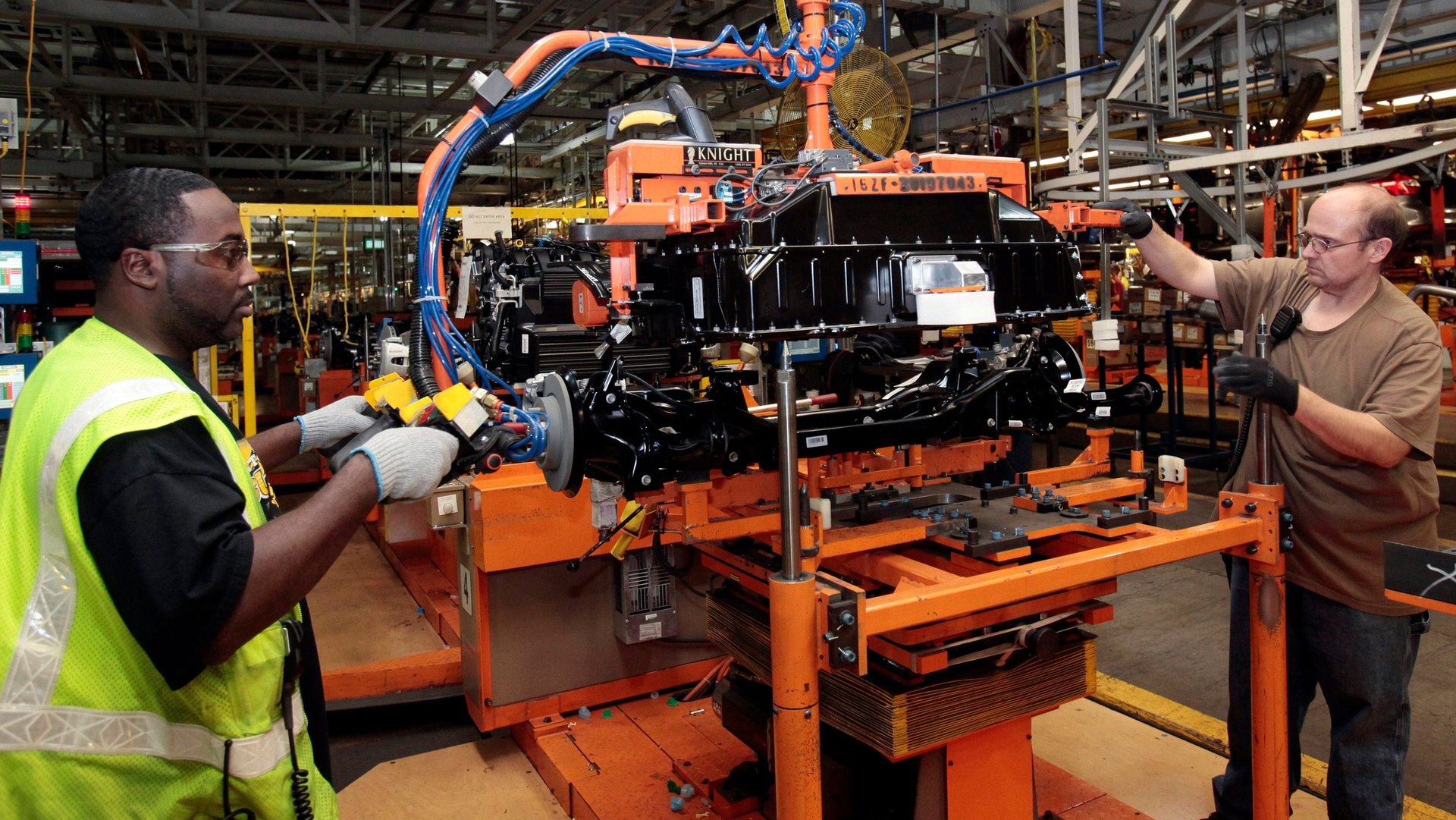
Donald Trump’s long-standing promise to use import tariffs to try to revive the US steel and aluminum industry was opposed by US economists, labor experts, and even the industries themselves—but the White House did it anyway. As a result, over 146,000 Americans will lose their jobs, economists estimate.
Tariffs might protect some jobs in the US steel industry, but far fewer than the number of jobs that will be lost. That’s because steel manufacturers in the US employ far fewer people than industries that make things out of imported steel, like automakers. Just over 400,000 people in the US work in metal-producing jobs, economist Jed Kolko wrote in March. Four and a half million work in jobs that depend on metal.
Join 500,000+ readers who start their day with Quartz.
By subscribing, you agree to our Terms of Service and Privacy Policy.
Employers in the other industries are going to have to pay more for materials, making their products costlier and less competitive. This will force them to cut jobs, economists and industry officials say. Hurting US manufacturers even further, the countries hit by the tariffs will also tax imported US products.
Republicans in Congress called the tariffs “dumb” and “damaging” after the White House announcement, and a US retail industry trade group said they “will raise the cost of doing business for thousands of American companies, including retailers, and will stifle efforts to expand and create jobs.”
The Trade Partnership, a economic consulting group, estimated in March that five US jobs will be lost for every one saved by the proposed tariffs, or about 146,000 jobs in total. That estimate assumed the US’s partners in the North Atlantic Free Trade Agreement, Mexico and Canada, would be exempted from the tariffs.
Now the losses are going to be even higher than that earlier estimate, Trade Partnership president Laura Baughman told Quartz, because the tariffs only exempt Australia, Argentina, Brazil and South Korea. “What’s most alarming now is that imports from Canada and Mexico will also be hurt, increasing consumer and job impacts beyond those we estimated last March,” she said.
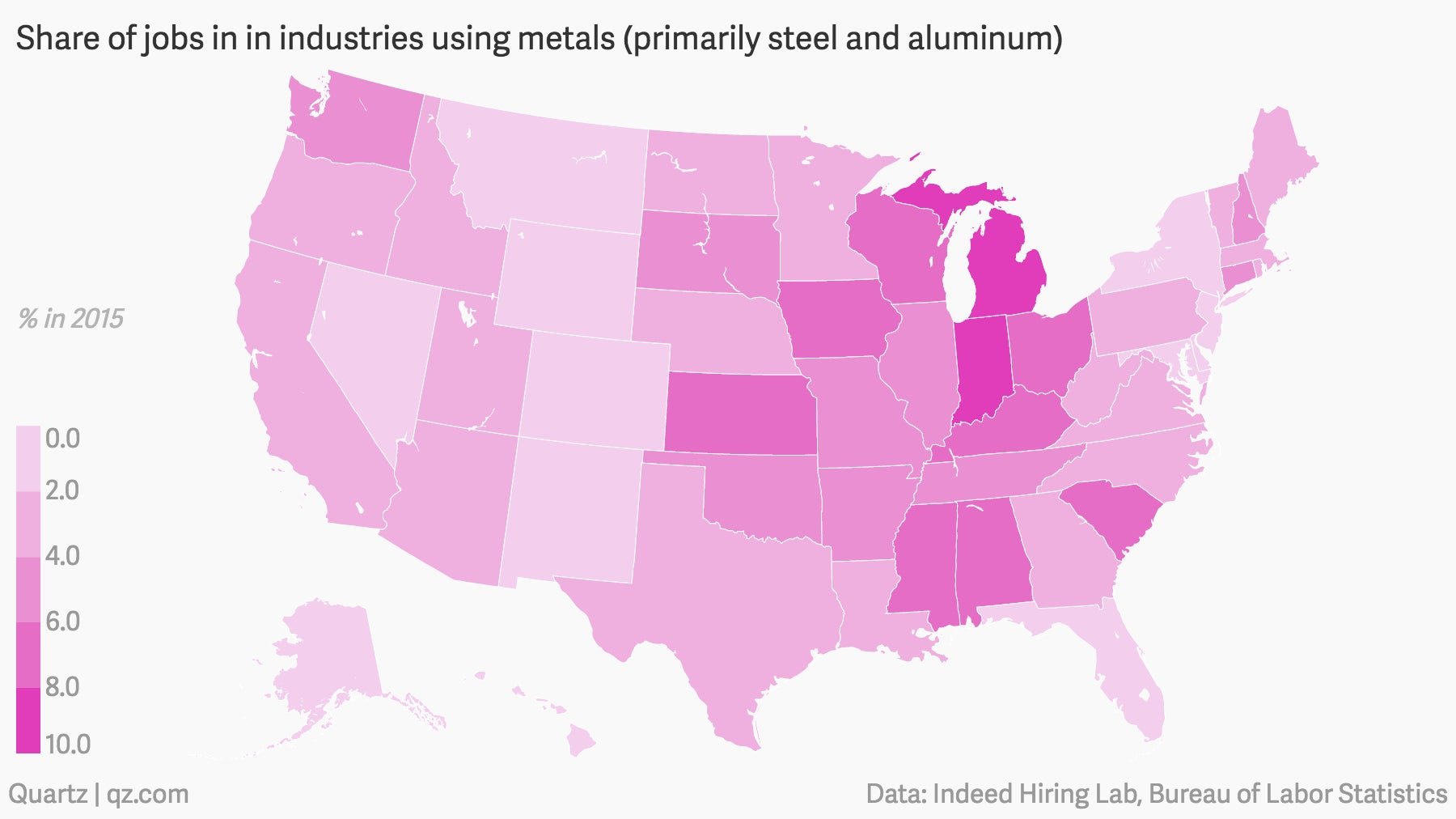
These job losses will be felt throughout the US, Kolko’s analysis shows, but particularly in the “rust belt” states and the deep South, including Michigan, Ohio, Indiana, and Mississippi.
Trump notoriously hates “experts” and dismisses economic research. But the notion that steel tariffs cause job losses isn’t just an egghead theory; recent history proves how disastrous they are, as Quartz noted last year:
In 2002, president George W. Bush imposed tariffs on steel imports for much the same reason as Trump—combating cheap imports from other countries—but ended them when the World Trade Organization ruled them illegal. Over the 18 months that the tariffs were imposed, a spike in steel prices put 200,000 workers out of their jobs, according to a study (pdf) paid for by companies who buy steel.
The WTO may also rule on the US’s most recent trade tariffs as well, trade specialists said today. But it took the international body 18 months to make that ruling last time, while the jobs affected could be lost much more quickly.
