A New York Times investigation drawing on 400 pages of documents detailing how Beijing built its network of detention camps in Xinjiang—where as many as 1 million Muslims are being held—has sparked an unlikely show of dissent on China’s censored internet.
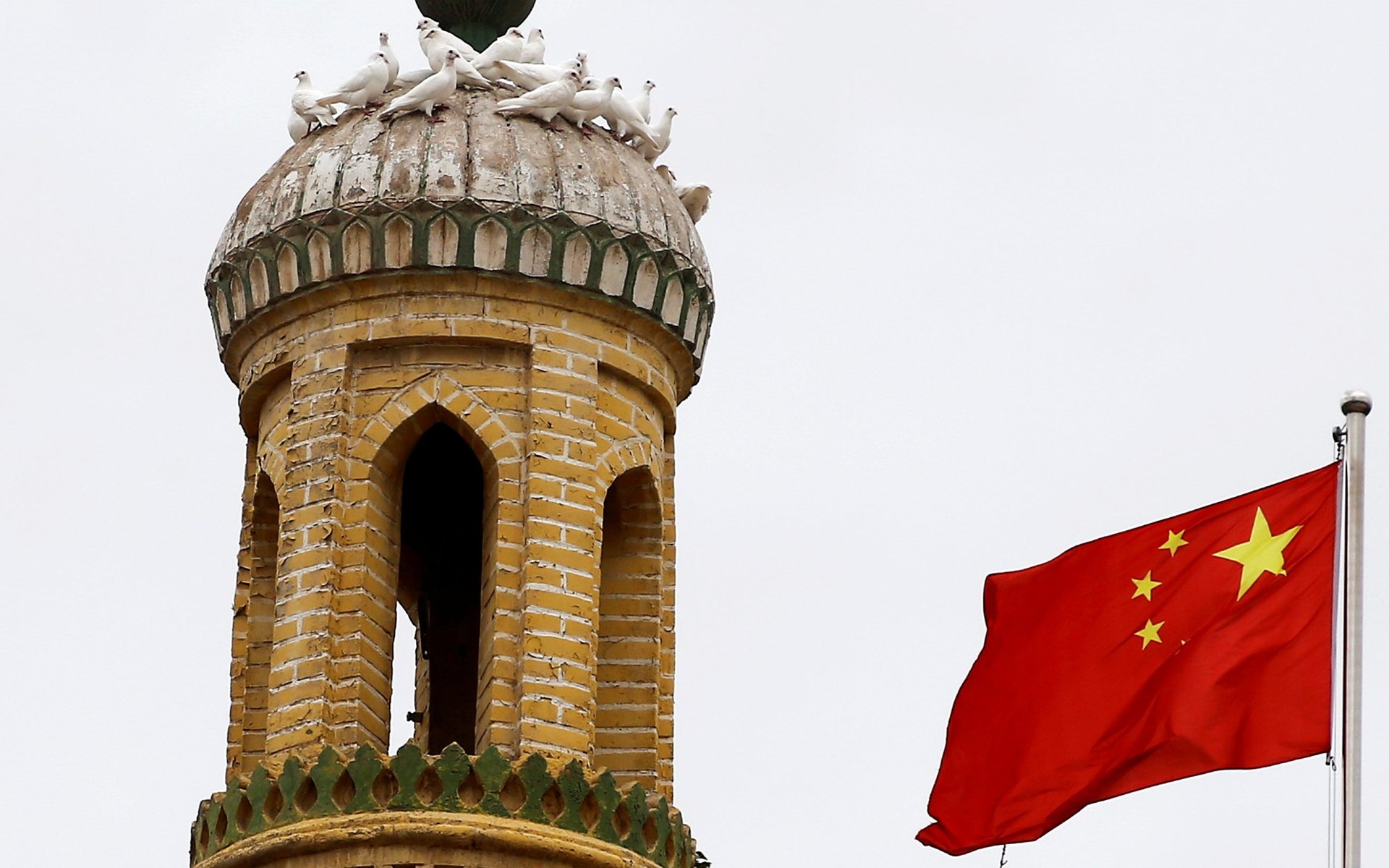
A New York Times investigation drawing on 400 pages of documents detailing how Beijing built its network of detention camps in Xinjiang—where as many as 1 million Muslims are being held—has sparked an unlikely show of dissent on China’s censored internet.
One of the most shocking takeaways from the report, published on Saturday (Nov. 16), was that despite the Chinese Communist Party’s and leader Xi Jinping’s display of omnipotence, there are cracks in the system. The documents themselves were leaked to the paper by a regime insider, and they told of a party official in Xinjiang who had been punished for freeing thousands of Muslim inmates.
Join 500,000+ readers who start their day with Quartz.
By subscribing, you agree to our Terms of Service and Privacy Policy.
According to the Times, the documents detailed that Wang Yongzhi, former party secretary of Yarkand, a county in southern Xinjiang that has been singled out by Xi as a “front line” in the country’s fight against religious extremism, released over 7,000 of 20,000 detainees there. Wang, who was tasked with delivering economic growth in the region, was worried that the mass detentions would worsen ethnic relations, thereby making it impossible to record the economic progress needed for his promotion. He was detained and being investigated that year for “gravely disobeying the party central leadership’s strategy for governing Xinjiang,” according to the report.
China has been rounding up Uyghurs, Kazakhs, and other minorities in recent years and sending them to camps where detainees are subject to forced labor and political indoctrination. Beijing, however, calls the camps “vocational training schools” and says that they are necessary to prevent the spread of religious extremism in the far western region, which in the past has seen violent incidents break out between the Uyghur population and the Han Chinese, and terrorist attacks committed by Uyghurs elsewhere in the country.
Wang was stripped of his party membership and fired from his post, according to a 2018 report (link in Chinese) in Chinese media, the last known report about him. Wang’s case was sent to a procuratorate. It’s unclear what public prosecutors charged him for or what sentence he received.
Despite being blocked in China, some people were able to access the New York Times report possibly with the use of a virtual private network. On Weibo, China’s largest social media platform, some users paid tribute to Wang by reposting a line from the report about his greatest political sin, as listed by authorities in an internal report: “He refused to round up everyone who should be rounded up.”
“He refused, this is so desperate,” wrote (link in Chinese) one user yesterday (Nov. 17), with five other users also reposting this line without referencing the Times report in a bid to bypass censors.
Such instances of dissent from the official party line are rare on the Chinese internet, but even more so in this case as the narrative spun by Beijing about Xinjiang—that the camps are necessary to stamp out religious extremism and that Muslims are violent outsiders —have widespread support in the country, where many harbor fearful and discriminatory views about Uyghurs.
“Now, the news behind and inside China’s Great Fire Wall are connected. Respect for his courage and integrity,” wrote another user (link in Chinese).
One way that these dissenters were able to post about Wang without drawing too much attention from censors was by sharing a news report about the investigation into Wang published in 2017. A Weibo user even compared Wang to Oskar Schindler, the German businessman who saved the lives of around 1,200 Jews during World War II. Another shared a screenshot of the internal report on Wang that was cited in the New York Times story, saying that “history will not forget this person and this piece of paper.”
