In the US and Europe, fashion has been among the categories hit hardest by Covid-19. In May, sales at US clothing and accessories shops were down 62.4% (pdf) compared to last year, while the 19-country Euro area said retail sales of clothing, textiles, and footwear were 50.5% below their 2019 level (pdf) for the month.
In the US and Europe, fashion has been among the categories hit hardest by Covid-19. In May, sales at US clothing and accessories shops were down 62.4% (pdf) compared to last year, while the 19-country Euro area said retail sales of clothing, textiles, and footwear were 50.5% below their 2019 level (pdf) for the month.
Many shoppers have curbed discretionary purchases, but even those who want to spend have found non-essential stores shuttered. Undeterred, they’ve turned to e-commerce, where online retailers are happily satisfying their desire for new clothes.
Join 500,000+ readers who start their day with Quartz.
By subscribing, you agree to our Terms of Service and Privacy Policy.
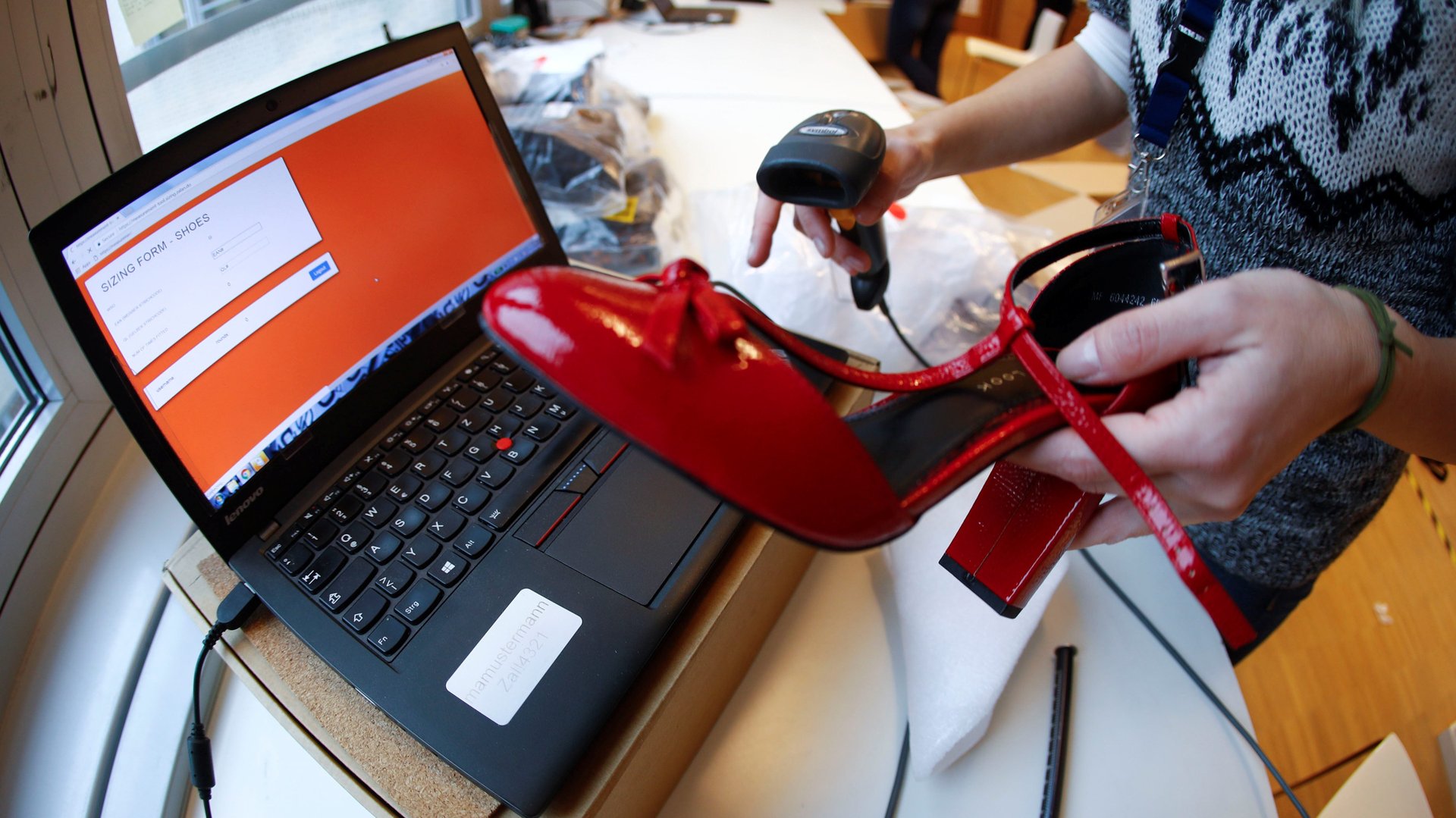
Zalando, a Berlin-based company that bills itself as Europe’s largest online fashion retailer, reported on July 15 that its gross merchandise sales grew as much as 34% in the recent quarter, which it credited to shoppers buying more digitally. It said it had more than 3 million new customers and updated its guidance for the year to reflect that it now expects gross merchandise sales to rise by up to 25%.
It’s not alone in seeing a sales bump:
Despite shoppers having to handle clothes to really know how they fit and feel, they’ve generally taken to buying clothes online more quickly than some other categories. Research firm Forrester has estimated e-commerce makes up about twice as much of fashion’s sales as it does for retail overall.
🎧 For more intel on fashion trends, listen to the Quartz Obsession podcast episode on puffer jackets. Or subscribe via: Apple $AAPL Podcasts | Spotify $SPOT | Google $GOOGL | Stitcher.
Now experts predict the pandemic and the behavioral changes it’s causing will only accelerate shoppers buying more of their clothes digitally. It’s a tailwind for online-only retailers, which generally haven’t suffered the same downturn as competitors that still rely on stores for most of their sales. It’s also likely to push those competitors to invest more in building up their digital operations.
The tide of new online shoppers hasn’t lifted all companies, however. In a business update yesterday (pdf), luxury firm Richemont said sales for its “online distributors” division, made up of online luxury fashion hub Yoox Net-a-Porter and its Watchfinder site, fell 42% in the quarter. It pointed to its fulfillment centers having to close temporarily as the main reason for the drop. TheRealReal, an online luxury reseller based in the US, also saw its business stumble (pdf) recently and blamed shelter-in-place orders that limited its operations. Otherwise it said demand was healthy in April and May.
As long as they can keep their operations open, fashion’s big online players look better positioned to weather the pandemic and its after-effects, especially if they sell clothes for lounging around the house.
