MediaNews Group/Boston Herald via Getty Images
Walk into a mall in just about any American city in the 1990s and you'd likely have seen roughly the same thing. Teens wearing baggy clothes and flannel would mix with people in boy band or Bart Simpson t-shirts. High-wasted pants were everywhere, and bucket hats were the headgear of choice — except for the women sporting the "Rachel" haircut. They'd grab a Beanie Baby or some Pogs at Toys "R" Us, get an ear pierced at Claire's, or pop into The Gap $GPS or Abercombie & Fitch to pick up some new threads.
It was a peak time for a number of retailers. But in the decades to come, many saw their popularity spiral, while others vanished entirely.
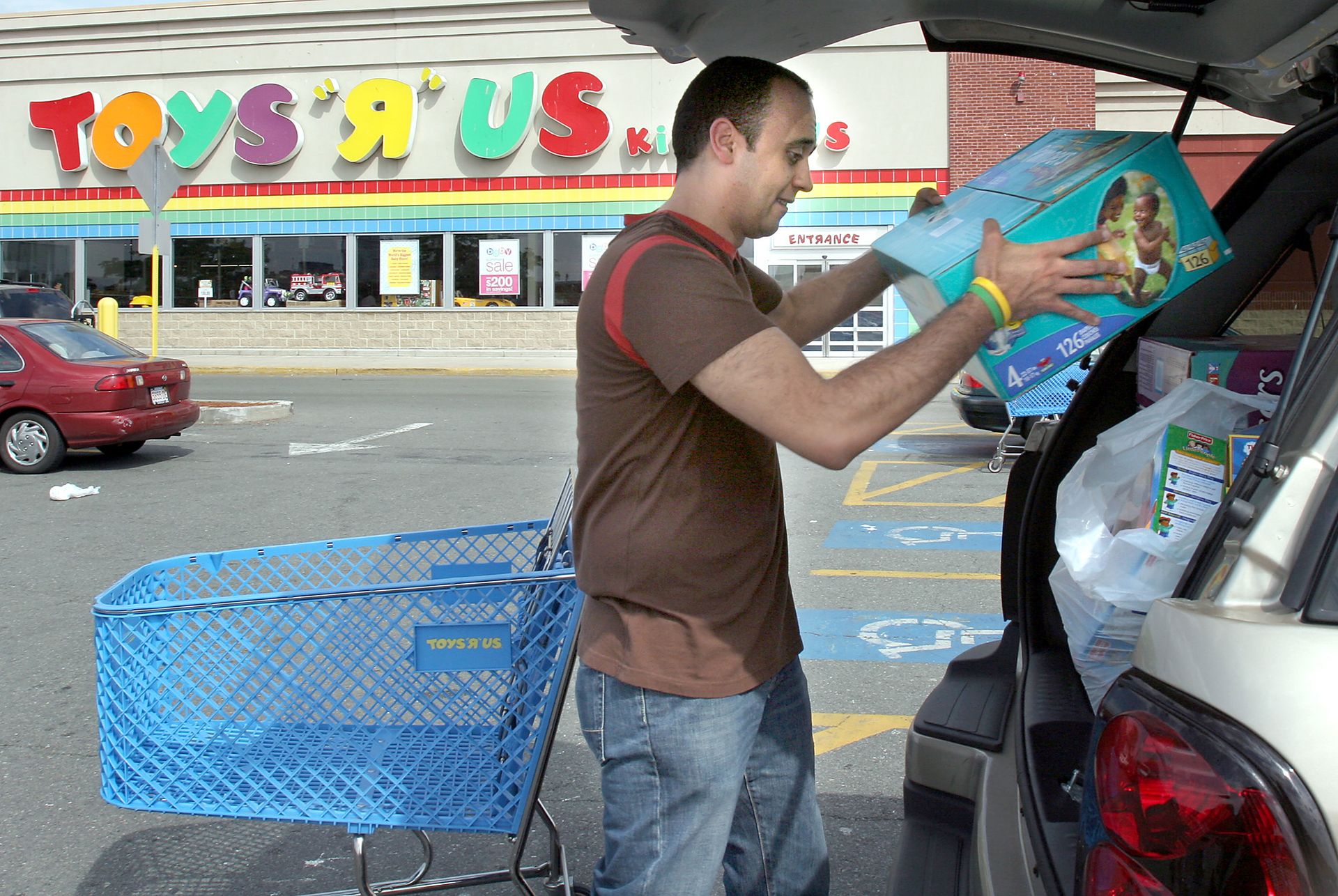
Today, just as ripped denim and vintage Coach bags are popular once more, many of the retail stalwarts of the 1990s are back. Toys "R" Us, which was liquidated in 2018, recently announced plans to open 10 new flagship stores around the country, 20 seasonal holiday shops and six new locations on U.S. military bases before the end of the year. Claire's, despite filing for bankruptcy for the second time in 10 years in August, was bought out in September, keeping at least 795 retail locations in business.
The new owner of Bed Bath & Beyond, which shut down in 2023, plans to open 300 new locations in the next 24 months. Meanwhile, retailers that never closed, but saw their revenues decline, such as Esprit, Abercrombie & Fitch, Gap, and Delia's, have seen revivals.
What in the name of slap bracelets is going on? The answer lies in a mix of things. Some of it is corporate reinvention. Some is nostalgia. Some is new owners betting on the power of well-established names.
"The recent attention on certain retailers cannot be attributed to a single overarching trend," says Brian McCarthy, retail principal at Deloitte. "Instead, it reflects a mix of strategic reinvention and market repositioning."
As McCarthy notes, the reasons behind the resurgence of these familiar names vary from company to company. Claire's, for example, is still around because a white knight bought it at a firesale price. The company sold for just $140 million after generating revenues of about $1.3 billion last year. But companies like Abercrombie & Fitch and The Gap reinvented themselves to become relevant to consumers once more.
"Abercrombie … dropped that whole exclusionary vibe, brought in inclusive sizing, and started actually listening to what customers want through data," says Ray Wimer, professor of retail practice at Syracuse University. "Gap brought in new leadership and got back to basics, literally. Quality essentials, clearer brand identity. The nostalgia factor got people to take another look, but it's the execution that's keeping them around."
TikTok and Instagram do add a nostalgic layer to these retail revivals — and that has the added benefit of helping brands reconnect with formerly loyal customers. The new owners of companies like Claire's and Toys "R" Us are capitalizing on that, but at the same time, they're exploring new licensing models and experimenting with different turnaround mechanics. (Toys "R" Us, for instance, has pop-up shops in roughly 450 Macy's $M stores around the country.)
However they're achieving their new round of awareness, these '90s brands are facing a much different retail landscape that they were back when the Spice Girls were all the rage and online shopping was in its infancy. While the malls aren't as full as they were 30 years ago, the companies are successfully luring people from beyond their screen. Still, that doesn't mean consumers aren't still shopping with online retailers as well.
"What's interesting to me is what this says about retail more broadly," says Wimer. "It's not that people are abandoning online shopping, it's that they're rediscovering what physical stores can offer when they're done right. Stores as experiences, as fulfillment centers, as places to actually see and touch things. It's a smarter integration of digital and physical, not some romantic return to the mall era."
The big question, of course, is whether these companies will continue to succeed. Short-term boosts in sales are fairly easy, especially when something is trending on social media. The real trick is converting those one- or two-time customers into recurring ones.
To avoid being a flash in the retail pan, say experts, the brands will continue innovating. Nostalgia might hook customers, but it's not a viable long-term business plan.
