
Amazon $AMZN's next frontier: rural America.
Amazon and Walmart are racing to reach Americans at the end of the line
Getty Images / Bloomberg
Amazon $AMZN's next frontier: rural America.
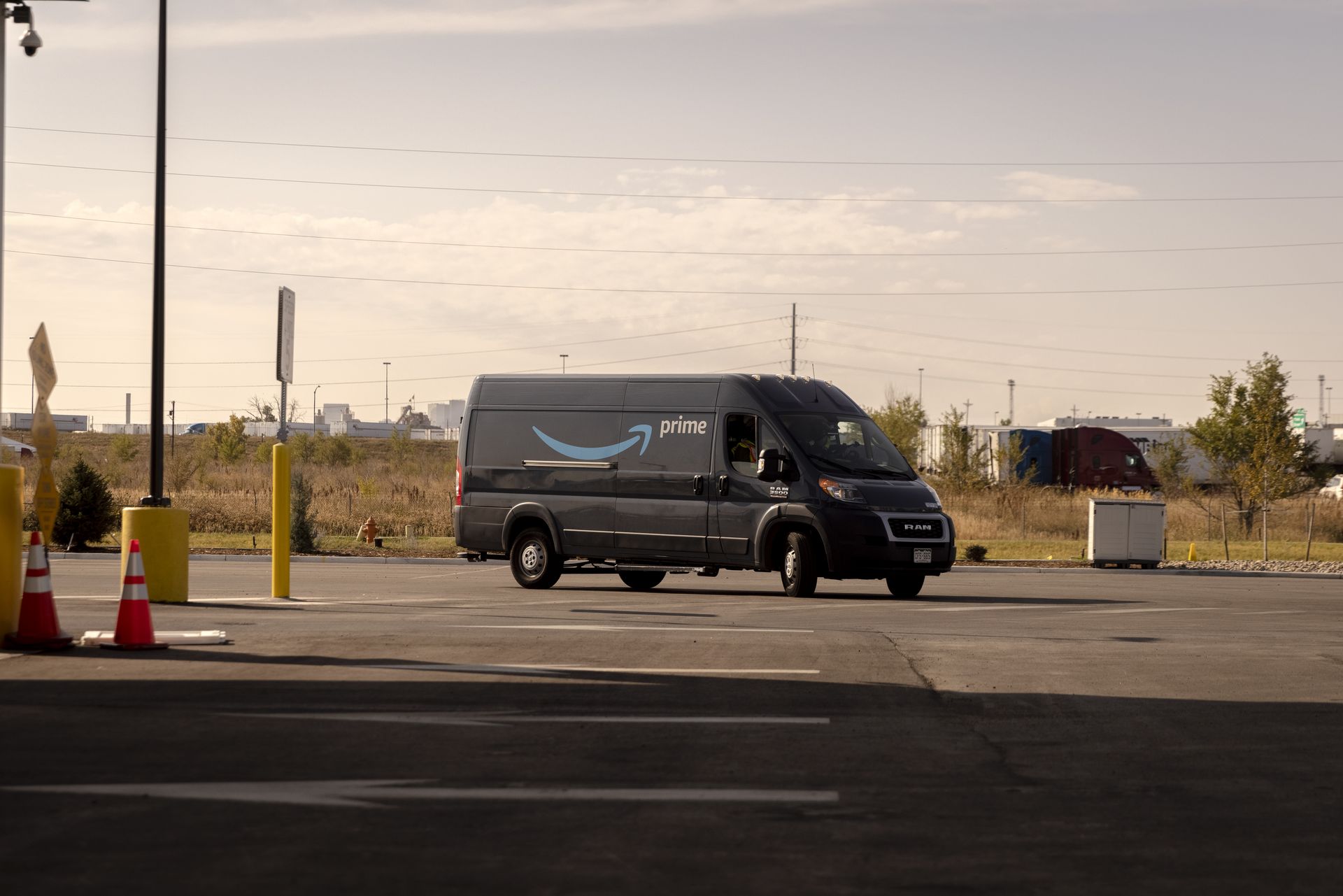
The retailer is investing $4 billion into its rural “last mile” network. Set to triple in size by the end of 2026, the network will deliver one billion additional packages annually, Amazon said in April. It added that an additional 4,000 small towns, cities, and rural communities will get same-day and next-day deliveries by the end of the year.
Amazon said spending billions more on its rural delivery network will create 100,000 additional local jobs, which is more than the 75,000 workers employed by the U.S. Postal Service in America’s 15 most-rural states, according to a 2020 Institute for Policy Studies report.
With sparser fulfillment sites, limited infrastructure, and lower shipment density per ZIP code, low-margin rural areas have been historically neglected by for-profit couriers like Amazon, Walmart $WMT, UPS, and FedEx $FDX. Legally obliged to service all Americans, the USPS typically covers these routes instead.
But when Walmart launched GoLocal in 2021, a delivery service transporting goods from both its own stores and other retailers, it changed the game for rural e-commerce. With more than 90% of Americans living in a ten-mile radius of a Walmart, the retailer saw that its sprawling network of over 4,600 stores could double-up as fulfillment centers, offering a competitive advantage over Amazon in hard-to-reach areas. Walmart claims it can now deliver food, general merchandise, and prescriptions to 93% of Americans within three hours. The company is also reportedly testing “dark stores,” which resemble retail stores but are closed to the public, in Dallas, Texas and Bentonville, Arkansas, in a bid to further speed up deliveries, Bloomberg reported in June.
Walmart’s rural delivery bet has boosted its e-commerce business. Walmart’s U.S. online sales grew over 20% year-over-year during the first quarter of 2025, whereas Amazon’s North American sales grew just 8.5%. Likewise, Walmart’s e-commerce market share grew by 1.2% year-over-year in 2024, outshining Amazon’s 0.8% gain, according to Bank of America $BAC, although Amazon still dominates this sector.
So, with Walmart positioning itself as the commercial delivery service for the hard-to-reach, Amazon began scaling its rural network in 2023 to play catch-up.
“The battle for the rural last mile in America is intensifying,” wrote Morgan Stanley $MS analysts in June. "As Kong (Walmart) fights Godzilla (Amazon) in the battle for retail and eCommerce supremacy, the favored weapon of choice has often been delivery/logistics.”
Irrespective of Walmart's brick-and-mortar advantage, Amazon supercharged its deliveries in 2023 and 2024. The number of items delivered the same or the next day in the U.S. increased 30% in the first half of 2025, compared to the same period last year, the company said in a release. With Amazon arguably nearing the limit of what speed is possible in cities, tackling the rural market was inevitable.
Equally, recent technological innovations may improve the economics of serving areas with low shipment density.
Prime Air, launched in 2022, uses drones to deliver parcels in 60 minutes or less, available so far in College Station, Texas, and both Tolleson and Phoenix, Arizona. Amazon is also reportedly developing artificial intelligence software to power humanoid robots that could replace delivery workers and “spring out” of its vans, The Information reported in June. This year, it also deployed 1,000 electric delivery vans with Vision-Assisted Package Retrieval, an AI-powered tool that's intended to remove the need for drivers to organize packages. The company has also invested in autonomous driving startup Plus, which is developing technology for long-haul freight transportation.
Whether these technologies will be used for rural deliveries remains to be seen, but their cost-cutting potential could subsidize less efficient shipments.
While Amazon may be bringing faster deliveries to rural residents, it's leveraging logistical might to eat up more of the retail sector.
“If you're a small retailer, and you can go to the post office to ship things, you're more competitive in rural areas compared to Amazon,” said Christopher W. Shaw, author of First Class: The U.S. Postal Service, Democracy, and the Corporate Threat. But if Amazon is now able to deliver on behalf of that small business, they’ll likely shift their store onto its marketplace, he said. “I think there's definitely a monopoly power issue here, because Amazon is covering the entire chain now, and it's expanding its hold on that.”
What's more, Amazon's and Walmart's rural expansions come after years of financial woes at the USPS. The agency has failed to turn a profit since 2007, hemorrhaging $70 billion in losses. In a bid to turn things around, in 2021 it unveiled a 10-year plan to overhaul its delivery logistics, including cuts of $3 billion a year over the next decade, announced last August. Postmaster Louis DeJoy, appointed by President Donald Trump, told The Washington Post that these measures would slow service for some rural communities: “At the end of the day, I think some portion of the mail showing up 12 hours later, I think it’s a price that had to be paid for letting this place be neglected.”
Amazon was quick to position itself as a savior. “At a time where many logistics providers are backing away from serving rural customers because of cost to serve, we are stepping up our investment to make their lives easier and better,” said Udit Madan, Amazon's senior vice president of operations.
Nevertheless, Shaw doesn’t foresee Amazon’s delivery network ever usurping the USPS entirely. “In this country, we have mule trains delivering mail in certain places. We have people delivering by ferry boats, or by airplane, because there's no roads,” he said. “I don’t think [Amazon] will go to the most money-losing routes, in the most rural areas. There's an economic disincentive for them to do that.”
While Amazon may not be expanding into the mule train business anytime soon, it is on track to become the country’s largest postal service. This may eat into USPS revenue, leaving the agency less-equipped to service Americans at the end of the line.
Join 500,000+ readers who start their day with Quartz.
By subscribing, you agree to our Terms of Service and Privacy Policy.