
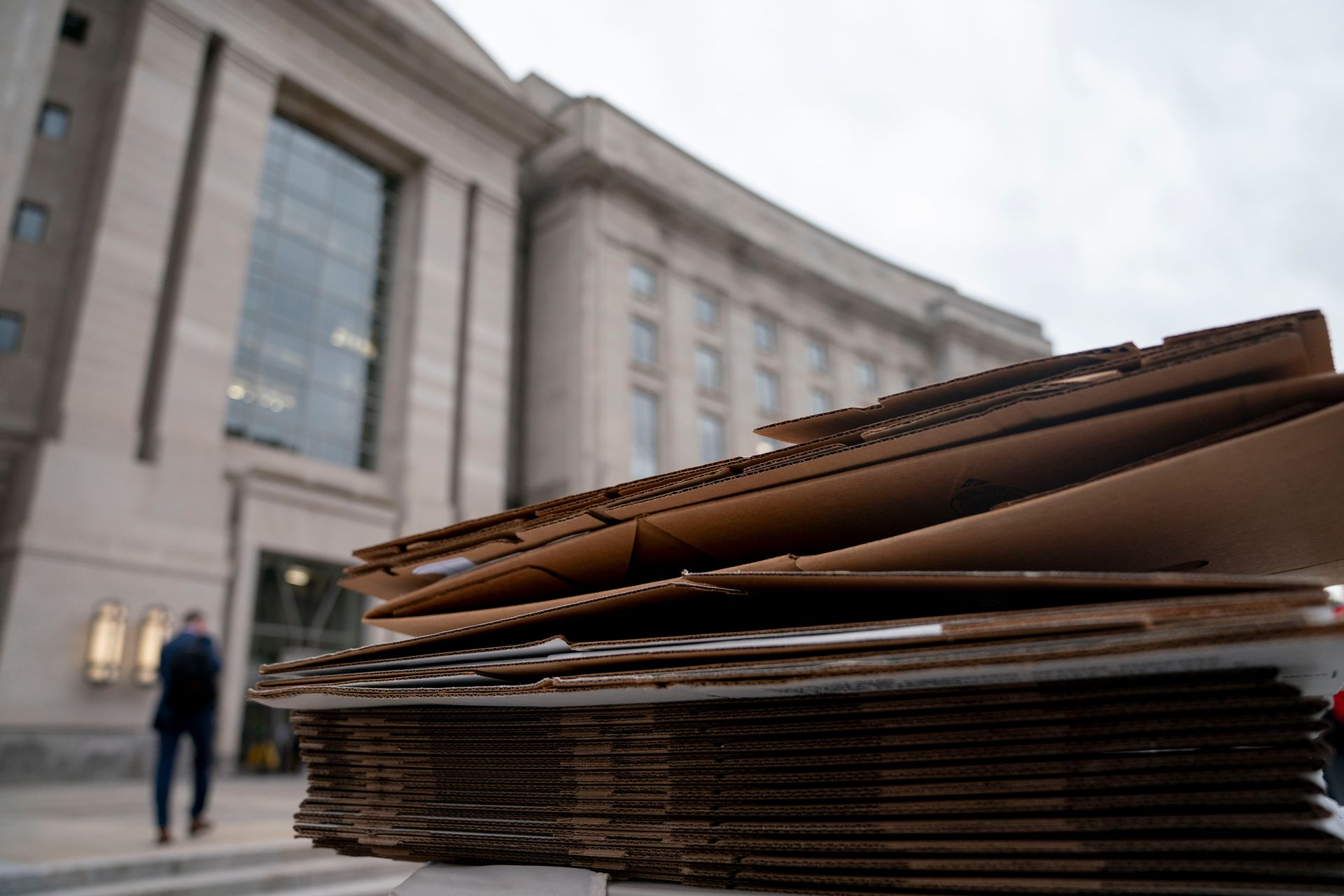
International Paper, the largest cardboard box manufacturer in the United States, recently closed two mills in Georgia and cut more than a thousand jobs. While this might look like routine cost-cutting in a tired industrial sector, it may actually be a warning light for the broader economy.
The cardboard box industry has long served as a barometer to measure real-world demand. Everything from big appliances to frozen pizzas is shipped in these boxes. When factories ramp up and businesses expect higher sales, they order more boxes. If they think demand is falling, box orders go down.
The current situation is increasingly concerning. U.S. containerboard production capacity has fallen by about 9% in just eight months — a decline double the rate experienced during the 2009 recession. International Paper reported that U.S. box shipments fell 5% year-on-year in the second quarter, marking its fourth consecutive quarterly decline. Similarly, Smurfit Westrock saw a 4.5% slide in North American corrugated cardboard volumes.
Trade tariffs are also part of the equation. Analysts at Barclays estimate that 10% to 15% of American containerboard capacity is tied to exports. Trade disruptions are expected to slow these exports and potentially shrink them by 2026. Economist Jadrian Wooten of Virginia Tech notes that if shipments keep falling, other indicators, such as GDP or unemployment, may eventually catch up.
The slowdown isn't only about demand. Packaging has become lighter to reduce waste, and the industry has consolidated significantly. Smurfit Kappa merged with WestRock in a $20 billion deal in 2023, and International Paper bought Britain’s DS Smith for $9.9 billion in 2025. This means three major players now control most of America’s box-making capacity, which gives them more room to shut mills while keeping prices steady.
Historically, cardboard has been a reliable indicator. During the last three or four recessions, demand for cardboard boxes dropped by 10% to 15%. That is probably why former Federal Reserve chair Alan Greenspan reportedly watched box demand as a real-time sign of economic activity. When box shipments slow down, it often means the economy is changing.