Expectations for rate cuts have been helping drive stocks to new highs. But that doesn't mean lower interest rates are always and only good news
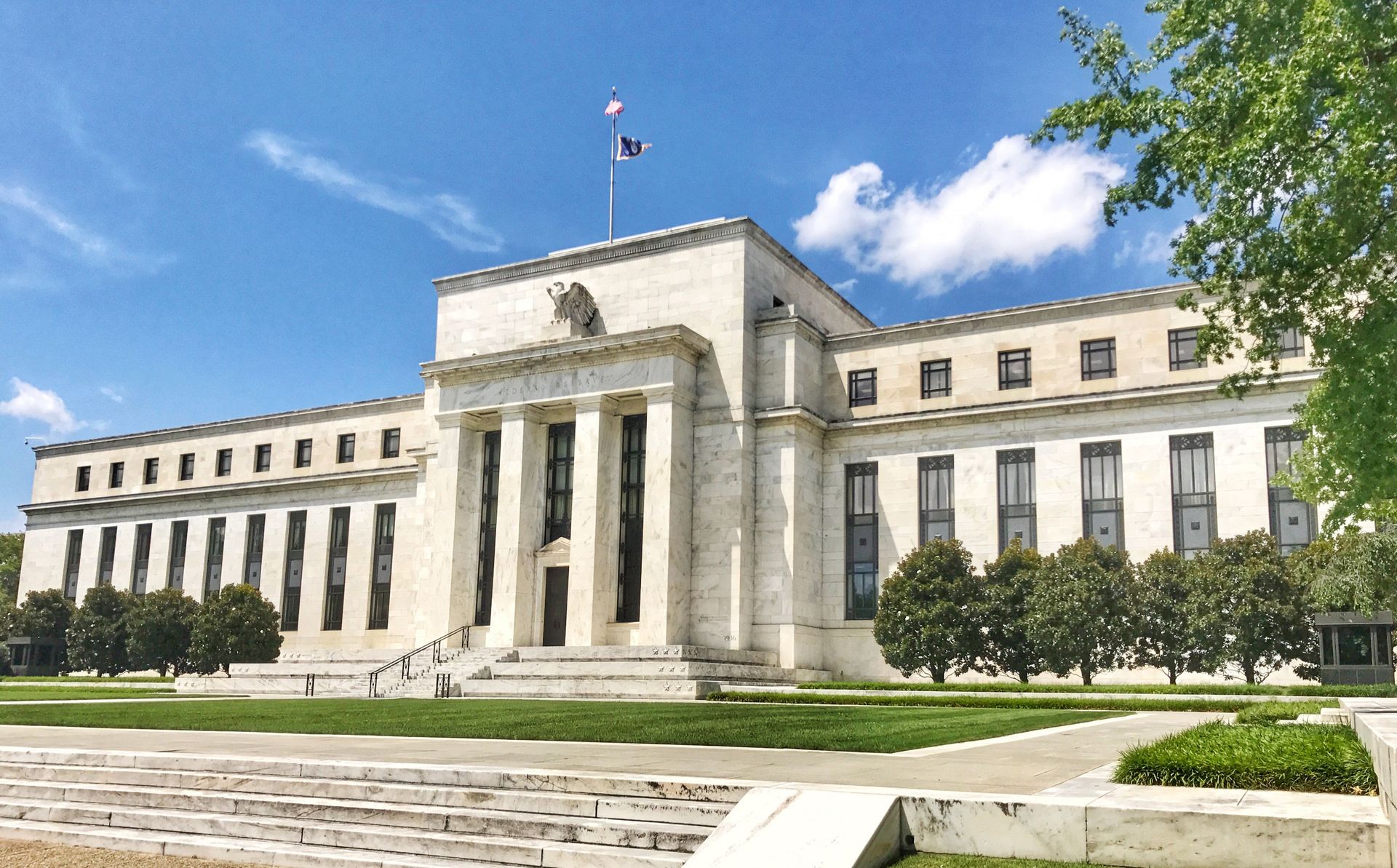
Smith Collection / Gado / Getty Images
Top Federal Reserve policy makers are meeting this week, with a highly anticipated interest rate cut expected when the gathering ends Wednesday.
With the job market cooling and inflation no longer a major threat, economists expect a 0.25% cut in the benchmark Federal Funds Rate. Additionally, Morgan Stanley $MS and Deutsche Bank expect the Federal Open Market Committee, the central bank's monetary policy making panel, to slash rates by 0.75% by year's end.
Join 500,000+ readers who start their day with Quartz.
By subscribing, you agree to our Terms of Service and Privacy Policy.
Some analysts say the Fed will split on the rate cut amount, but will wind up cutting interest rates this week.
“The most likely outcome is a three-way split,” Samuel Tombs, chief U.S. economist at Pantheon Macroeconomics, said in a Monday research note. Yet some Fed decision makers are “attempting to please [President Donald] Trump with a vote to ease by 50 basis points” while most committee members will green-light a 0.25% cut, and a small minority opt for no cut at all.
Expectations for interest rate cuts have been helping drive stock indexes to new highs. But that doesn't mean lower interest rates are always and only good news. Here's what to know.
While the Federal Reserve historically cuts rates to give the U.S. economy a shot in the arm, lower interest rates also bring some downside issues to the table for U.S. households, with these risks at the top of the list.
With interest rates heading lower, more traffic (and more demand) would likely lead to more market competition, triggering rising home prices.
“Lower mortgage rates may entice more buyers to enter the market, increasing home values, even if they only slightly decline,” said Charles Urquhart, founder at Fixed Income Resources, a financial advisory consulting firm.
That scenario could accelerate if the Fed gets aggressive about rates.
“Beyond the immediate cut, what matters most is the Fed’s guidance on the speed and magnitude of future easing,” said Atsi Sheth, chief credit officer at Moody’s Ratings. “We expect cumulative rate reductions totaling 100 basis points over the next 12 months, which will shape expectations and influence macroeconomic conditions well beyond the near term.”
Easy bank savings income could be disappearing with extended Fed rate cuts. “The Fed's yield is higher than money market yields,” Urquhart said. “Today's 4–5% cash returns are already on borrowed time.”
As the Fed continues to move forward with rate cuts and maintains this approach into 2026, U.S. consumers can expect the economic landscape to shift in ways they may not have anticipated.
“If the Fed lowers rates, consumers could see relief on mortgages, car loans, and credit cards,” said Karla Dennis, founder at Karla Dennis and Associates, a finance and tax strategy firm in La Palma, California. “Lowering rates on consumer goods and directly reducing monthly household expenses is a huge win for consumers.”
Yet those same cuts can be serious threats to Americans’ financial standing.
“A slowing job market signals caution right now,” Dennis noted. “With unemployment at 4.3% (a four-year high), families should be aware that job security is softening. Consumers need to prepare with stronger savings and reduced debt where possible.”
Inflation is also still a wildcard for consumers. “Even with job weakness, if inflation remains sticky, consumers will still feel pressure on rent, food, and services,” Dennis added. “It’s a reminder to budget carefully until prices truly stabilize.”
That’s why a rate cut should be a cautionary signal for Americans. “The Fed is often observing a slowdown in growth, and cuts are not a freebie,” Urquhart said. “Consumers might mistake 'cheaper borrowing' for a "strong economy."
On the upside, Main Street investors can leverage a Fed rate cut to their advantage if they know where to look.
“Discount valuations on small caps continue to look compelling,” said Michael Reynolds, vice president of investment strategy at Philadelphia-based Glenmede Investment Management. “Small-cap companies are likely to benefit more from corporate tax relief and lower interest rates while also being less exposed to the impact of tariffs. Small caps should increasingly have an earnings growth edge over large caps.”
Additionally, shifting trade policies should make international diversification more valuable. “Japanese equities particularly offer a unique combination of discounted valuations, ongoing corporate reform efforts, and strong fundamental growth,” Reynolds noted.
