
The Federal Reserve delivered a modest rate cut as Trump demands more and bulls bet on good times to come
Chip Somodevilla/Getty Images
The Federal Reserve lowered its benchmark interest rate by 25 bps on Wednesday, its first cut of 2025, as policymakers tried to steady a slowing job market while facing intense political pressure from President Donald Trump. The decision brings the federal funds rate down to a range of 4.00%-4.25%.
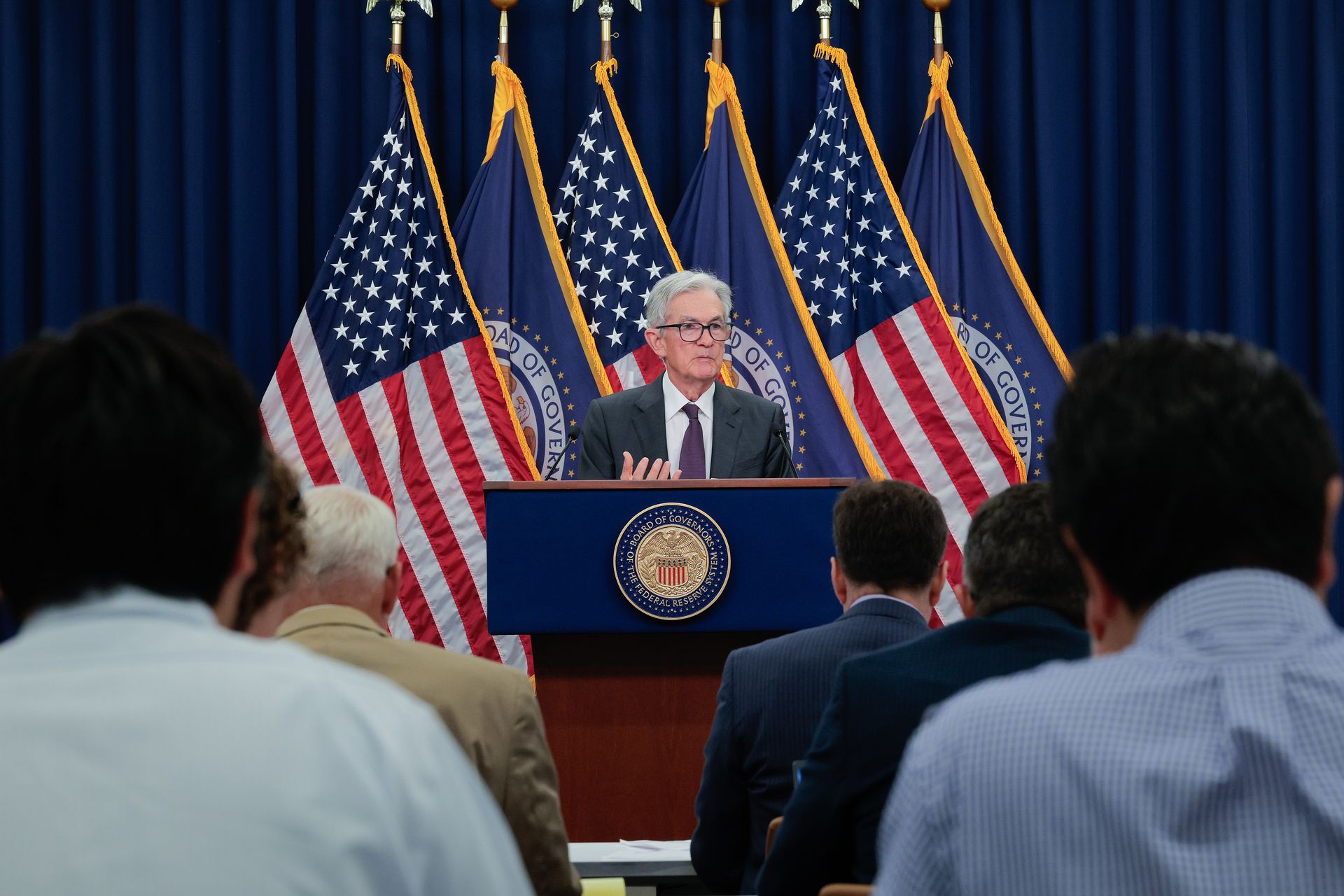
Fed Chair Jerome Powell faced reporters at the 2:30 p.m. press conference, fielding questions on immigration, unemployment, tariffs, inflation, and the independence of the Fed. Powell reiterated that political considerations belong elsewhere in Washington, and are not the concern of the central bank.
In updated projections, the Fed signaled that rates could fall by another 50 bps before year’s end, likely through two 25 bps cuts at the two final meetings of 2025, which would take the range to 3.5%-3.75%, just below June’s outlook.
The “dot plot” showed a range of views. One official favored no change this year. Another backed a much sharper drop to 2.75%-3%, a view thought to belong to Stephen Miran, who also cast the only vote for a 50 bps cut at this meeting. Miran is the first official in nearly 90 years to hold a role in the executive branch while also working at the Fed, which some see as a conflict of interest between the political realm and the central bank's historic independence.
Asked at the press conference whether there was widespread support for a larger cut, or whether such a cut was seriously discussed, Powell said there wasn't.
The cut may have been widely expected, but the stakes are unusually high. Trump has relentlessly demanded deeper, faster reductions, installed his top economic adviser Stephen Miran as a Fed governor this very week, and continues to fight in court to remove Governor Lisa Cook.
In recent months, dramatic stock market moves have followed some of Trump’s more serious attempts to take additional control, but the outlook remains murky, with Politico’s Victoria Guida noting that if courts give Trump more authority to remove governors, the balance of power inside the Fed could shift decisively from here.
The economic backdrop is just as challenging as the political one.
Payrolls rose by just 22,000 in August, with unemployment up to 4.3%, while inflation remains stuck around 3%, above the Fed’s 2% target and complicated by Trump’s tariff policies. A benchmark revision this month also erased nearly a million jobs from prior estimates, fueling talk of a “jobless expansion.”
As the news broke, major stock-market indices moved only modestly, suggesting the cut was already priced in. This comes, however, on top of several weeks of accelerating gains. The S&P 500 hit another record this week, as investors embraced the perhaps uncomfortable truth that bad news for workers — slower hiring, softer wages — is becoming good news for profits.
Looking out over the next few weeks and months, many analysts are betting the bulls have it. Prediction markets see cuts in October and December as likely if not certain, with some Wall Street economists seeing cuts ahead at every meeting through January.
Join 500,000+ readers who start their day with Quartz.
By subscribing, you agree to our Terms of Service and Privacy Policy.