
The government shutdown is nearing the end of its first month with scarcely an end in sight. That doesn't bode well for the U.S. economy.
The risks of a recession swell if the government shutdown stretches into the December holiday season
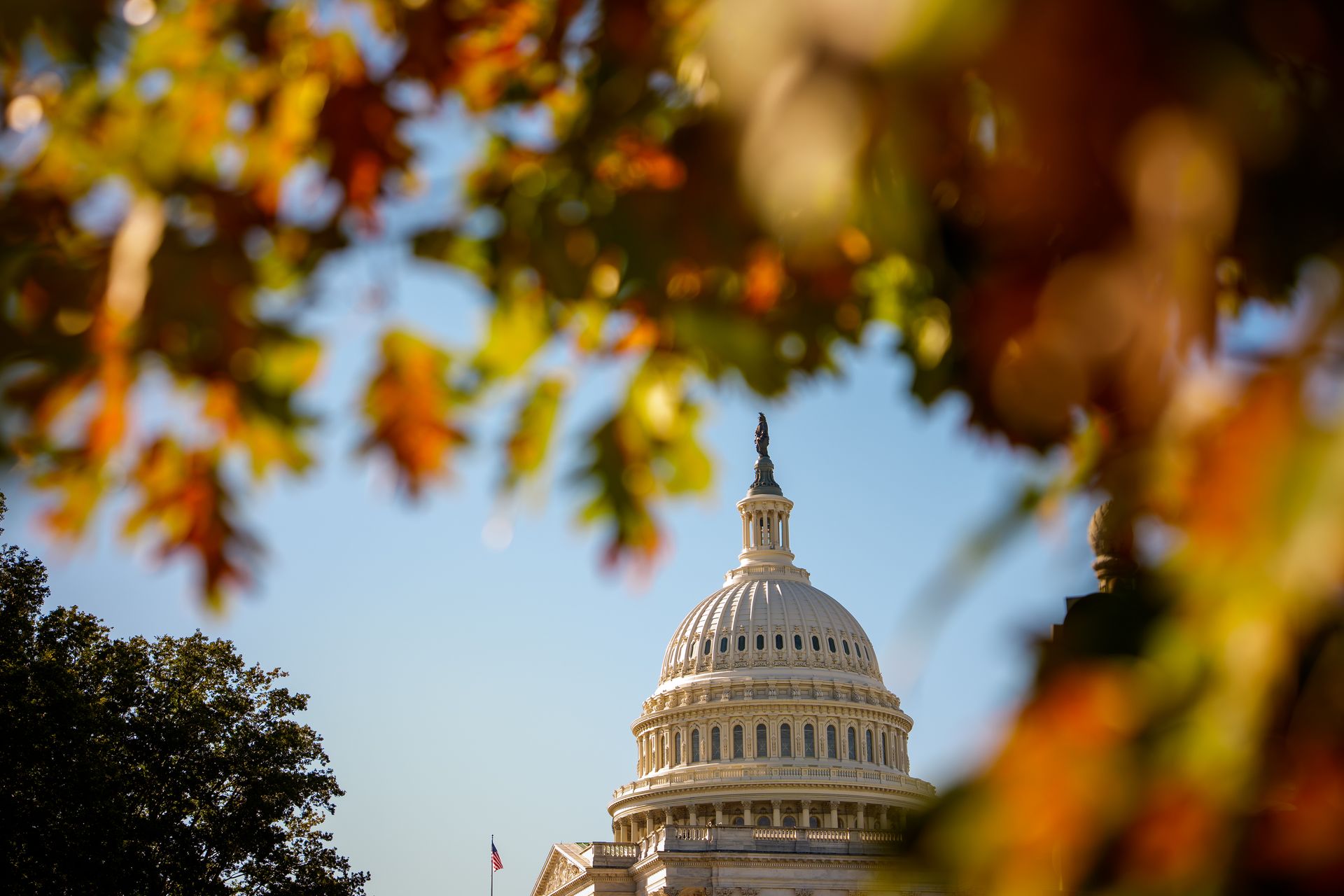
The Dome of the U.S. Capitol Building is visible on October 22, 2025 in Washington, DC. (Andrew Harnik/Getty Images)
The government shutdown is nearing the end of its first month with scarcely an end in sight. That doesn't bode well for the U.S. economy.
At least 670,000 federal workers are furloughed from their posts, according to the Bipartisan Policy Center. Others, like military personnel and air traffic controllers, are reporting to their jobs without pay.
In addition, major safety net measures like the Supplemental Nutritional Assistance Program (SNAP) are about to exhaust their funding.
There are varying estimates on how the shutdown will damage the U.S. economy. While it probably won't trigger a recession in the short-term, the risks of one swell if the shutdown stretches into the December holiday season.
The White House Council of Economic Advisors has projected the U.S. sheds around $15 billion in lost economic activity for each week of the shutdown. Other analysts such as Moody's $MCO Analytics economist Mark Zandi are forecasting a $30 billion economic loss per week. The latter amounts to a 0.1% reduction each week in the annualized real gross domestic product growth for the quarter.
"The federal government has been shut down for nearly a month, and little attention has seemingly been paid to the macroeconomic fallout. Perhaps rightly so," Zandi wrote Monday in a social media post. "This is unlikely to be the case for much longer."
Zandi added that if the shutdown dragged into November and breaks a record in becoming the longest in U.S. history, the hit to the economy will be magnified. The 35-day shutdown spanning from late 2018 into early 2019 remains the longest on record.
"Government workers not getting paid will pull back on their spending, government contractors will lay off workers, and government services will be disrupted," he said. "In the scenario where the shutdown lasts through the end of the year, a recession is more likely than not."
The U.S. economy is in a strong position to ride out the shutdown's worst effects. Unemployment remains low, though hiring has showed signs of stalling out in recent months. The impact of President Donald Trump's global, on-and-off tariffs has blunted the confidence of employers to expand their workforces or otherwise take new risks. A recent Federal Reserve report showed that consumers are experiencing price increases due to the spate of new import taxes.
That gloomy sentiment has been showing up among consumers as well. The consumer confidence index from the University of Michigan reported a 1.5% drop in consumer sentiment compared to September, the third month in a row it fell.
Fresh data, though, on the state of employment hasn't been available since August, as the latest jobs report was put on hold over the shutdown.
Join 500,000+ readers who start their day with Quartz.
By subscribing, you agree to our Terms of Service and Privacy Policy.