
The White House said it could set in motion mass firings of civilian federal employees within days, as the funding dried up for the U.S. government for the first time in over six years.
The shutdown will upend much of the government's daily operations, disrupting national parks, museums, and food safety inspection, among others
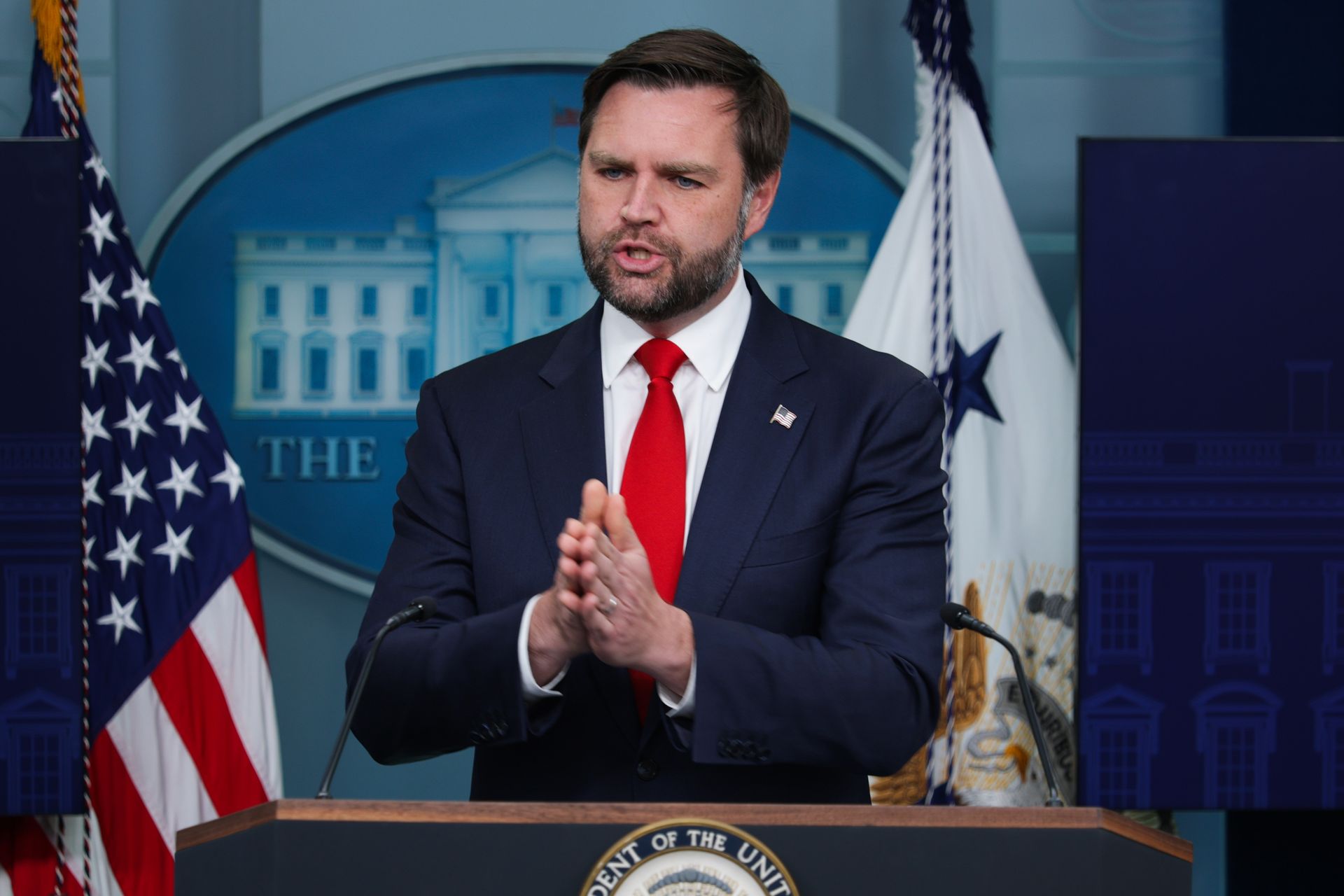
U.S. Vice President JD Vance speaks during the daily press briefing at the White House on October 01, 2025 in Washington, DC. (Alex Wong/Getty Images)
The White House said it could set in motion mass firings of civilian federal employees within days, as the funding dried up for the U.S. government for the first time in over six years.
"Let's be honest, if this thing drags on for another few days, or, God forbid, another few weeks, we're going to have to lay people off," said Vice President J.D. Vance during a rare appearance at a White House press briefing.
Vance added that the federal government might have to pursue "extraordinary steps" to ensure operations can function "as well as [they] possibly can." Other White House officials echoed that.
"We believe that layoffs are imminent," said White House press secretary Karoline Leavitt. "They are unfortunately a consequence of this government shutdown."
The White House offered no further details on its specific plans on slashing the federal workforce. It comes a day after President Donald Trump threatened large-scale layoffs on government employees, particularly against those he deems to be opposed to his policies.
“When you shut it down, you have to do layoffs,” Trump said on Tuesday. “So we’d be laying off a lot of people that are going to be very affected, and they’re Democrats.”
The shutdown will upend much of the government's daily operations, disrupting national parks, museums, and food safety inspections, among others. About 800,000 federal employees deemed "non-essential" are being furloughed.
Others who are deemed essential, such as U.S. military service members and air traffic controllers, will continue working without pay until Congress steps in with new funding. The Bureau of Labor Statistics will not produce a closely-watched September jobs report on Friday.
It's unclear how long the shutdown might last, given the significant impasse between Republicans and Democrats. A second vote on a pair of rival funding bills failed in the Senate on Wednesday. A prolonged shutdown could slow economic growth. Financial markets, though, were on pace to climb modestly on Tuesday.
The last government shutdown lasted 35 days in late 2018 following a major dispute over Congress funding Trump's promised border wall on the U.S.-Mexico border.
Already, White House budget director Russell Vought has begun retaliating by canceling projects in mostly Democratic states. Earlier on Wednesday, Vought put on ice $18 billion of infrastructure projects in New York City, claiming the funding flowed from "unconstitutional DEI principles."
New York is the home state for Democratic congressional leaders Chuck Schumer and Hakeem Jeffries, who are opposed to reopening the government without a broader spending deal to renew expiring Affordable Care Act tax credits.
Later, Vought wrote on social media that he was canceling $8 billion in "Green New Scam" funding in 16 states. California, Colorado, Oregon, New Jersey, and New Mexico are among the states affected.
Join 500,000+ readers who start their day with Quartz.
By subscribing, you agree to our Terms of Service and Privacy Policy.