After years of dominance, the global diamond industry is taking hits from tariffs, lab-grown versions, and changing consumer patterns
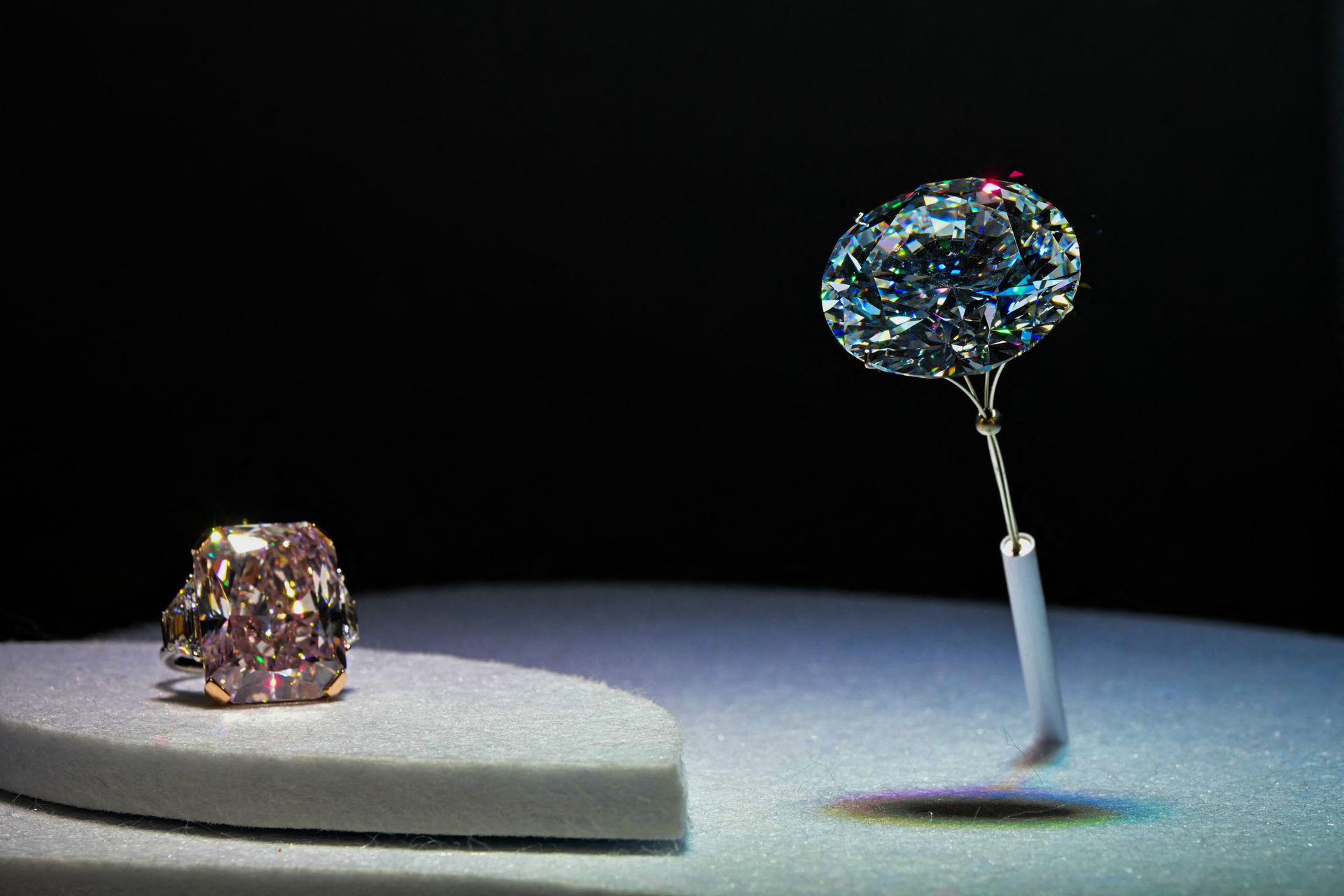
The precious gem industry has fallen on hard times, with diamonds, historically the granddaddy of them all, in particular peril in 2025.
The data sets the table on that conversation, even though diamond industry mavens probably don’t like what the numbers are saying right now.
For starters, global diamond prices have fallen 5.7% in 2025, according to the Ziminsky rough diamond index. Diamond prices have also plummeted 30% in the past three years, the index reported.
Join 500,000+ readers who start their day with Quartz.
By subscribing, you agree to our Terms of Service and Privacy Policy.
Industry observers see two big reasons why diamonds (mainly natural diamonds) have lost their luster with the public and with investors.
Lab-grown diamonds have caught the eye of price-conscious consumers, as so-called synthetic diamonds can cost as little as 85% less than natural diamonds. It’s primarily a cause of production, as lab diamonds don’t need to be dug out of the ground in challenging Sub-Saharan terrain.
Instead, lab-grown diamonds are manufactured in a temperature-controlled manufacturing facility using immense pressure and extreme heat to produce gemstones that, to the naked eye, look and feel just like natural diamonds, at least with the less-than-discerning public.
In the 20th century, no self-respecting trust fund would go without a diamond portfolio component, either as ownership of a hard asset or through direct investment in diamond industry stocks and funds. Those days are fading away.
Take Anglo American (UK: AAL), which owns 85% of De Beers Group, long the premier brand name in the diamond realm. The London-based mining giant has seen its shares fall by 7% against the S&P 500 Index, which has risen 9.7% year to date. While U.S. tariff hikes of up to 50% certainly haven’t helped diamond stocks, De Beers saw first-half revenues ($195 billion) fall by 13% on a year-to-year basis, primarily due to significantly lower consumer demand, which resulted in the company dropping diamond prices by 5% or more to compensate.
Or, consider LVMH Moet Hennessy Louis Vuitton ADR (LVMUY), which, at a $266 billion market cap, is one of the largest luxury goods companies across the globe. The company’s stock price is down -16% year-to-date and is down -22% over the past year. While the company may be deemed “The House of Fashion” for good reason, it also has deep roots in the diamond sector, with diamond and jewelry brand names like TAG Heuer, Bulgari, and Tiffany & Co. That exposure to the sliding gemstone sector isn’t helping LVMUY shareholders right now.
It’s not only synthetic diamonds and a lack of investors. Industry experts say the diamond industry is under severe pressure from multiple angles.
“Inflationary pressures that started in 2023 and into 2025 had already softened consumer spending and made retailers more cautious,” said Monil Kothari, founder at Haus of Brilliance, a New York City-based jewelry retailer. “That’s now compounded by the new U.S. tariffs on diamonds imported from India; 50% on loose diamonds and even higher for finished jewelry.”
Where once retailers like Kothari imported $100,000 worth of loose diamonds duty-free, now they’re paying $50,000 in tariffs upfront, on goods that often just sit on the shelf until sold. “For finished jewelry, the financial impact is even steeper,” he noted.
That alone would have been enough to slow sales, but there’s also been a notable shift in consumer behavior. “Younger shoppers aren’t prioritizing natural diamonds the way previous generations did,” Kothari said. “They care about value, meaning, and personalization more than tradition. There’s a cultural redefinition happening around what counts as 'luxury,' and diamonds aren’t always at the center of it anymore.”
Additionally, retailers across the board are hesitating to take big inventory positions.
“With consumer demand soft, tariffs creating cost volatility, and uncertainty all around, it’s become difficult to plan ahead with confidence,” Kothari added. “There’s just a general chill in the trade right now, and that translates to fewer orders and softer sales.”
Other gemstone experts say talk of a complete diamond market collapse is off the mark.
“I wouldn't say natural diamonds are in a free fall,” said Rustin Yasavolian, CEO at Masina Diamonds, a jewelry retailer in Marietta, Georgia. Though, diamond industry leaders made a decision that set the stage for the sector’s current trouble, he said.
“In 2021, the natural diamond market tried to differentiate itself from its synthetic counterpart by increasing the price due to supply constraints,” according to Yasavolian. “The natural market claimed that natural diamonds are rare and there is true value in them. They also made claims that lab-grown diamonds have no true value because there is no finite amount, and they could produce as many diamonds as they want.”
Additionally, the increase in natural diamond prices pushed people more towards the lab-grown counterpart.
“People claiming that natural diamonds were becoming unaffordable, and why pay the exorbitant premium when lab-grown diamonds are chemically identical,” Yasavolian added. “Since then, natural diamond prices have come down significantly to try to compete with lab-grown diamonds. Although not nearly as inexpensive as lab-grown diamonds, natural diamonds have become much more affordable since their 2021 peak.”
That price gap is proving to be a problem for natural diamond sellers.
“With inflation and a stagnant interest rate around 7%, it’s difficult for some individuals to justify spending $20,000 on a natural diamond when they can get something that looks the same with the exact same chemical composition for $3,000,” Yasavolian added.
Can natural diamonds survive? Sector professionals say so, but their future upside is likely limited.
“Diamonds will survive, especially those with rarity, provenance, or history,” said Emma Snowdon, creative director at Berganza, a London-based antique and vintage jewelry specialist. “True collectors want something no machine can replicate: the romance of a hand-cut diamond, an unheated Burmese ruby, the velvety blue of a Kashmir sapphire, or the rich green of a Colombian emerald.”
“In a world where so much looks the same, these stones truly stand apart,” Snowdon added.
Other diamond experts agree, noting there’ll always be a niche for rare, natural stones, just like we see the persistently popular industries for vintage wines or classic cars. “But for the modern fine jewelry buyer, lab-grown diamonds are the new standard,” said Irina Aran, founder and CEO of Facets Fine Jewelry, in New York City. “They’re not a compromise. They’re a conscious alternative, and an upgrade in the eyes of many.”
Gemstone buyers should do their due diligence and know exactly what they’re getting when buying a diamond. That’s the case for natural and lab-grown diamonds.
“For buyers, lab-grown can be a cheaper option, but it won’t hold its value,” Snowdown said. “Natural diamonds with history and provenance can.”
For high-value diamonds, it’s always worth working with a trusted specialist and seeing the piece in person. “Quality jewelry offers something money can’t buy, which is craftsmanship, story, and individuality. These are qualities no synthetic can ever match.”
It’s also advisable to focus on buying diamonds in your pre-budgeted price range.
“You may have a sentimental reason to buy a natural diamond, and if you can find something in your price range that’s professionally certified, I’d go for it,” said Ian Ross, vice president of operations at New York City-based Ross Metals. “Don’t be afraid of waiting for a better price, either, because it could very well come down.”
Buyers also shouldn’t fret about buying so-called ‘inferior’ lab diamonds.
“Many people gravitate towards lab-grown diamonds for valid reasons, so you shouldn’t hesitate over social stigma or anything like that if that’s what you want to do,” Ross advised. “Just make sure it's the right stone.”
Ross also recommends going into a shop or storefront to buy gemstones.
“That way, you can physically look at what you’re buying, especially with larger natural diamonds that have imperfections in them,” he said. “Take a look at a natural diamond and then compare it with a lab-grown one with your own hands and eyes with a magnifying loop.”
“It’s a worthwhile experience and, in our industry, that human connection still means a lot."
