In 2019, Sam Altman wrote: “The most successful people I know believe in themselves almost to the point of delusion.”

The OpenAI boss has a pattern of walking back artificial general intelligence timelines, safety promises, and regulation
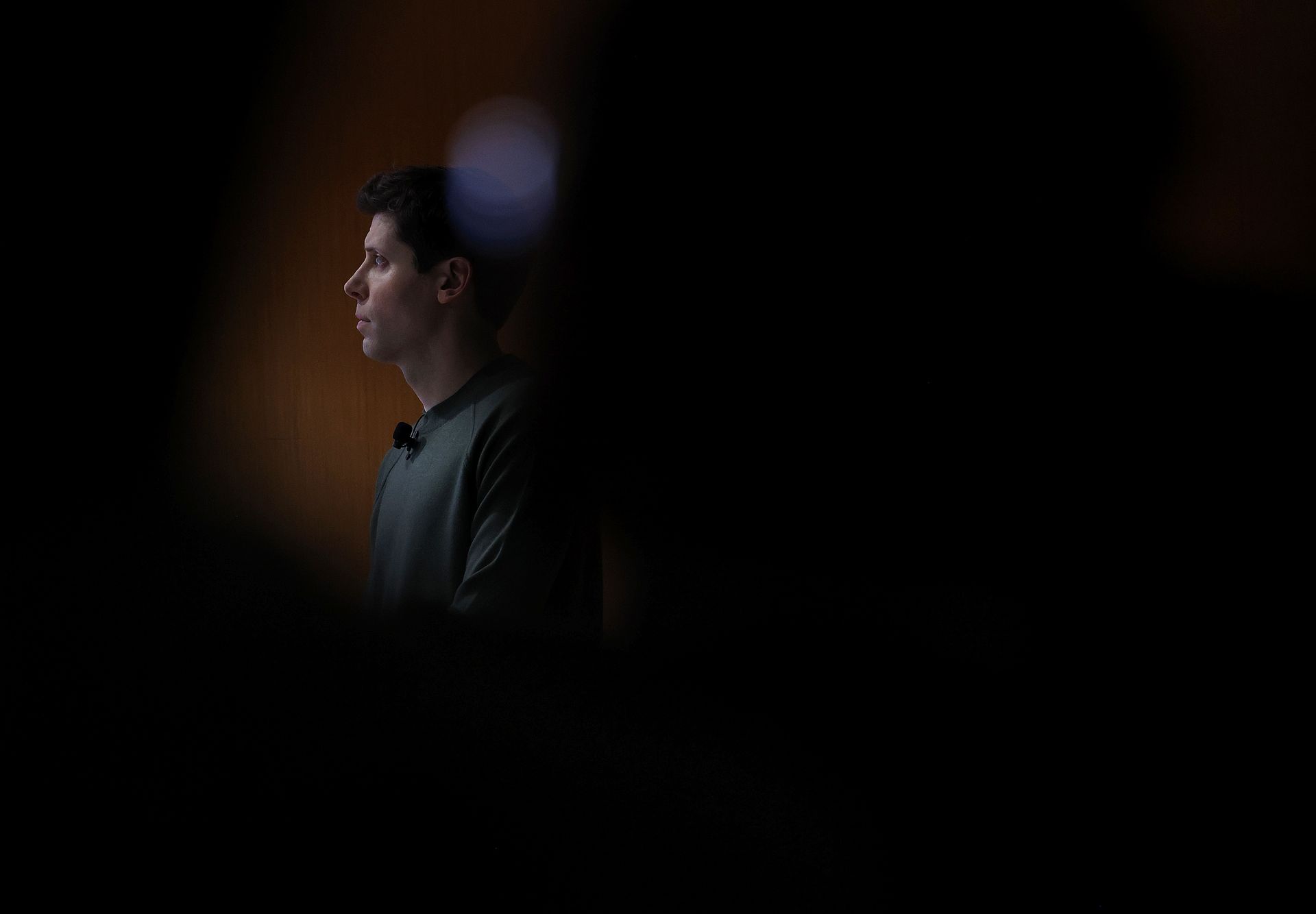
Justin Sullivan/Getty Images
In 2019, Sam Altman wrote: “The most successful people I know believe in themselves almost to the point of delusion.”
The OpenAI chief executive might be taking this a little too literally. The latest grand vision is that Altman wants ChatGPT to become personal assistant, shopper, doctor, and more, all in one interface. OpenAI has already partnered with Spotify $SPOT, Expedia $EXPE and Zillow so users can make playlists, plan vacations, and house hunt through its platform. Earlier this week, it announced a deal with Walmart $WMT that will let people buy groceries through its platform.
“Most people will want to have one AI service, and that needs to be useful to them across their whole life,” he told technology site Stratechery earlier this month. “I do feel like this is a once-in-a-lifetime opportunity for all of us and we’ll take the run at it.”
In other words, Altman wants OpenAI to become something more like an operating system, or an app store, or a super app — or all of the above.
The problem is that Altman has a tendency for hyperbole and broken promises. Most notable is his rhetoric around artificial general intelligence (AGI), seen by many as the holy grail for AI companies. Altman has called it the thing that could “elevate humanity” and “give everyone incredible new capabilities.” OpenAI’s charter once said AGI will “automate the great majority of intellectual labor.” Last year, Altman teased that it would come in 2025.
Then he backtracked. “My guess is we will hit AGI sooner than most people in the world think and it will matter much less,” he told The New York Times’ Dealbook summit in December. “AGI can get built, the world mostly goes on in mostly the same way, things grow faster, but then there is a long continuation from what we call AGI to what we call superintelligence.” More recently, he called AGI “not a super useful term.”
Elsewhere, Altman reportedly approached Scarlett Johansson in 2023 to be a voice of ChatGPT; she declined. The next year, its new voice assistant sounded strangely like her, and Johansson got lawyers involved. During the same period, in 2023, OpenAI publicly promised to devote 20% of available compute to guarding against AI safety concerns. The team, called Superalignment, was disbanded a year later.
On regulation, it’s a similar story. In 2023, Altman appeared before a Senate judiciary committee and said the U.S. needed strong regulations to avoid AI's potential dangers, saying regulatory intervention would be “critical to mitigate the risks of increasingly powerful models.” By May 2025, he sat in front of another Senate committee and agreed when Republican Ted Cruz argued against “overregulation." We need the space to innovate and to move quickly," Altman said.
With all this in mind, Altman’s more recent claim that humanity is “close to building digital superintelligence” might justifiably raise some eyebrows. Superintelligence is a hypothetical AI that is cleverer than all humans (even more powerful than AGI). OpenAI has warned in the past of the dangers of something like this “going rogue,” though fortunately for the rest of us, the majority of experts in the field don’t give Altman’s claims much credibility.
Of course, Altman is now locked into promising the world. OpenAI is still running at a loss and now has a $500 billion valuation to justify. Investors will need to throw $7 trillion at the AI industry over the coming years to pay for the computing infrastructure it requires. Those investors are unlikely to swallow that on the promise of incremental improvements to a chatbot that still hallucinates facts at great expense to some users. Much better to tout a futuristic, highly speculative, widely disputed, and somewhat nebulous vision of a product capable of “solving physics."
All of this makes the everything app seem quite reasonable in comparison — and in some ways it is. WeChat has already done it in China, and the deals with Walmart, Spotify, and others are steps in the right direction. However, in the West, competition laws are designed to stop this. And don’t forget about Apple $AAPL and Google $GOOGL, who won’t give up their wildly successful operating systems and app stores without a fight. Elon Musk is trying, and so far failing, to do the same with X $TWTR.
“My favorite historical analogy [for AI] is the transistor,” Altman told Stratechery in the October interview, discussing the super-app plans. “I think it will just kind of seep everywhere into every consumer product and every enterprise product.”
Sounds great. Or perhaps it’s just another hallucination.
Join 500,000+ readers who start their day with Quartz.
By subscribing, you agree to our Terms of Service and Privacy Policy.