A sports betting explosion has blurred the lines between gambling and investing. The rapid expansion has created unintended consequences
Getty Images
A version of this article originally appeared in Quartz’s members-only Weekend Brief newsletter. Quartz members get access to exclusive newsletters and more. Sign up here.
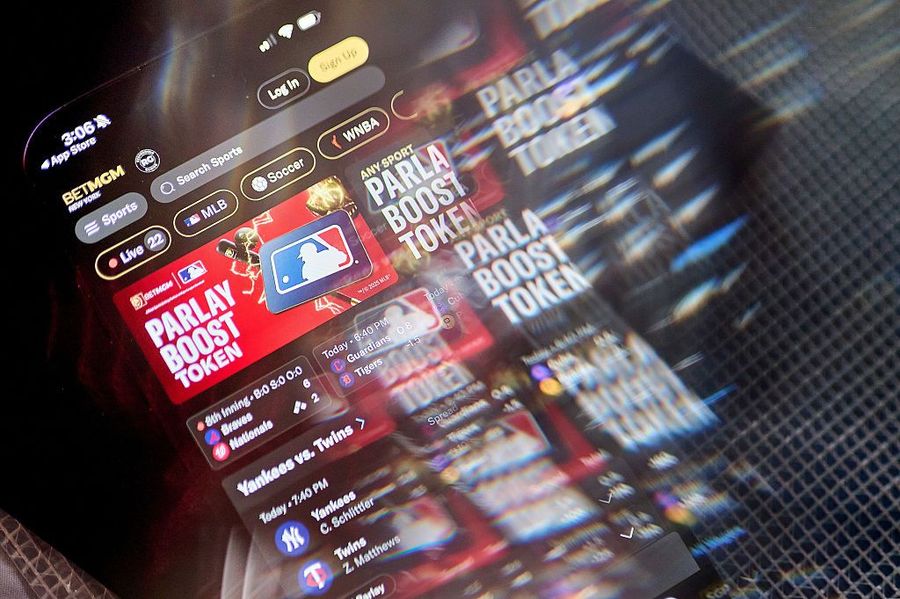
On any given Sunday this football season, Americans are placing millions in legal sports bets, a level of widespread wagering that would have been almost impossible a decade ago when only Nevada offered legal sportsbooks.
Today's football slate represents the peak of a sports betting boom that has fundamentally altered how Americans watch games. Sunday's action is part of an industry that's grown from $4.9 billion in total annual wagers in 2017 to in 2024. But beneath the Sunday spectacle lies a growing concern about addiction specialists reporting record demand for gambling help as the line between sports entertainment and financial risk becomes increasingly blurred.
Join 500,000+ readers who start their day with Quartz.
By subscribing, you agree to our Terms of Service and Privacy Policy.
The transformation has been swift and dramatic. When the Supreme Court struck down the federal sports betting ban in Murphy v. NCAA in 2018, legal sports betting was confined to Nevada and tribal casinos. Today, legal sports betting operates in 39 states and Washington, D.C., with more statehouses considering laws that would greenlight it.
The ubiquity of betting has reshaped the viewing experience itself. Where commercials once focused on beer and trucks, gambling ads now appear more frequently than alcohol advertisements during NBA games, according to Nielsen research. Whether driven by advertising or organic demand, almost half of men under 50 now have accounts with online sportsbooks.
NFL betting alone is projected to reach approximately $30 billion this season, according to estimates from the American Gaming Association. That figure includes not just who will win a game or season-long futures bets, but increasingly obscure wagers, like whether the national anthem will last over 90 seconds or the exact yardage of a quarterback's first touchdown pass.
But the rapid expansion has created unintended consequences that extend far beyond the Sunday scoreboards. Internet searches for gambling addiction help have increased 23% nationally since the Murphy v. NCAA decision, according to one UC San Diego study. In eight states studied, the opening of sportsbooks corresponded with significant increases in gambling addiction help-seeking, ranging from 30% in Virginia to 67% in Ohio.
The treatment infrastructure hasn't kept pace with the industry's growth. Gambling addiction treatment is "50 years behind where we are with drugs or alcohol," Michael Sciandra, executive director of the Nebraska Council on Problem Gambling, told The Atlantic. Unlike other addictions, no federal agencies oversee problem gambling research or treatment, leaving states to develop their own patchwork of resources.
Texas, which may vote on legalizing sports betting in November, exemplifies the preparation gap. Despite being the second-highest source of calls to the national gambling helpline, the state of more than 30 million people has no funding for gambling treatment and only three certified gambling counselors.
The regulatory gap has prompted congressional action. In 2024, Rep. Paul Tonko and Sen. Richard Blumenthal introduced the SAFE Bet Act, which would establish federal standards for sports betting operators, including restrictions on advertising during live games and limits on customer deposits. (They reintroduced it this year before March Madness after the previous version stalled in committee.)
The industry continues expanding into new territories, including states where sports betting remains illegal. Financial platforms like Robinhood now offer sports "events contracts" that function similarly to betting, blurring lines between gambling and investing. These products operate even in states that prohibit traditional sports betting by positioning themselves as financial instruments rather than wagers, creating a regulatory gray area that federal authorities have yet to definitively address.
There's a catch, though. While sportsbooks spend millions marketing the dream of winning, they actively limit customers who succeed too much. Successful bettors report having their maximum wagers reduced from hundreds of dollars to mere cents, or being banned entirely from platforms. Some discover their betting limits have dropped after winning streaks, while others find themselves cut off after cashing in on long-shot bets.
DraftKings says it restricts less than 1% of players "based largely on betting behaviors," but the lack of transparency around these decisions has drawn regulatory scrutiny. Massachusetts gaming officials are demanding more clarity on how and why companies limit successful bettors, while New Jersey regulations theoretically prohibit barring customers based solely on winning or skilled play.
Meanwhile, the NFL has embraced what it once opposed. In 2003, the league rejected a Las Vegas tourism ad for the Super Bowl, citing its prohibition on sports betting references. Today, the same league has lucrative partnerships with multiple sportsbooks and hosted last year's Super Bowl in Las Vegas.
The games will go on, the bets will be placed, and the industry will keep growing. But the real contest may be whether America can build the treatment systems and regulatory oversight to match the scale of what it has unleashed.
