
The Trump administration warned in a Supreme Court filing that a loss at the high court jeopardizes ongoing trade negotiations with "dozens" of foreign governments.
The petition acknowledged the Trump administration is still molding trade deal frameworks into final agreements
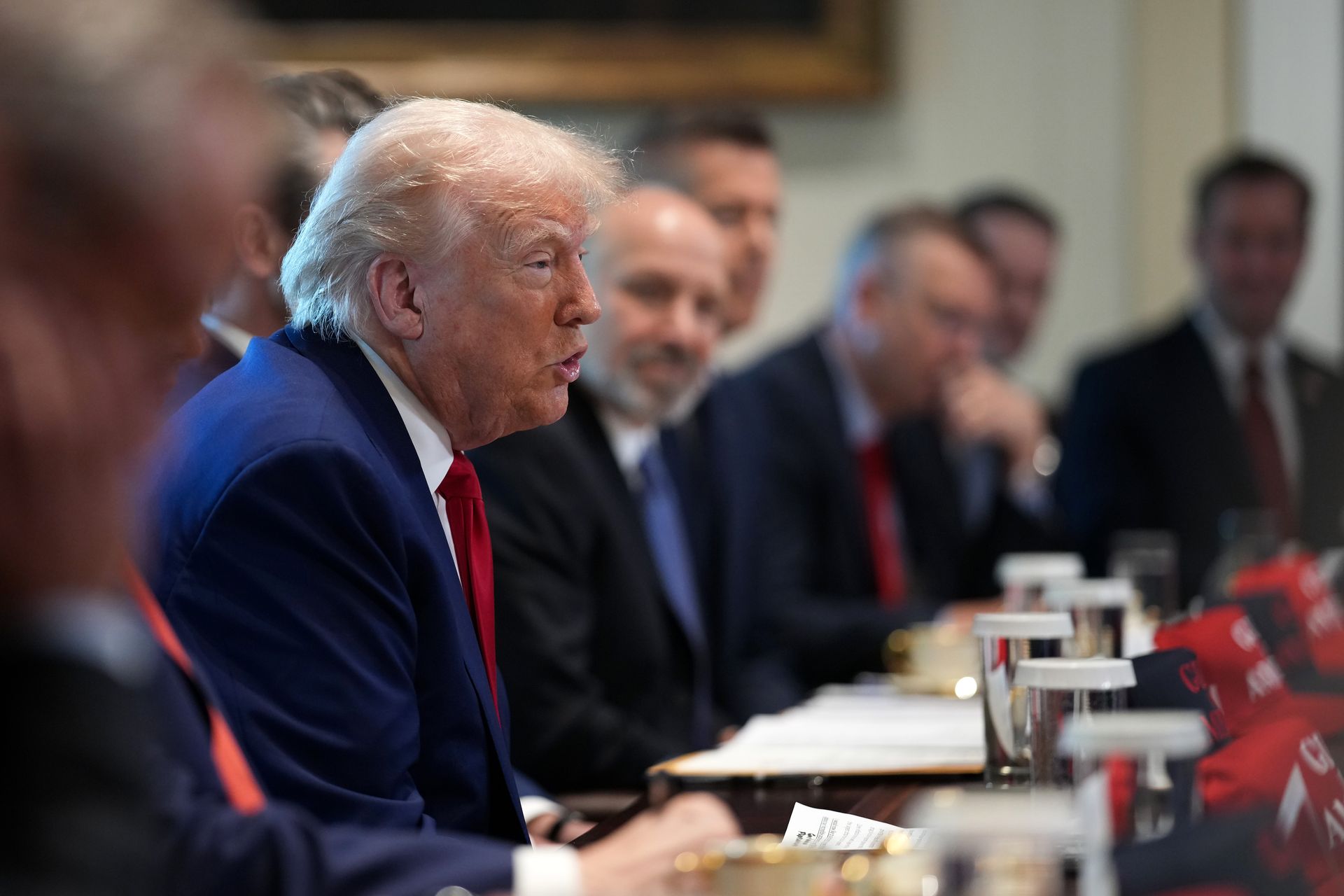
President Donald Trump speaks during a Cabinet meeting at the White House on April 30, 2025 in Washington, DC. (Andrew Harnik/Getty Images)
The Trump administration warned in a Supreme Court filing that a loss at the high court jeopardizes ongoing trade negotiations with "dozens" of foreign governments.
The late-Wednesday petition from Solicitor General John Sauer asked for the high court to swiftly overturn a lower court's determination that the barrage of so-called reciprocal tariffs exceeded President Donald Trump's legal authority.
"The stakes in this case could not be higher," the petition said, adding that stripping the president's ability to unilaterally impose tariffs risks exposing the U.S. to retaliation from trade partners "without effective defenses and thrust America back to the brink of economic catastrophe."
"To the President and his most senior advisors, these tariffs thus present a stark choice: With tariffs, we are a rich nation; without tariffs, we are a poor nation," read the filing.
Those country-specific tariffs will be invalidated in mid-October unless the Supreme Court upholds Trump's interpretation of his emergency power to rewire U.S. trade policy. If the high court agrees with the lower federal court, that decision could open the door for companies to claim tariff refunds depending on the scope of the final ruling.
The petition listed "historic trade deals" with the U.K, E.U., South Korea, Japan, Indonesia, Philippines, and Vietnam, though it acknowledges the Trump administration is still molding frameworks into final agreements. It added that there are still "dozens of countries" negotiating trade deals with the U.S.
Trump has levied tariffs on Canada, Mexico, China, and more in a bid to shrink the trade deficit, arguing it poses an economic emergency that imperils U.S. prosperity. Most analysts, though, say the trade deficit isn't a dire threat to the economy. It tends to grow when U.S. companies snap up foreign products in healthy economic times and shrinks when Americans shuns exports
New data from the Commerce Department released Thursday showed U.S. imports and exports rose in the month of July. Imports climbed 5.9% to $283 billion while exports also increased 0.3% to $180 billion compared to the prior month. The trade deficit, or the gap between U.S. imports and exports stood at $78 billion.
Join 500,000+ readers who start their day with Quartz.
By subscribing, you agree to our Terms of Service and Privacy Policy.