Major trade talks between the U.S. and China wrapped up in Stockholm following a two-day meeting, and both negotiating teams appeared to be closing in on a second truce to prevent steeper tariffs from snapping back on August 12.

The Stockholm talks were the second round of discussions between the U.S. and Chinese governments aimed at salvaging trade relations
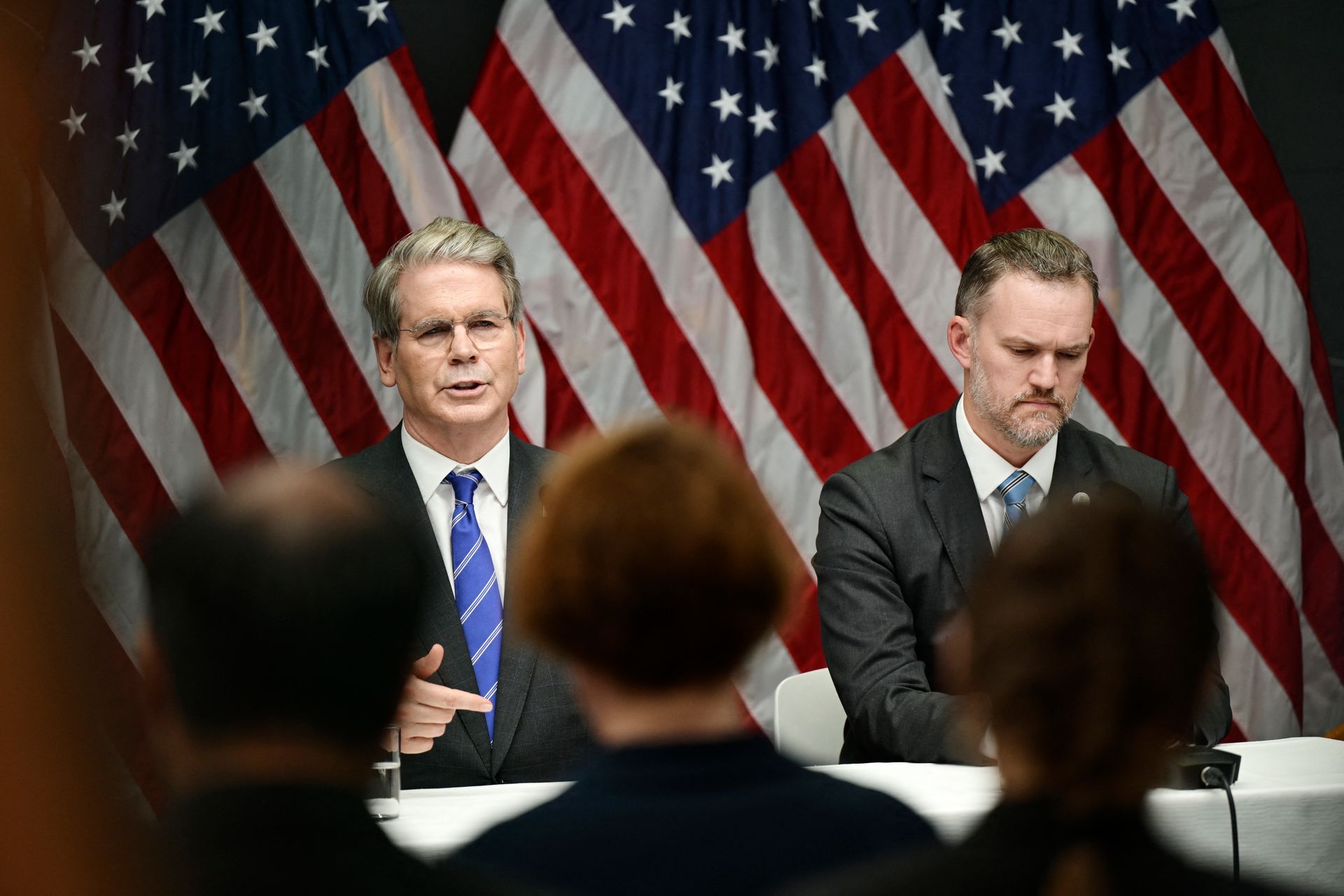
US Treasury Secretary Scott Bessent (L) and US Trade Representative Jamieson Greer address a press conference in Stockholm, Sweden on July 29, 2025. (Photo by MAGNUS LEJHALL/TT News Agency/AFP via Getty Images)
Major trade talks between the U.S. and China wrapped up in Stockholm following a two-day meeting, and both negotiating teams appeared to be closing in on a second truce to prevent steeper tariffs from snapping back on August 12.
Treasury Secretary Scott Bessent and U.S. Trade Representative Jamieson Greer spearheaded the U.S. negotiating team in the Swedish capital of Stockholm. President Donald Trump said he expected to be briefed by the pair on the discussions on Wednesday, shortly after returning from a five-day trip that blended his golf business and diplomacy.
“[Bessent] felt very good about the meeting,” Trump told reporters aboard Air Force One. “Better than he felt yesterday. Yesterday I said, ‘Here we go again.’ But today it worked out. I think we'll resolve this problem.”
“We'll either approve it or not,” Trump added. He also said he hoped to meet Chinese leader Xi Jinping sometime before the end of the year.
Bessent later said in a CNBC interview that the talks proceeded on broader issues, rather than specific ones from prior meetings. “I can say the meetings were very far reaching, robust, and highly satisfactory,” he said. The Treasury Secretary added that the talks with Chinese officials focused on further loosening rare earth export limits, which he described as “clunky.” Bessent also said U.S. officials pushed the Chinese government to reorient its economy so that it is powered by consumption rather than manufactured exports, part of the Trump administration’s effort to shrink the trade deficit between Washington and Beijing.
The Stockholm talks were the second round of discussions between the U.S. and Chinese governments aimed at salvaging trade relations. Earlier discussions in London and Geneva yielded a truce that unwound triple-digit tariffs on Chinese imports and restarted exports of U.S. tech products to Beijing. Then, China agreed to restart rare earth exports that, while restricted, had threatened to cripple supply chains — especially for automakers.
The U.S. still maintains a 30% tariff on Chinese imports, while China has kept a 10% tax on U.S. imports.
The Trump administration recently struck a trade agreement with the European Union, setting a 15% tariff on European imports, while U.S. exports to the 27-member bloc will be duty-free. A similar deal was forged with Japan, another major U.S. trading partner. However, that still leaves dozens of nations racing to agree to trade deals with the Trump administration to avoid double-digit tariffs that kick in on August 1, a deadline imposed by the president.
Commerce Secretary Howard Lutnick said it seemed probable that the U.S. and China would continue ironing out the finer points without needing to reimpose super-sized tariffs.
“Is that a likely outcome? Sure, it seems that way, but let’s leave it to President Trump to decide," Lutnick said Monday in a Fox News interview.
Join 500,000+ readers who start their day with Quartz.
By subscribing, you agree to our Terms of Service and Privacy Policy.