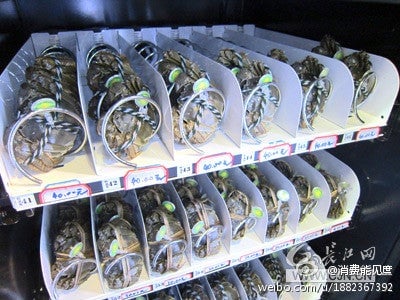
It’s that time of year again, when the people of China unite in tearing apart exoskeletons to suck up the flesh of hairy crabs. From August to October, the crabs—which get their name from the hair-like tendrils that grow on their claws—sell like hotcakes throughout China.
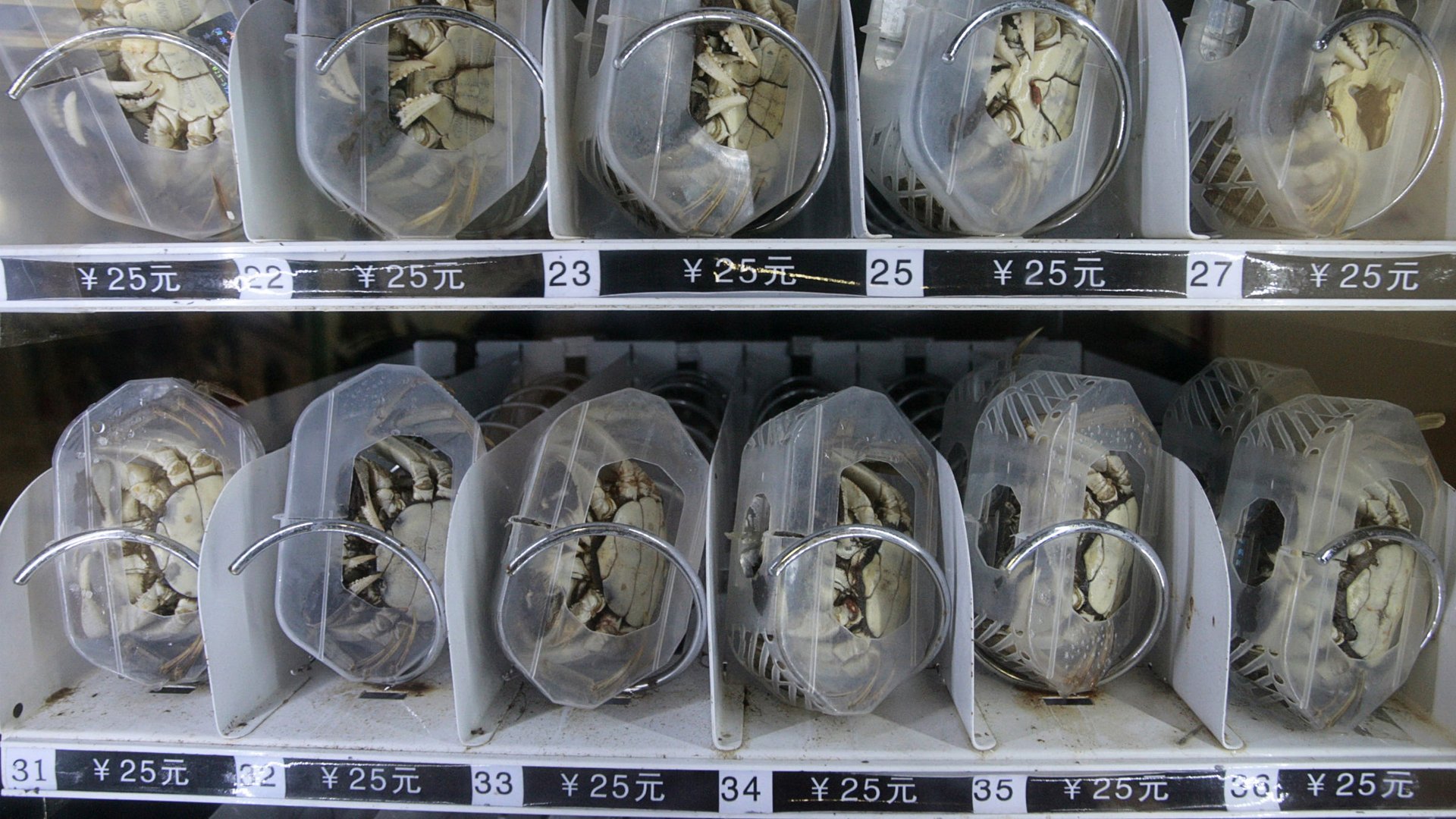
It’s that time of year again, when the people of China unite in tearing apart exoskeletons to suck up the flesh of hairy crabs. From August to October, the crabs—which get their name from the hair-like tendrils that grow on their claws—sell like hotcakes throughout China.
Except, hotcakes don’t sell in vending machines. Live hairy crabs? Apparently, yes. On September 11, a vending machine stocked with live crabs appeared on a street in Hangzhou, the capital of Zhejiang province. The machine, which is restocked daily, sells crabs for around 20 yuan ($3.27), along with the appropriate accoutrements (crab vinegar and two bags of ginger tea).
Join 500,000+ readers who start their day with Quartz.
By subscribing, you agree to our Terms of Service and Privacy Policy.
“It arrived just this evening—we’re the first company in Hangzhou to have one!” Mr. Liu, the vending machine’s owner, told City Express. Liu, who owns the shop next door, is hoping to capture after-hours demand for crabs with the self-service machine. ”Crab shops like ours, they generally close at night,” said Liu. “But what are people to do at night when their stomach starts to feel empty and they want to chow down on a hairy crab and knock back some booze?”
If you assumed this cutting-edge invention was brand new, you were wrong. In 2010, another crab vending machine appeared in a Nanjing subway station, pictured below:
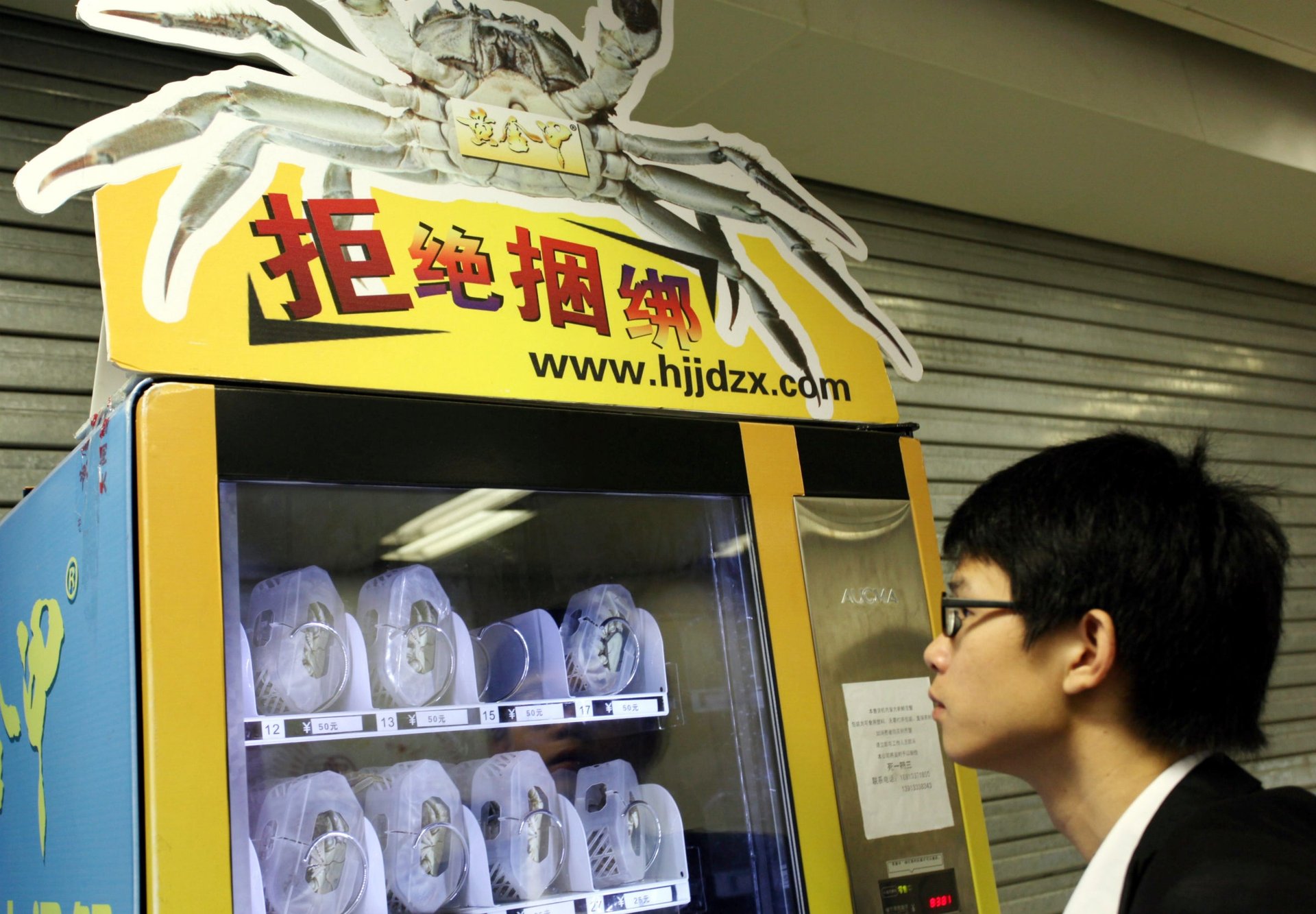
Liu bought the latest crab machine from a man named Shi Tuanjie, chairman of the Gaochun Double Lake Crab Company, who owned the original machine pictured above. In its heyday, Shi’s original machine sold 200 crabs a day and boasted crab-savvy innovations, such as climate control and packaging:
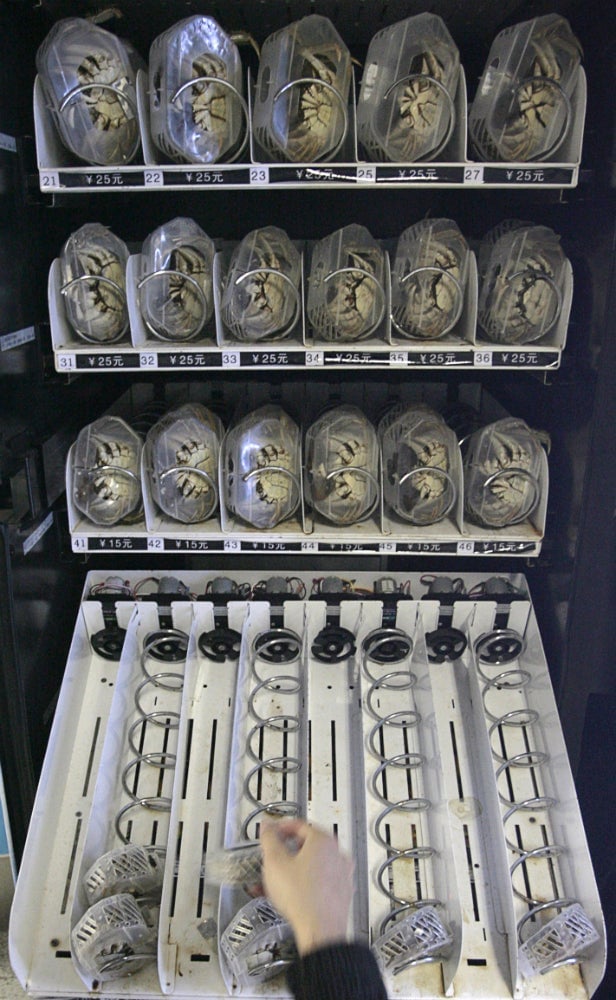
But when hairy crab season rolled around in 2011, Double Lake didn’t restock the Nanjing vending machine. It’s not clear why, but local media reports suggests it was more successful as a marketing stunt than anything else. “Since more people ogled the vending machine crabs than actually bought them, the crab mortality rate was fairly high,” said the Yangzi Evening News (link in Chinese).
Even if Hangzhou’s vending machine isn’t all that profitable either, Liu, like his predecessor, is banking on the machine’s marketing benefits in the hopes of boosting his store’s crab brand.
But Liu may have a sales advantage over Shi: the brand integrity of his merchandise. Shi’s crabs came from Gaochun Lake, an area where crabs are considered inferior to those of Yangcheng Lake, the origin of Liu’s crabs. (Gaochun Lake has been associated with so-called “bath crabs” (paywall)—which are raised in questionable habitats and sold shortly before harvest season to upmarket farms in Yangcheng or Taihu Lakes. Those farms then mix the inferior crabs in with the higher-pedigree crabs, passing them off as the latter when they sell them to distributors.)
But there may be a weak spot in Liu’s endeavor. It looks like Golden Armor wasn’t part of his deal: