What’s good for the economy isn’t necessarily good for the people living in it. Case in point: The United Kingdom, where David Cameron’s Conservative-led coalition government is pushing forward with a popularly mandated overhaul of the country’s somewhat bloated public sector. Reforms might well be needed. But they’re clearly painful. In fact, according to Citi analysts, the UK is going through an “unprecedented squeeze on living standards,” thanks to falling incomes and rising costs of necessities like energy and utilities. Citi economists crunched a bunch of different gauges of “real” or inflation-adjusted measures of economic wellbeing. Here’s how they look.

Any way you slice them, the UK numbers are godawful:
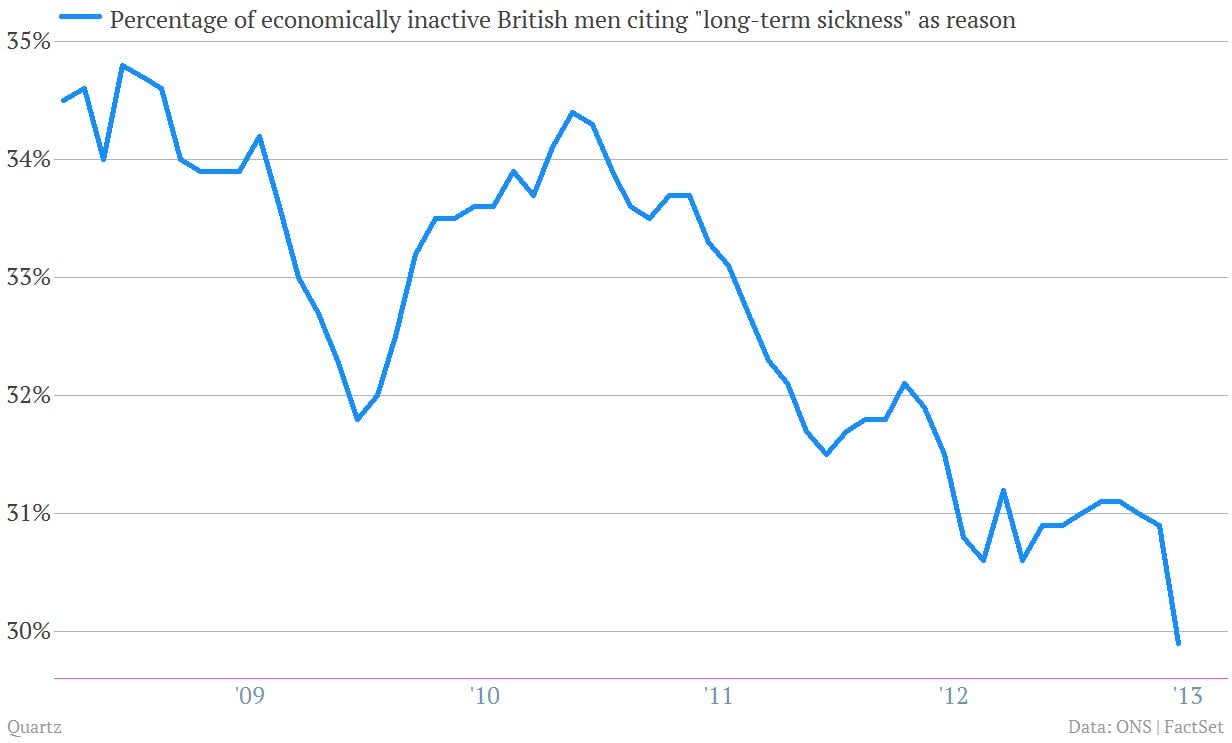
Why are wages low? It’s pretty simple: high unemployment and an ample supply of workers. One source of those workers, comes from the decline in the number of Brits on the dole, as we’ve spotlighted before:
And also, costs of living are rising. (That’s a result of rising indirect taxes, energy and utility costs as well as a range of other semi-regulated prices, Citi analysts say, including gas, water, rail fares and university tuition.) So what’s the upshot?
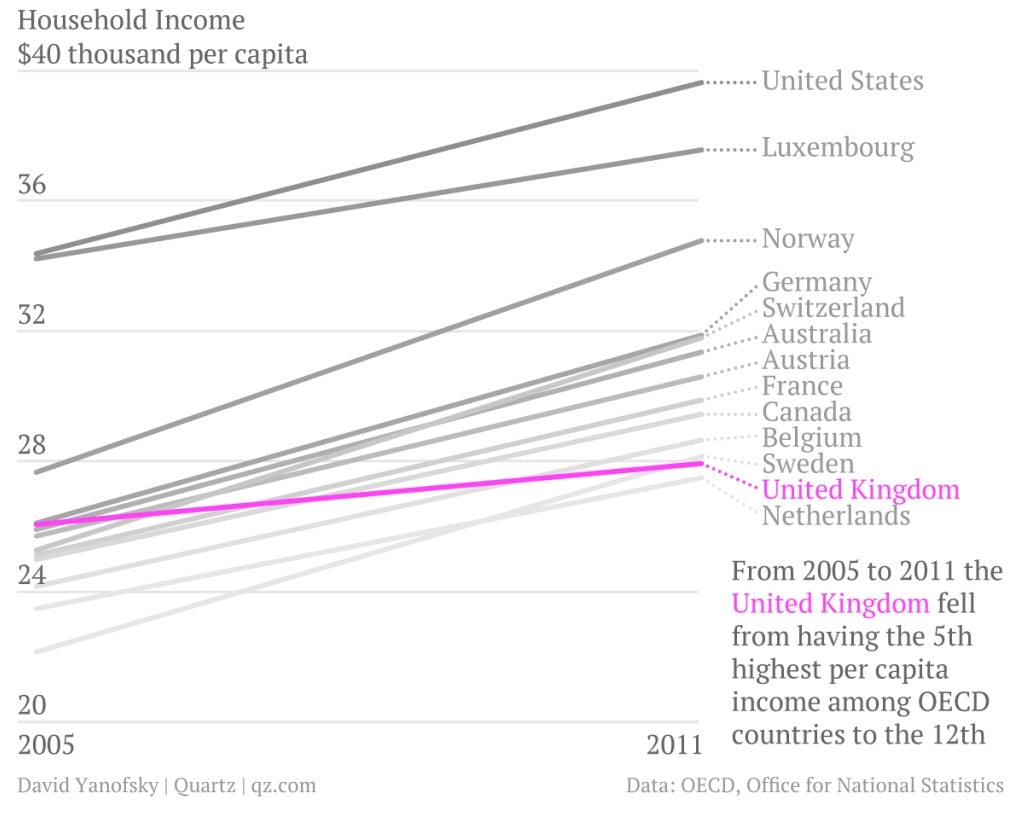
Brits are losing quite a bit of ground compared to other developed countries in recent years. As we’ve told you before, by some measures they’re now poorer than the French, Swiss, Belgians, Swedes, Austrians, Aussies and Canadians.