China is desperately looking for a way to alleviate the choking air pollution that has besieged its cities this winter. Since shutting down all of the country’s coal-powered power plants seems to be a non-starter, some scientists think they have a promising alternative: Cleaning the air by pumping a fine mist of -320 degrees Fahrenheit (-195.5 Celsius) liquid nitrogen into the air.
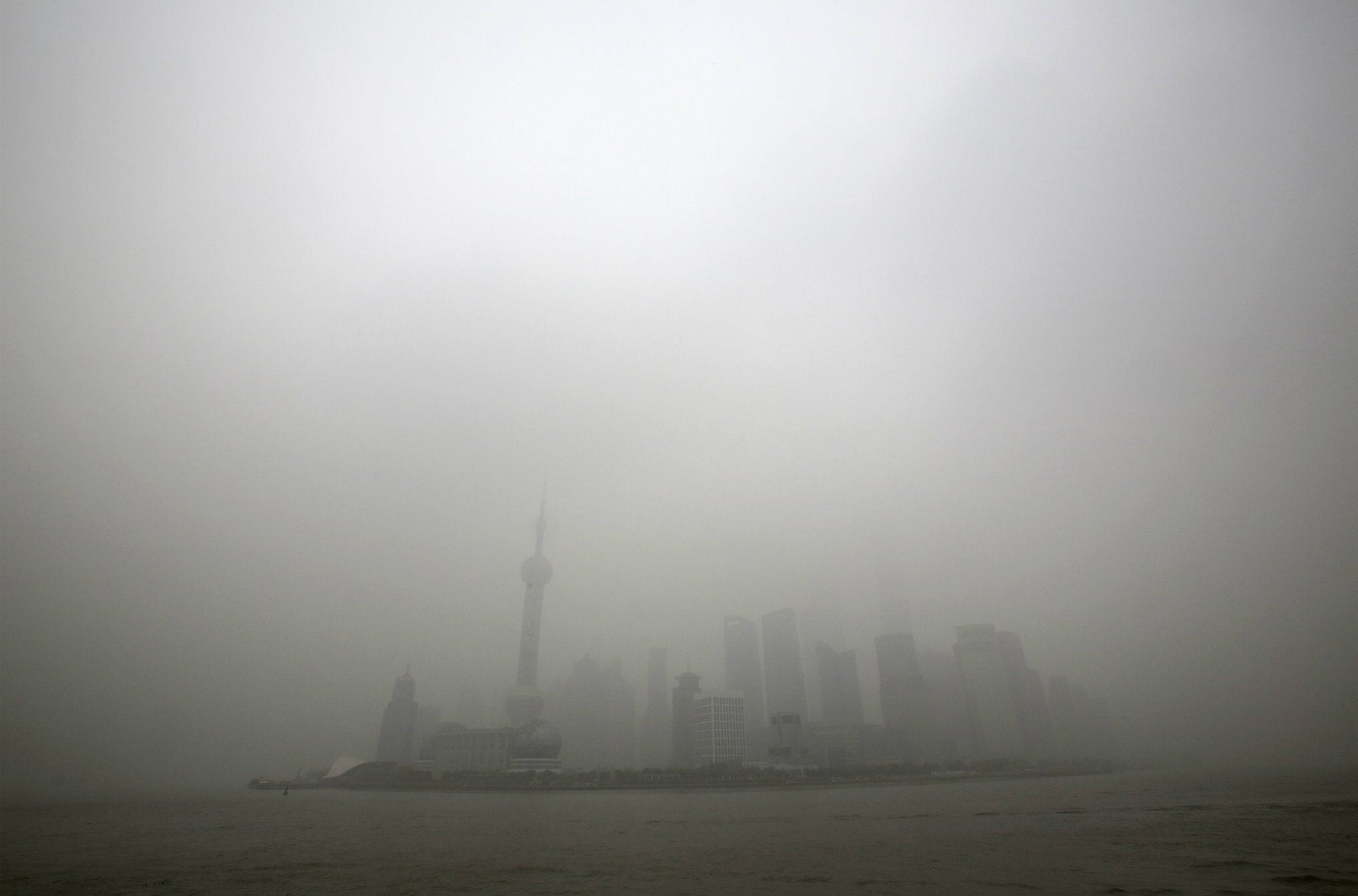
China is desperately looking for a way to alleviate the choking air pollution that has besieged its cities this winter. Since shutting down all of the country’s coal-powered power plants seems to be a non-starter, some scientists think they have a promising alternative: Cleaning the air by pumping a fine mist of -320 degrees Fahrenheit (-195.5 Celsius) liquid nitrogen into the air.
“Experiments showed that in an environment with temperatures below [the] freezing point, liquid nitrogen outperformed all other agents,” He Hui, a researcher at the government’s Beijing Weather Modification Office, told the South China Morning Post. Yes, Beijing has a Weather Modification Office, which along with other provincial meteorological agencies were tasked with finding new ways to combat air pollution.
Join 500,000+ readers who start their day with Quartz.
By subscribing, you agree to our Terms of Service and Privacy Policy.
Quartz confirmed the essential mechanics of how the technique might work with Emily Carino, a postdoctoral researcher in chemical engineering with a PhD from the University of Texas.
“When liquid nitrogen is dispersed in air, it readily absorbs heat from the surrounding atmosphere, causing water vapor to instantly condense. The condensate would drag down particulate matter along with it as it falls to earth,” she said. “The mechanism is sound, though there could certainly be unintended consequences associated with creating a rain of pollutants. The implementation could also be tricky because the reaction occurs so quickly.”
Used improperly, liquid nitrogen is dangerous: It can cause severe cold burns if it comes in contact with skin, and items cooled by liquid nitrogen can stick fast to human skin when touched. Users also need to be wary of asphyxiation, as liquor manufacturer Jägermeister found out the hard way when it hosted a party in Mexico where liquid nitrogen was added to a swimming pool—causing several guests to faint as oxygen was displaced.
Weather manipulation isn’t new for China. Before the Beijing Olympics, China’s government relied on “cloud seeding” to insure clear skies. The process, which was developed in part by novelist Kurt Vonnegut’s brother Bernard in the 1940s, involves shooting silver iodide into clouds, where it creates ice-forming nuclei, sparking rainfall.
