It might not be popular. But it’s working.
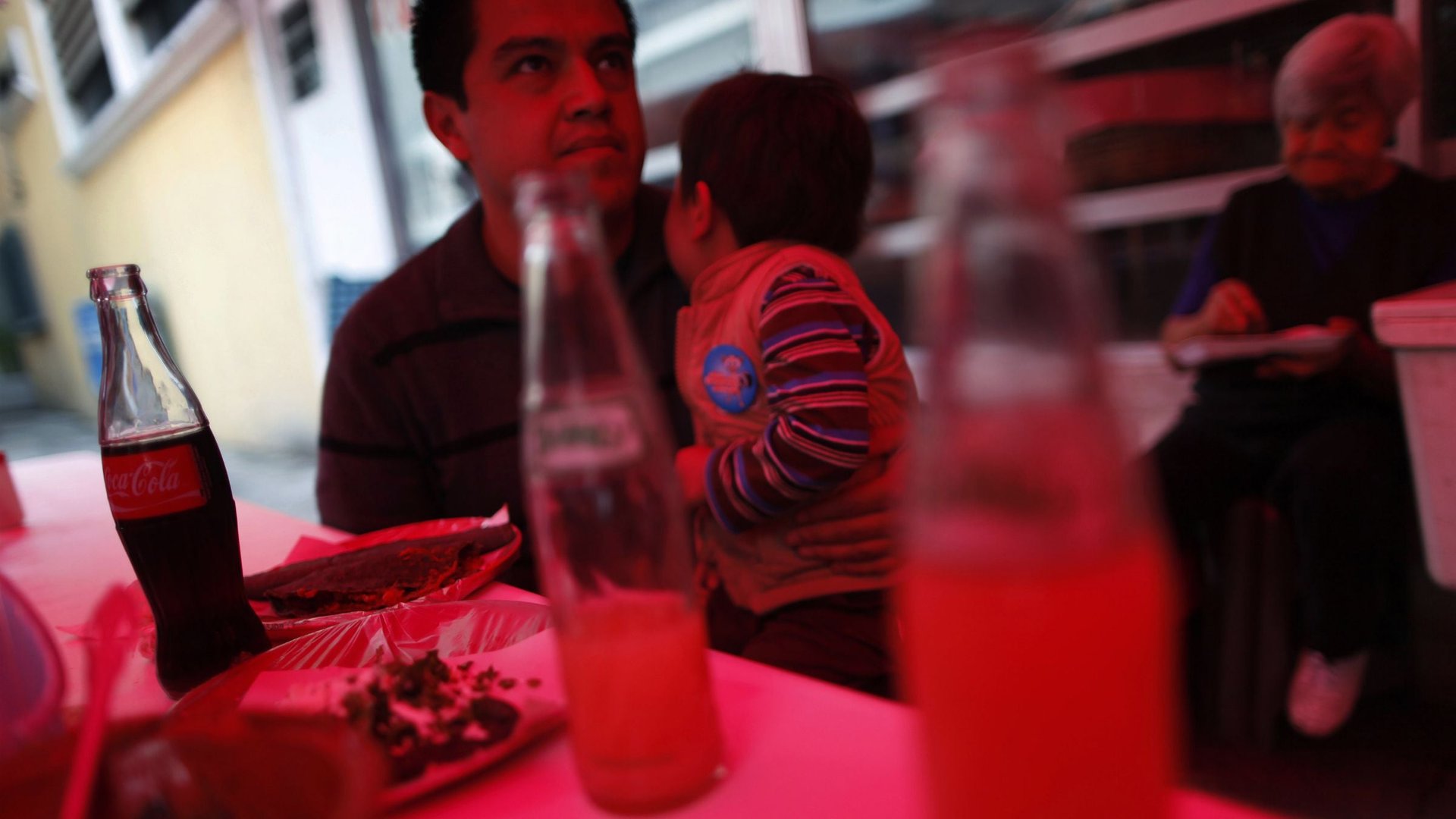
It might not be popular. But it’s working.
Latin America’s largest Coca-Cola $KO bottler, Coca-Cola Femsa, yesterday reported weak Mexican sales volumes, which slipped 2.8% during the quarter excluding the impact of mergers and acquisitions, as a new excise tax on soda ate into consumer demand for sugary drinks. Rival Arca Continental reported a similar sales slip in Mexico, as did Pepsi bottler Organizacion Cultiba.
Join 500,000+ readers who start their day with Quartz.
By subscribing, you agree to our Terms of Service and Privacy Policy.
While soda makers might grumble, the decline of Mexican soda sales is rather good news.
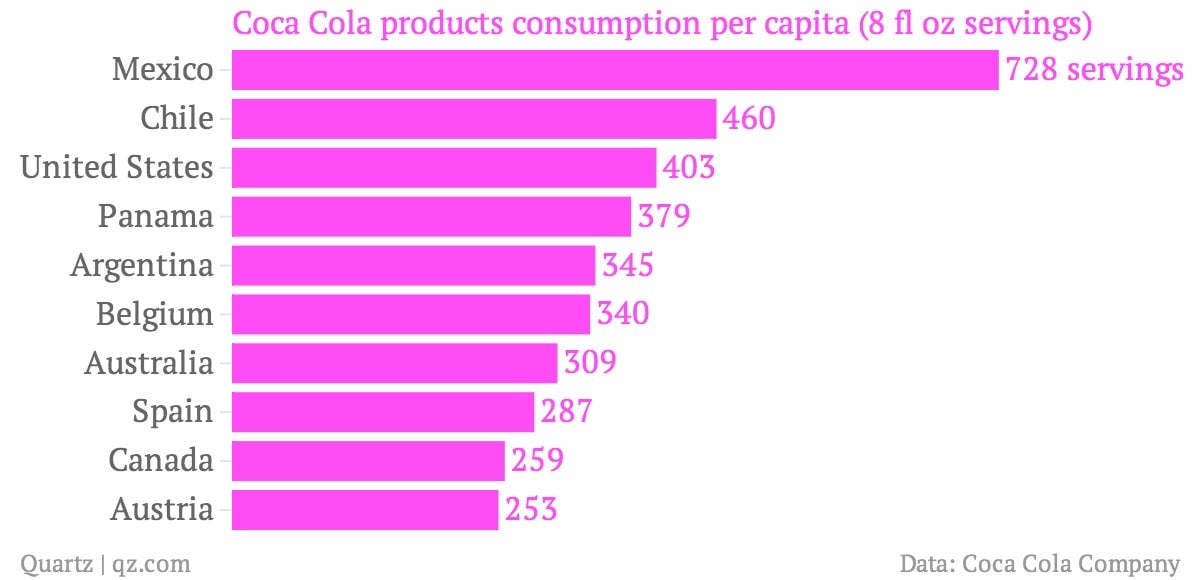
Mexico is a giant soda drinker. It is the single largest per capita consumer of Coca-Cola products, for example. In addition, Mexico is one of the world’s most obese countries. Diabetes is a top killer of its people.
The soda tax, one peso (roughly US$0.08) per liter, which went into effect this year, is a sensible way to begin to address the problem. Of course, soda isn’t the only source of calories. The country also levied a tax on junk food in an effort to both rein in runaway obesity and raise some much-need revenue.
But there’s no telling how this will work out over the long run. There’s a rich tradition of taxes aimed at curbing harmful behavior in economics, but they don’t always take. (Denmark’s fatty food tax failed when Danes decided to simply drive to Germany for cheaper, less-than-healthy fare.) That said, sometimes they do. (Sky high cigarette taxes are widely credited with cutting smoking rates, if not stamping out the habit completely.)
So, is Mexico’s soda tax here to stay? Don’t bet on it. The arrival on the scene of Mexico’s new taxes—including taxes on “luxury items” such as pet food—coincided with a pronounced soft patch for Mexico’s economy, and a period of weak consumer sentiment. The popularity of President Enrique Peña Nieto, who has been closely identified with the somewhat paternalistic tax push, is flagging.
That suggests the soda tax could cost Peña Nieto politically, which could make politicians elsewhere—even north of the border—leery of sticking their neck out to fight the powerful forces of big pop.
