When a US district court judge in Vermont ruled against powerful food industry groups on Monday, allowing the state’s plans to require food labeling for genetically modified organisms (GMOs) to move forward, it felt like a victory to the many groups advocating for US consumers’ right to know what goes into their food.
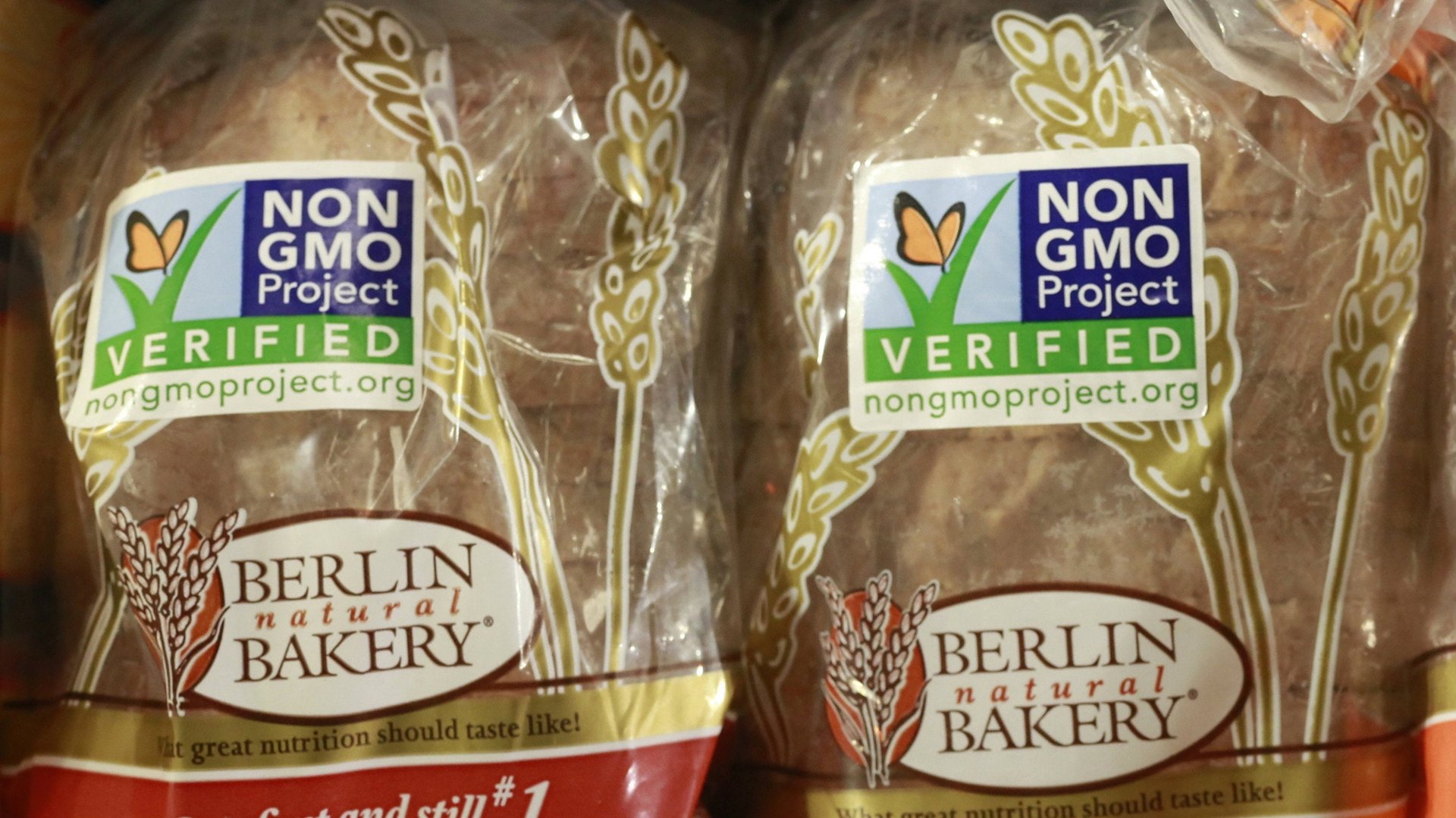
When a US district court judge in Vermont ruled against powerful food industry groups on Monday, allowing the state’s plans to require food labeling for genetically modified organisms (GMOs) to move forward, it felt like a victory to the many groups advocating for US consumers’ right to know what goes into their food.
But those groups might want to hold off on the celebrations. The wheels are already in motion to make sure Vermont’s law never fully comes to fruition. On Tuesday, the Coalition for Safe Affordable Food, along with 370 other groups—including PepsiCo $PEP, Kellogg $K, and Monsanto—submitted a letter to the House of Representatives urging passage of the Safe and Accurate Food Labeling Act, to “ensure that food labeling in the United States is uniform and science-based.”
Join 500,000+ readers who start their day with Quartz.
By subscribing, you agree to our Terms of Service and Privacy Policy.
The key word in that sentence is “uniform.” Essentially, the act would make mandates about food labeling a federal—not state—prerogative.
Such a law wouldn’t just affect Vermont. While it was the first state to enact GMO labeling requirements, Maine and Connecticut have passed similar laws. And more states may follow: As of June 2014, more than 70 bills and ballot initiatives were introduced in thirty states, according to a report from the Environmental Working Group.
Under the proposed bipartisan bill, the Safe and Accurate Food Labeling Act introduced by Reps. Mike Pompeo (R-KS) and G. K. Butterfield (D-NC), the US Food and Drug Administration—not state legislatures—would have the sole authority to require mandatory labeling. Companies’ voluntary labeling, as the coalition’s website states, would still be permitted.
To support the bill, Big Food is doing more than just sending letters—It’s putting its money where its mouth is. A lot of money. Last year, anti-label lobbying nearly tripled—increasing from $23.3 million in 2013 to $63.6 million in 2014, according to a new report from the Environmental Working Group.
Even though supporters of the federal legislation frequently point out that GMOs are safe, advocates for labeling say it’s not necessarily about safety, but rather about information and transparency.
“No, this is not a safety issue,” explained Marion Nestle, the Food Politics author and professor of nutrition at New York University, in a blogged response to Chipotle $CMG’s announcement that it was going GMO-free. “[T]his is a matter of trust. Chipotle customers are offended that GMO foods are not labeled and that they have no choice about whether to eat them.”
If the uniform-labeling bill passes in Congress, it will put the US at odds with the European Union, where food containing GMOs must be labeled as such.
Again, this is not based on scientific findings that GMO foods are dangerous. As the UK’s Food Standards Agency website notes, “We recognise that some people will want to choose not to buy or eat genetically modified foods, however carefully they have been assessed for safety.”
