Over the past year the rise of the populist right-wing UK Independence Party has been charted by a media at first incredulous, and then accepting of the phenomenon. Incredulous, because UKIP isn’t terribly new (it was founded in 1993 and Nigel Farage first became leader in 2006), has always been plagued by scandal, and for a long time was regarded as something of a joke.
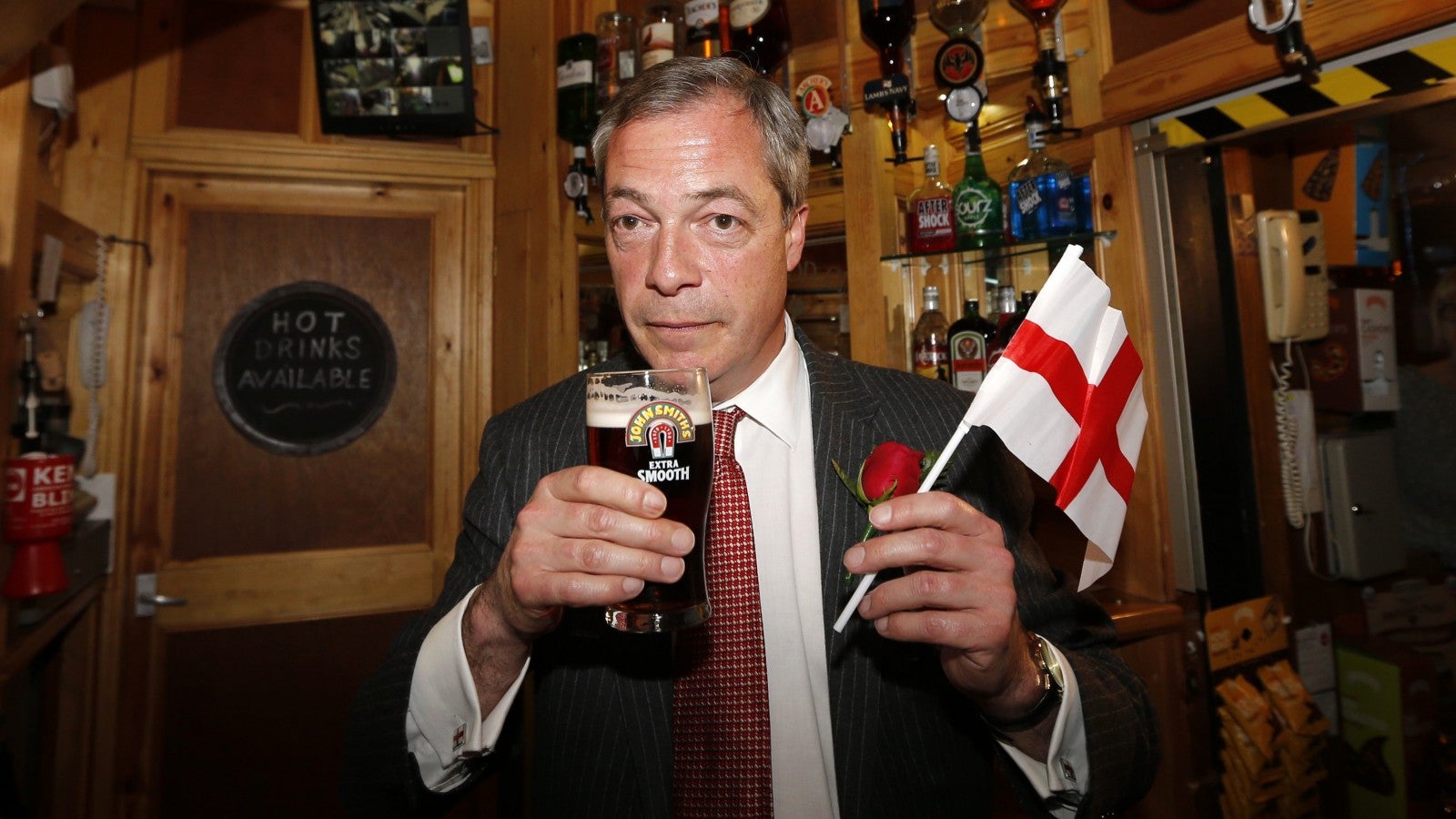
Over the past year the rise of the populist right-wing UK Independence Party has been charted by a media at first incredulous, and then accepting of the phenomenon. Incredulous, because UKIP isn’t terribly new (it was founded in 1993 and Nigel Farage first became leader in 2006), has always been plagued by scandal, and for a long time was regarded as something of a joke.
Its recent popularity has been fuelled by—and is fuelling—anti-immigration sentiment in parts of England. Defections to UKIP by two members of parliament from the ruling Conservative party (leading to local elections that the UKIP candidates (paywall) won) underscored its rise.
Join 500,000+ readers who start their day with Quartz.
By subscribing, you agree to our Terms of Service and Privacy Policy.
Polls have given UKIP around 15% of the vote for months, which could translate into 25 or 30 seats in parliament. One poll back in October predicted the party, which wants the UK to exit the European Union, could win 128 seats.
Now, with the general election just one week away, it could be a very different story. Nate Silver, the US statistician with an uncanny knack for correctly calling baseball games and American elections, crunched the numbers and said UKIP will likely win one seat. That’s right. One.
So what happened?
With all that said, some pollsters still see UKIP winning 30 seats. But the UK’s winner-takes-all electoral system means it wouldn’t actually take a big shift in voting intention for those 30 seats to turn into zero. And coming second in a whole bunch of races won’t get you one jot of power in government.
