We tend to think of ants, and other social insects such as bees and termites, as busy little workers, but it turns out some of them may actually be quite lazy.
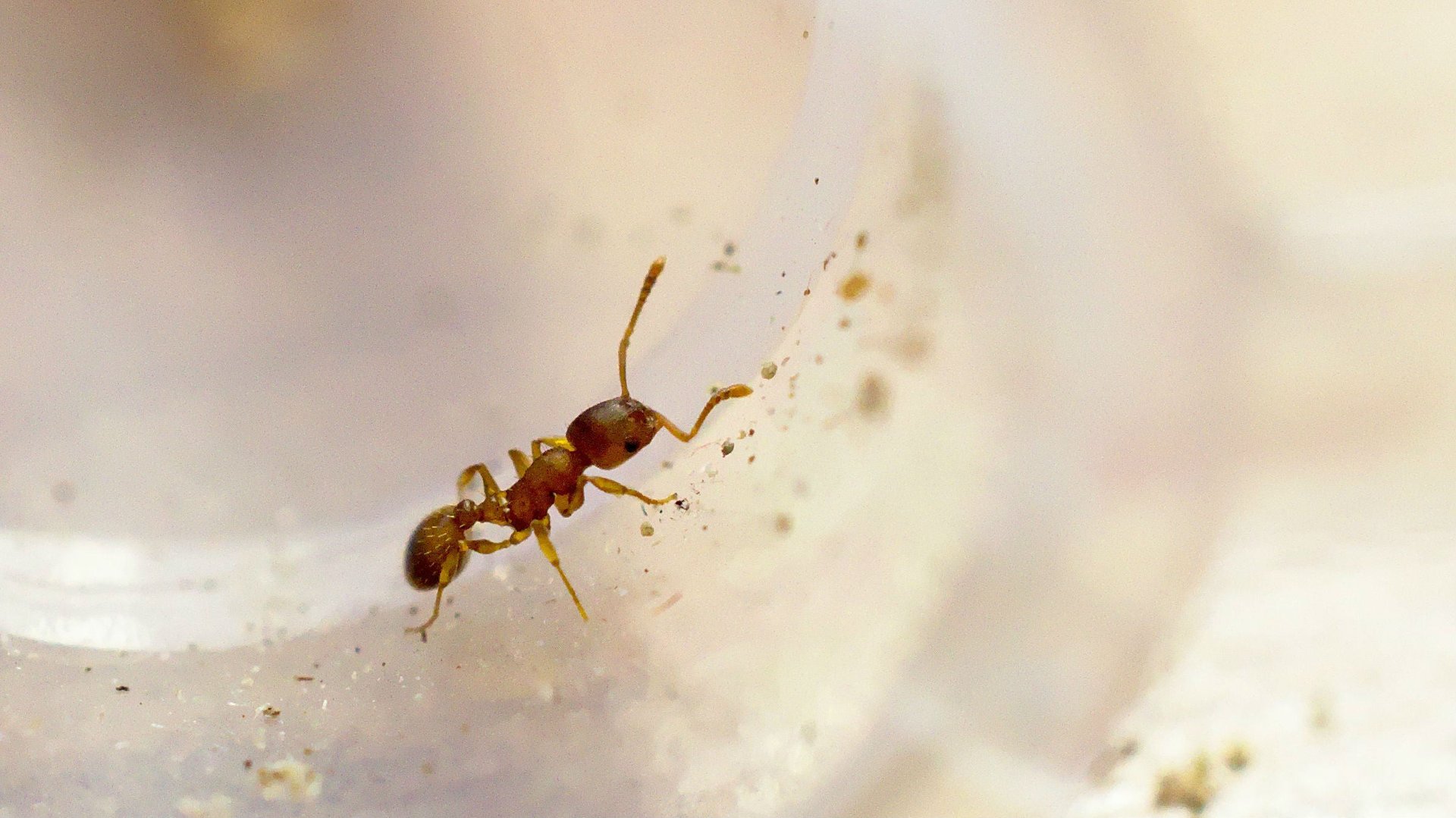
We tend to think of ants, and other social insects such as bees and termites, as busy little workers, but it turns out some of them may actually be quite lazy.
A study (paywall) conducted by researchers at the University of Arizona observed five colonies of Temnothorax rugatulus—a common ant species found across western Canada and the United States—and tracked their movements for three random days over a three weeks. Before they began their observations, they painted certain ants so they could track their individual activities. The team recorded five-minute videos of the colonies at four-hour intervals, and categorized the type of work they were doing at a given time.
Join 500,000+ readers who start their day with Quartz.
By subscribing, you agree to our Terms of Service and Privacy Policy.
They were surprised to find that almost half of the ants were actually fairly inactive throughout the day. While their counterparts busied themselves with nest-building or foraging, these ants were “effectively ‘specializing’ on inactivity,” according to the paper.
Which raises the question: why?
At present, scientists aren’t sure. Daniel Charbonneau, a graduate student at the University of Arizona and co-author of the paper, told the New Scientist that there are could be several reasons for certain ants do less than others, such as age or slower metabolisms. Other scientists have suggested that they could be on standby, in case an outside force threatens the colony.
The photograph above was shared by Flickr user Herman under a Creative Commons license. It has been cropped.
