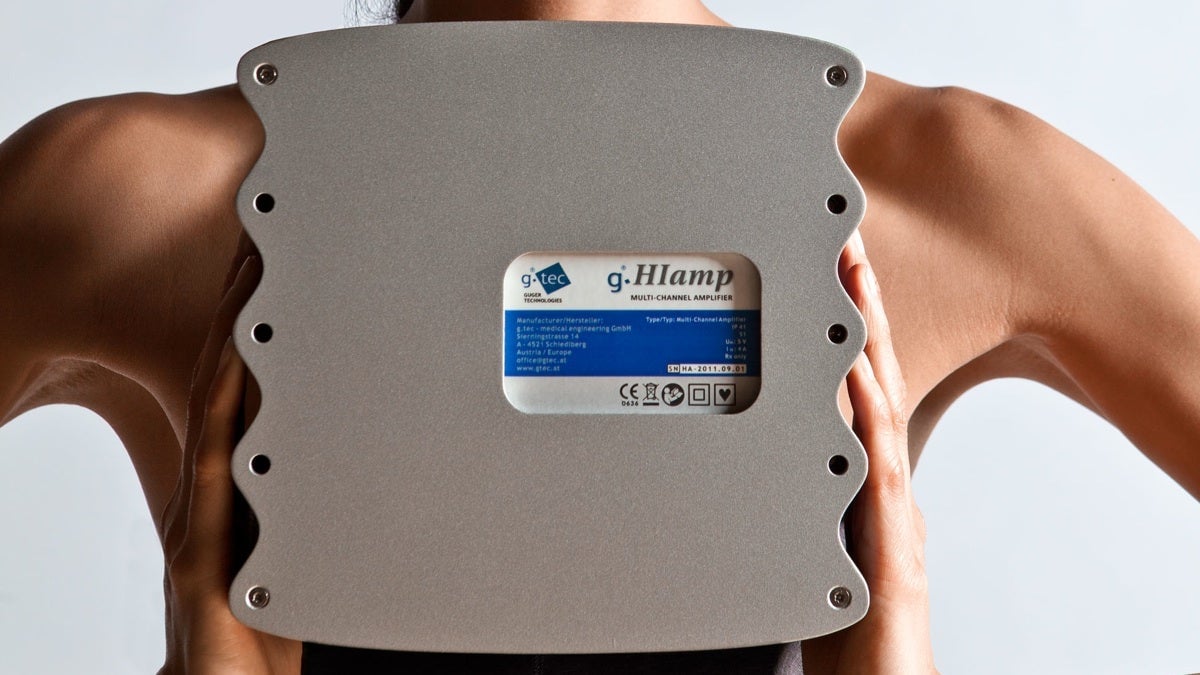
Amplifiers for the human brain, designed to allow people with paralysis to interact with the world, aren’t the most easily understood technology. So g.tec, the company that makes them, has come up with the following creative marketing strategy: Convince us that we’ll soon be interacting with computers through thought alone.
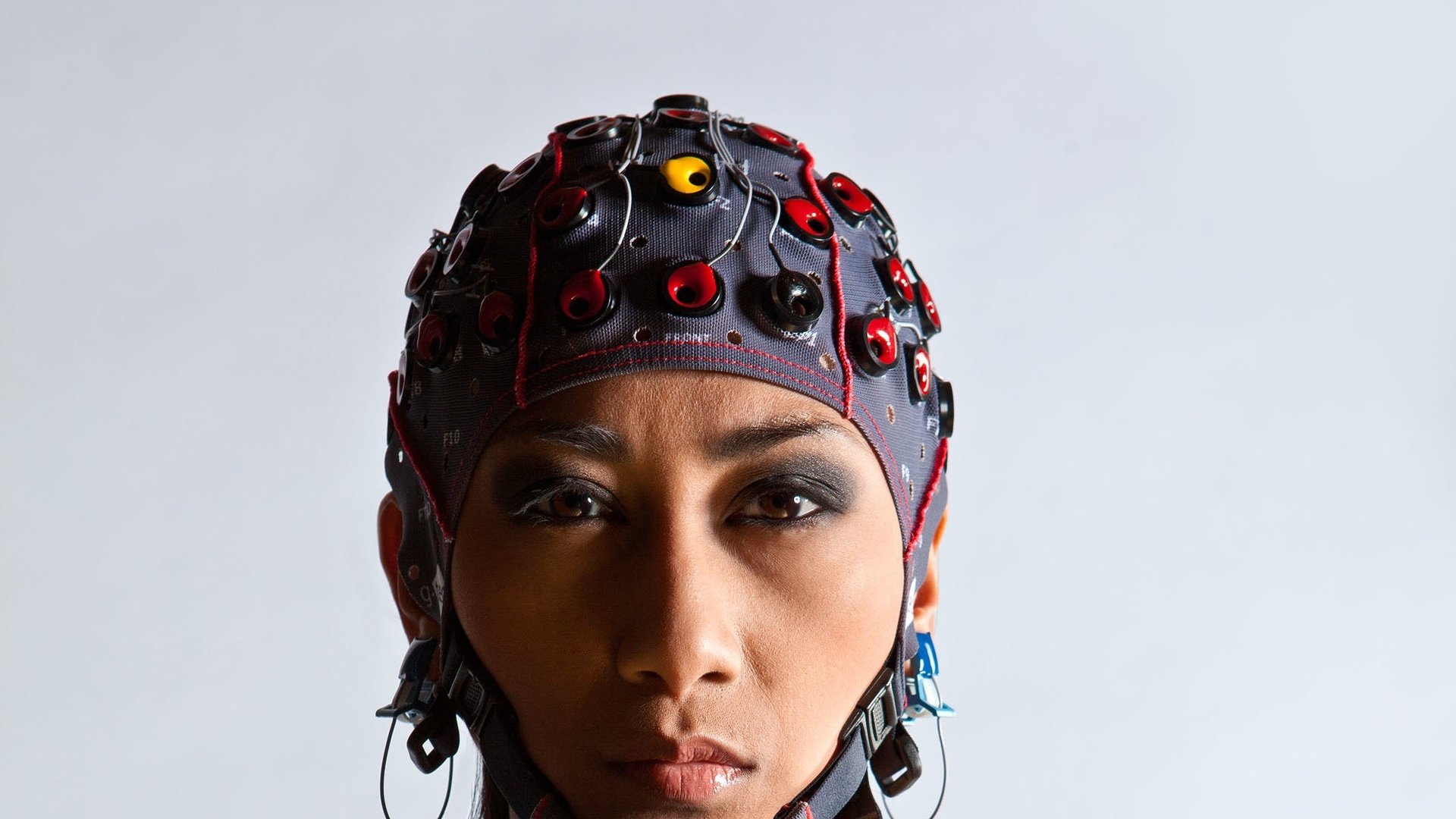
Amplifiers for the human brain, designed to allow people with paralysis to interact with the world, aren’t the most easily understood technology. So g.tec, the company that makes them, has come up with the following creative marketing strategy: Convince us that we’ll soon be interacting with computers through thought alone.
Here, for example, is a university project in which a student uses his brain to control a Rube-Goldbergian sort of etch-a-sketch, allowing him to write—albeit very crudely and slowly—without picking up a pen. And today at tech fair CeBIT, the company unveiled a new application that allows people, able-bodied and not, to paint pictures without lifting a finger.
Join 500,000+ readers who start their day with Quartz.
By subscribing, you agree to our Terms of Service and Privacy Policy.
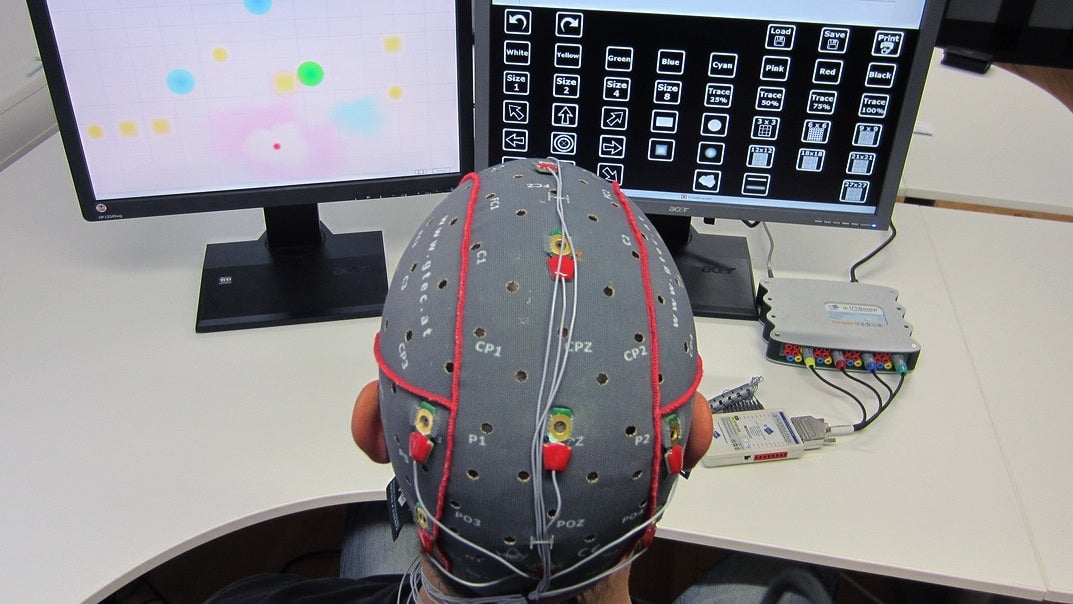
The interface requires that you wear a skull cap studded with electrodes, but that won’t seem so awkward once we’ve all accepted that wearing cameras on our faces—aka Google $GOOGL Glass—is completely normal.

The results (above) are primitive, but maybe that’s just because the medium awaits its Picasso.
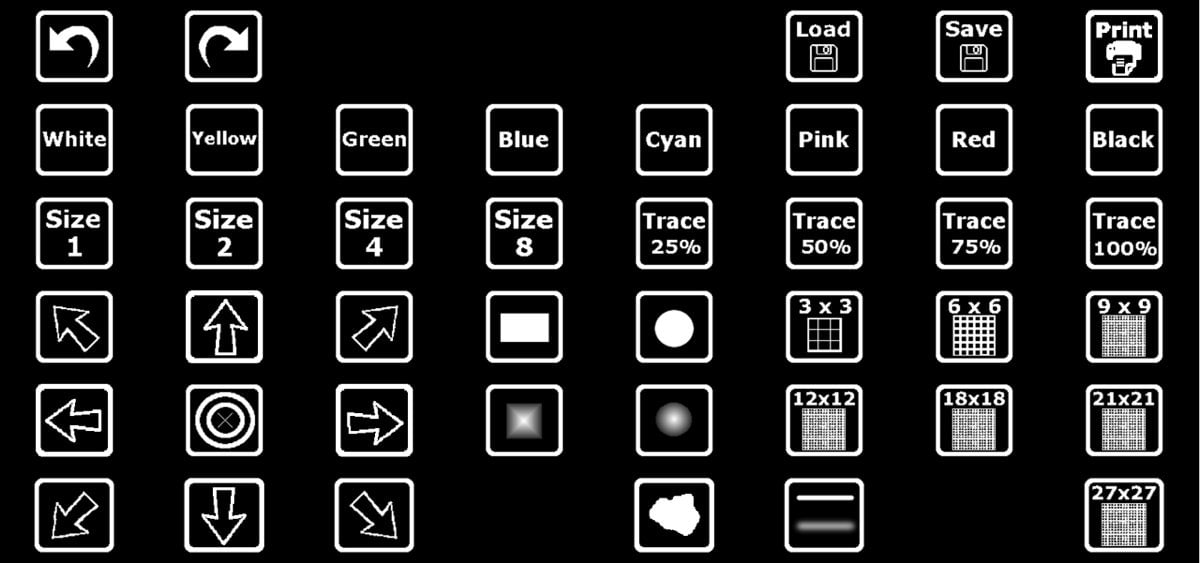
In addition to pushing a paintbrush around the screen, the system allows people to select the tools they’ll use when drawing, thanks to a modified version of g.tec’s EEG-based spelling system, which can allow patients who are paralyzed to communicate through words.
The able-bodied might also benefit from this technology: It could be a supplement to trackpads, keyboards, touchpanels and other systems for interacting with computers. G.tec already has software that can detect which items on a screen a user is paying attention to. If you’re used to working at a computer screen that’s full of different windows, imagine a system that brings whichever one of them you’re looking at to the foreground, so you don’t have to click on it. Of course, whether that would be worth wearing a silly hat for is another question.
