Japan’s prime minister took the stage on Wednesday to announce the third pillar of his “Abenomics” suite of policies, designed to shake the country out of its decade-long economic slump . It didn’t go very well. The Nikkei rose more than 1% as he started speaking, then within minutes reversed its gain, and then it kept falling, eventually closing down 3.8%.
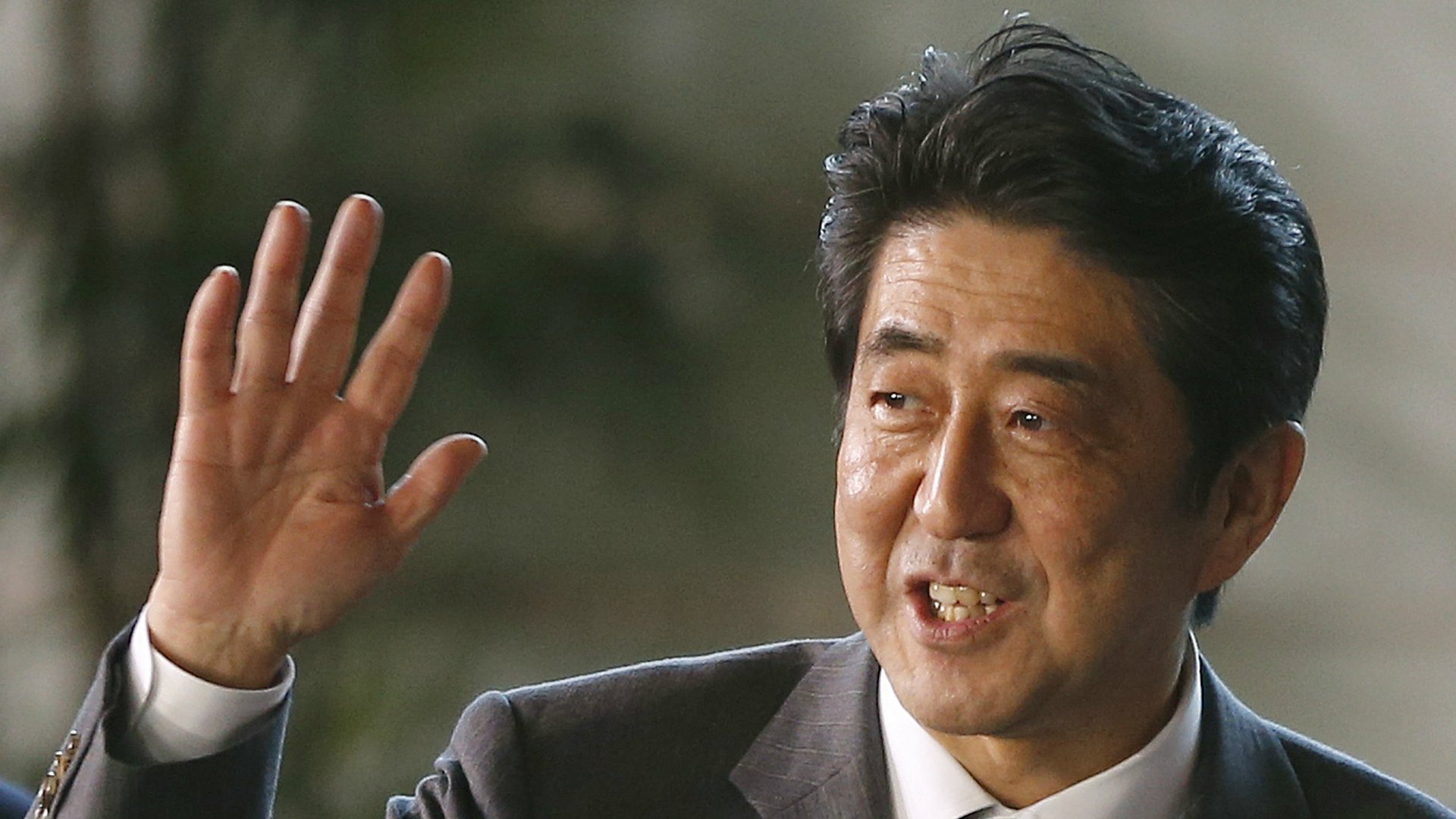
Japan’s prime minister took the stage on Wednesday to announce the third pillar of his “Abenomics” suite of policies, designed to shake the country out of its decade-long economic slump . It didn’t go very well. The Nikkei rose more than 1% as he started speaking, then within minutes reversed its gain, and then it kept falling, eventually closing down 3.8%.
It’s not that Abe’s plans were bad—they were just boring. Mizuho Trust & Banking analyst Takahiro Nakano told Bloomberg that “shares are being sold because Abe’s plan didn’t have any surprises that meet overblown expectations in the market.”
Join 500,000+ readers who start their day with Quartz.
By subscribing, you agree to our Terms of Service and Privacy Policy.
One key plank in Abe’s speech was a pledge to increase by half the amount of investment in Japan’s electricity industry, to about ¥30 trillion ($300 billion) over the next ten years. Renewable sources of energy and high-tech coal power plants will receive particular emphasis, although most noticeable was what Abe did not say—there was no mention of when the nuclear reactors that once accounted for over a quarter of Japan’s electricity generation would be restarted. That, combined with yet another report of contaminated water from the disaster-stricken Fukushima Dai-Ichi nuclear power plant sent shares in its operator, Tokyo Electric Power, plummeting 16%.
Other new policies included the following.
