In three devastatingly simple photos, the yawning gap of inequality between white women and women of color is brought to forefront.
In three devastatingly simple photos, the yawning gap of inequality between white women and women of color is brought to forefront.
In a photo essay titled “Let’s Talk About Race,” photographer Chris Buck explores stereotypical representations of white and non-white girls and women—and flips it. The photo essay appeared in the May issue of Oprah Winfrey’s magazine, O.
Join 500,000+ readers who start their day with Quartz.
By subscribing, you agree to our Terms of Service and Privacy Policy.
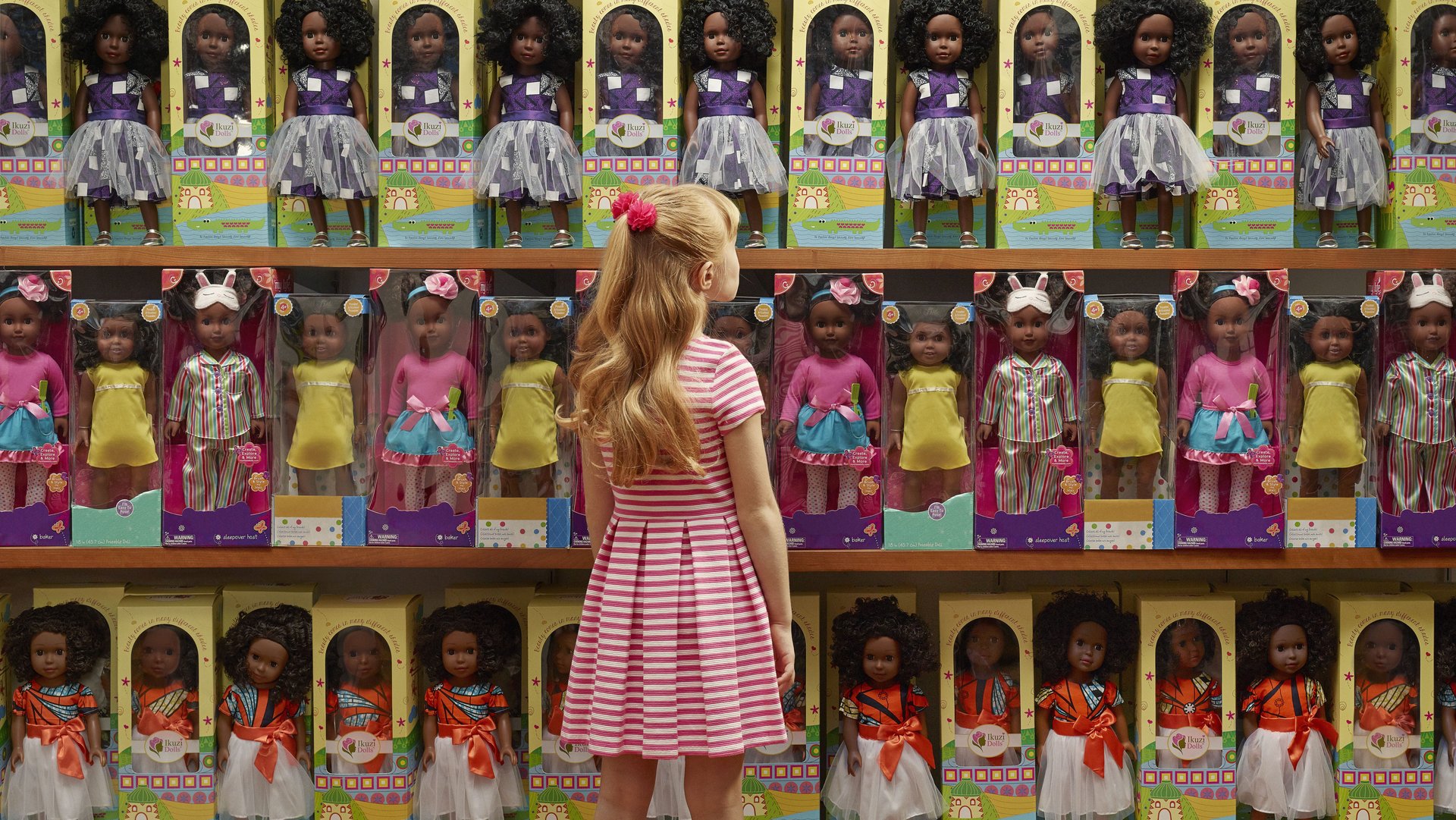
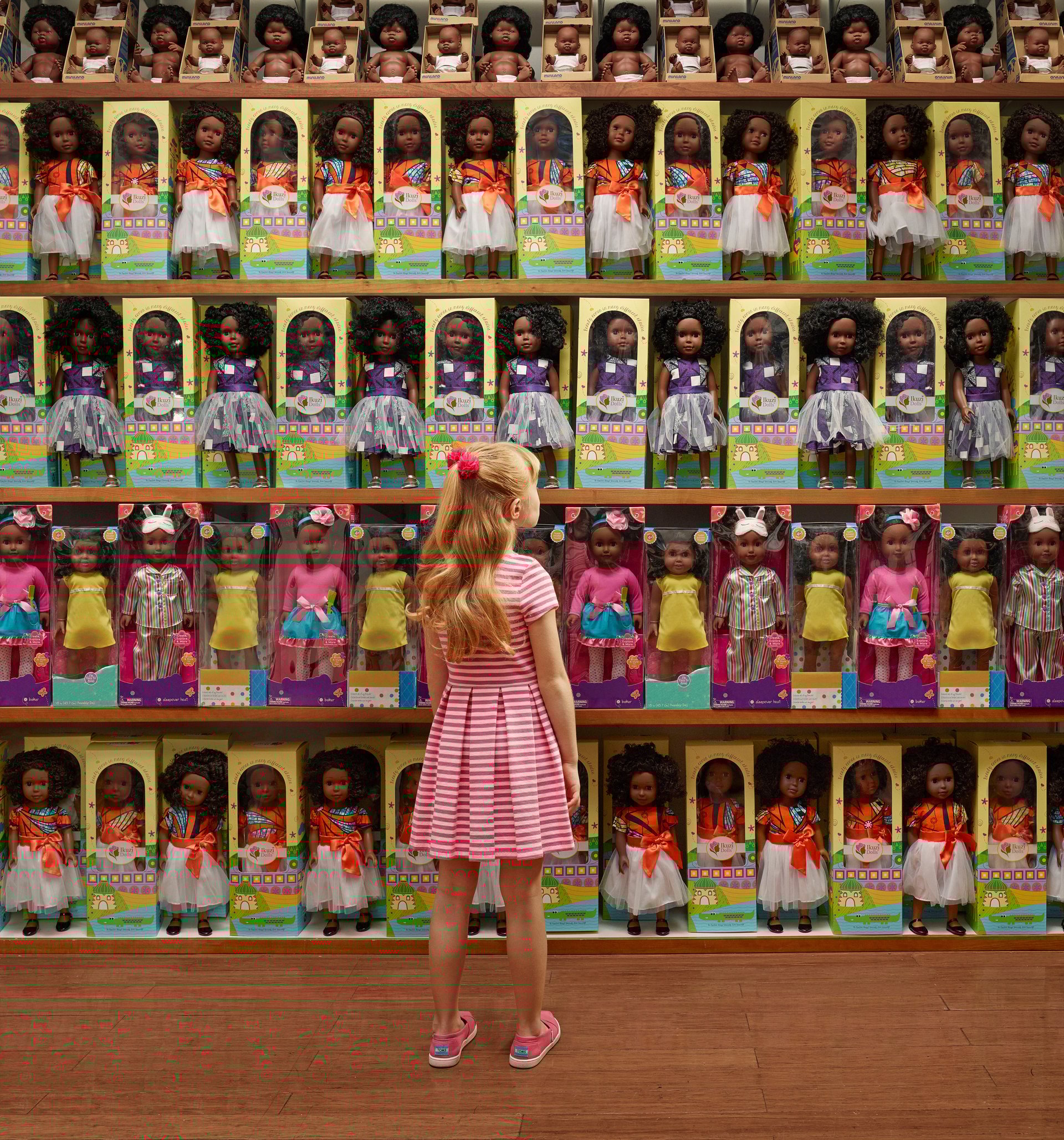
In one photo, a group of Asian women are laughing in a nail salon, while white women give them pedicures. In another photo, a Latino woman is on the phone, ignoring the white maid pouring her a cup of tea. In the third, a white girl stares up at row upon row of black dolls in a toy shop.


Buck told Quartz that the photo series was meant to spark a conversation about race and class among women. “It’s fine if it begins online, with social media, and comments sections, but more importantly, they should be carried out in the real world, between friends, co-workers and neighbors,” he said in an email. “All parties need to feel welcome at the table in this discussion, that’s how we move forward, and to me, at their best, that’s what these pictures begin to do.”
In the US, the wage gap between white and black Americans is worse today than it was in 1979, according to a recent report: The wage gap between white women and black women went from 6% in 1979 to 19% in 2015. The report suggests that white women have benefited more from the narrowing of the gender pay gap.
Representation in the media is another sore matter. Of the top 500 films of all-time, only six feature a protagonist who is a woman of color, according to the Representation Project.
Buck’s photos have resonated with many people online, but others reacted, predictably, by taking offense:
That’s fine, Buck says. “In a way the best pictures ask questions but don’t necessarily answer them,” he says. “At best these pictures do that.”
