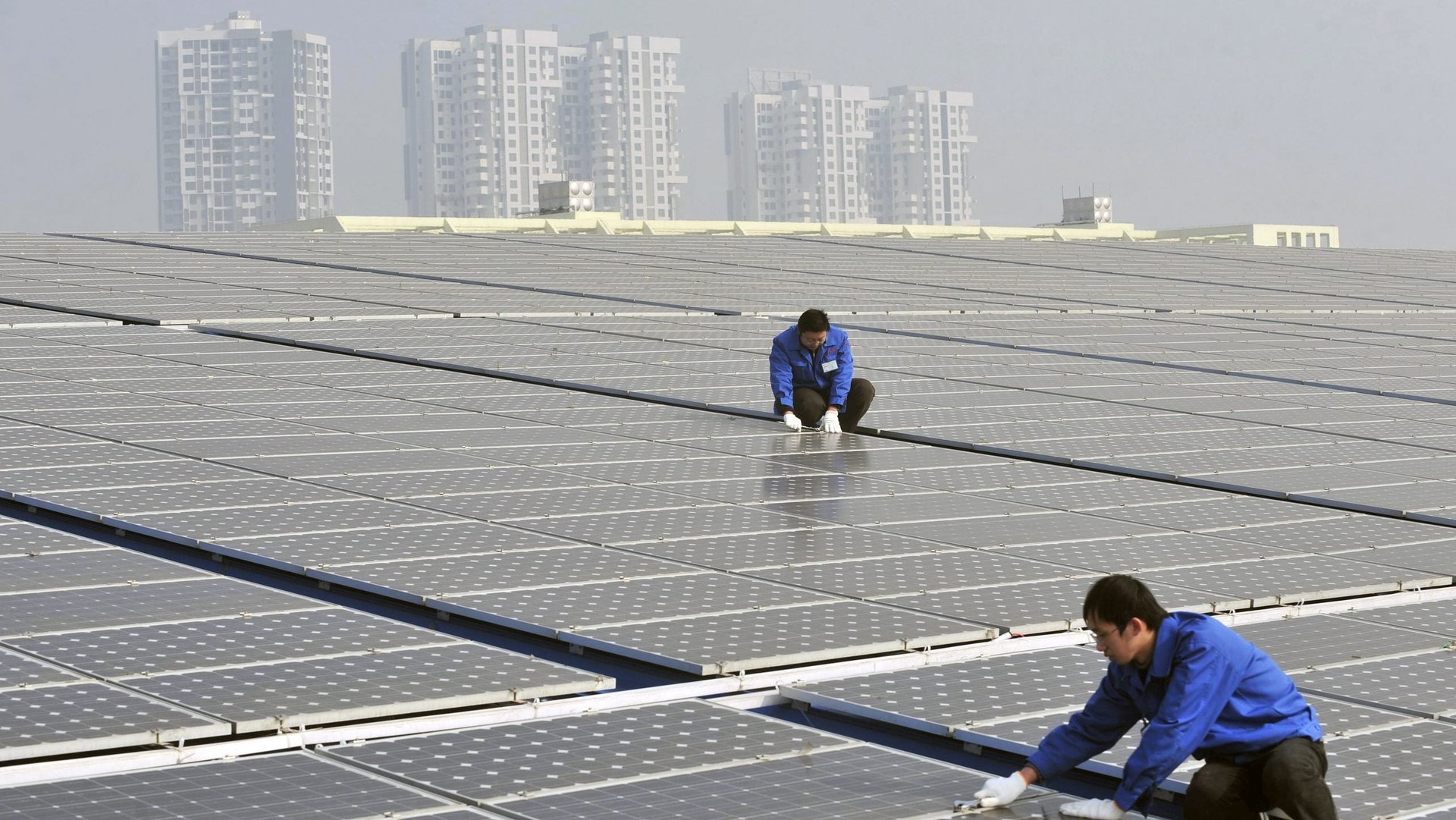
As air pollution in China continues to shorten lives, the government is heavily promoting solar power as a cleaner source of energy. Paradoxically, though, that same air pollution is also reducing the effectiveness of the nation’s solar plants.
As air pollution in China continues to shorten lives, the government is heavily promoting solar power as a cleaner source of energy. Paradoxically, though, that same air pollution is also reducing the effectiveness of the nation’s solar plants.
The particulate matter lodging itself deep in people’s lungs is also reducing the amount of sun reaching solar arrays, according to a study published last week (paywall) in the Proceedings of the National Academy of Sciences, a US journal.
Join 500,000+ readers who start their day with Quartz.
By subscribing, you agree to our Terms of Service and Privacy Policy.
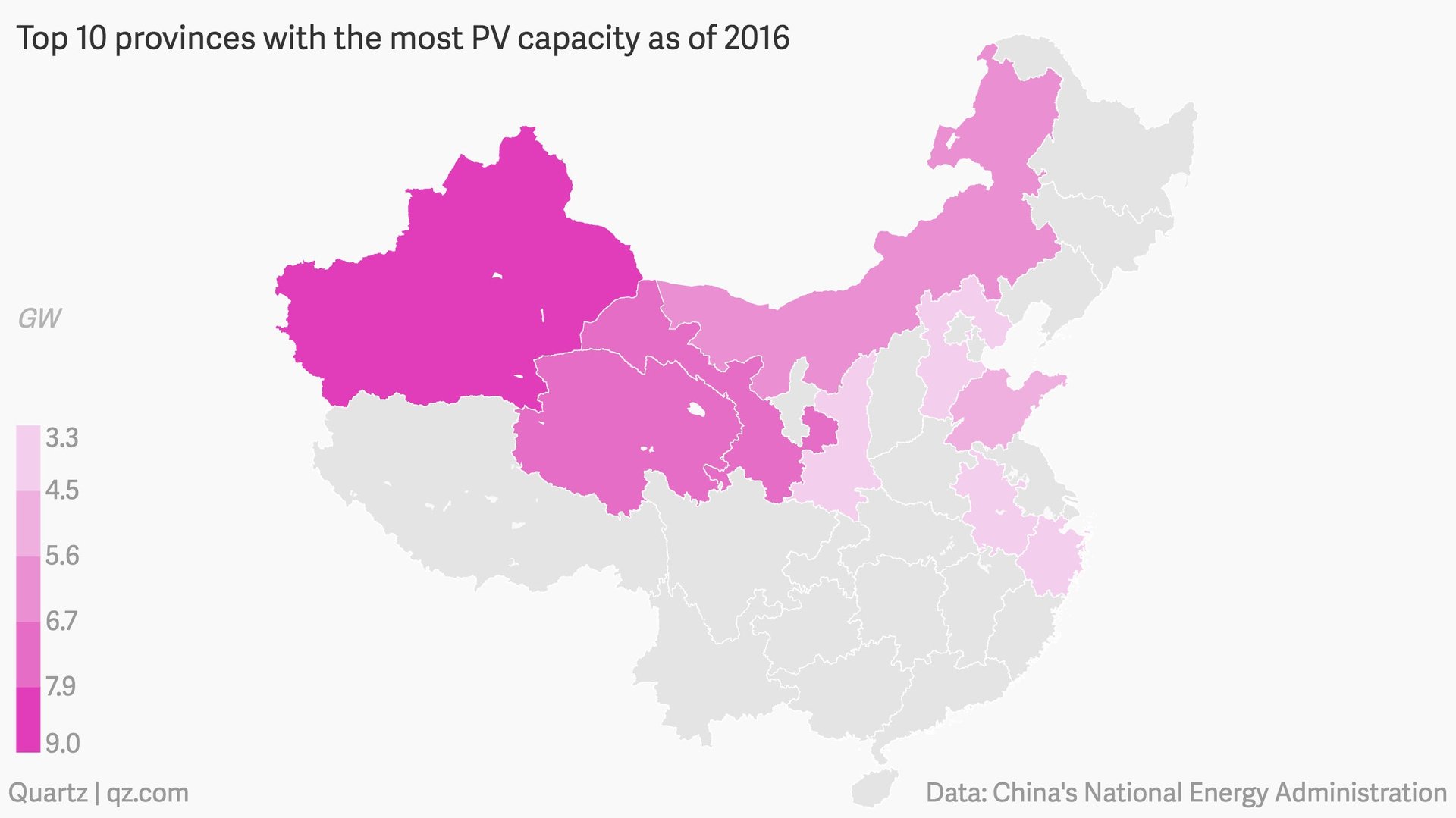
Using NASA satellite data, researchers at Princeton University examined how much of the sun’s radiation was reduced by aerosol components, including sulfate, nitrate, and carbon particulate matter—the stuff of air pollution. Examining data covering all of China from 2003 to 2014, the researchers found that in northern and eastern China, the country’s most polluted areas, air pollution could reduce solar electricity generation by up to 1.5 kilowatt-hours per square meter every day. That could mean a 35% drop of production capacity in the eastern province of Shandong, one of the top 10 provinces (link in Chinese) in terms of photovoltaic capacity last year.
In western China, which is less industrialized and urbanized, air pollution still cut around 10% of solar power production, the study found.
The worst waste came in winter, when the blocking effect of air pollution was similar to that of clouds (pdf). Winter air pollution prevented about 20% of solar energy from reaching photovoltaic panels on average.
Such waste certainly doesn’t help China with its solar ambitions. Last year the nation became the largest solar energy producer by boosting its installed photovoltaic capacity to over 77 gigawatts, and it’s aiming for 105 by 2020 (link in Chinese). Cleaner air would make things easier.
