Thousands of China’s elite are meeting in Beijing as the National People’s Congress (NPC), a rubber-stamp parliament, and the Chinese People’s Political Consultative Conference (CPPCC), a non-legislative advisory body, convene for annual meetings.
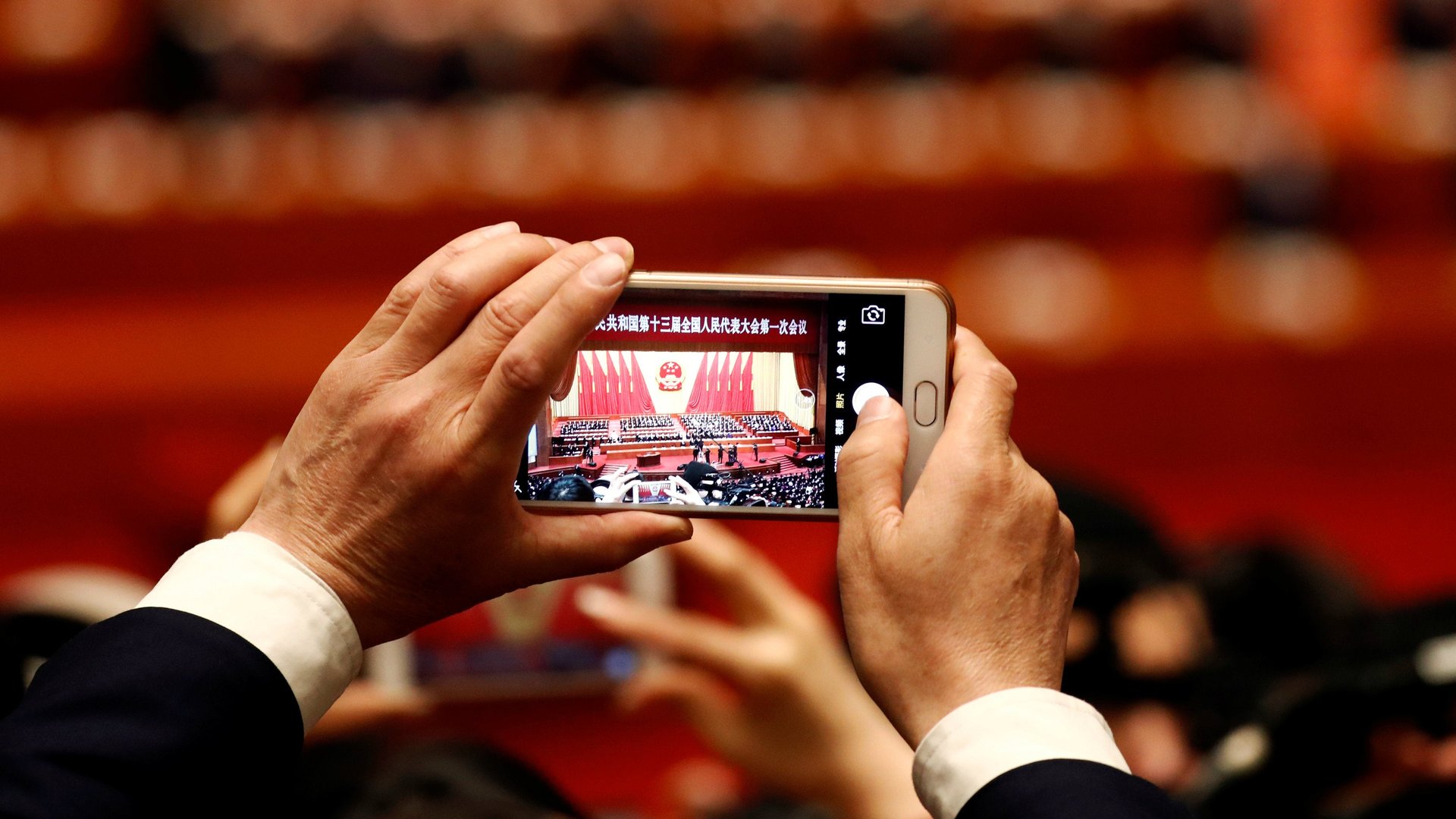
Thousands of China’s elite are meeting in Beijing as the National People’s Congress (NPC), a rubber-stamp parliament, and the Chinese People’s Political Consultative Conference (CPPCC), a non-legislative advisory body, convene for annual meetings.
While the events (commonly referred to as the “two sessions”) are political in nature, they also provide a meeting space for China’s ultra-rich. Many delegates to both the CPPCC and NPC, which have about 2,000 and 3,000 members respectively, are China’s commerce titans who join the bodies (pdf) for prestige, as well as insight into the party’s inner workings. As such, for many of China’s billionaires, the meetings are an opportunity to show deference to the party, and also air pet policies—which often align perfectly with the party’s own initiatives.
Join 500,000+ readers who start their day with Quartz.
By subscribing, you agree to our Terms of Service and Privacy Policy.
This year, China’s tech industry in particular is getting time in the spotlight, highlighting how the government is paying more and more attention to the internet sector as it shapes national policy.
Pony Ma, founder of social media giant Tencent and China’s richest man, is returning as a delegate to the NPC for the first time since 2015. On March 3, at a press event ahead of the NPC’s opening, Ma urged Beijing to integrate Hong Kong, Macau, and Shenzhen (where Tencent is headquartered) into a single global tech hub. It’s a proposal he mentioned earlier in 2017. Lei Jun, co-founder of smartphone maker Xiaomi, is also returning as an NPC delegate. On Saturday, Lei proposed measures to help Chinese brands expand internationally (link in Chinese) in markets that make up Xi Jinping’s “One Belt, One Road” trade initiative. In addition, Baidu founder Robin Li spoke as a delegate to the CPPCC, urging Beijing to support the country’s AI industry with favorable policies, like allowing road testing for self-driving cars (link in Chinese).
Meanwhile, rankings from research firm Hurun tracking the wealthiest participants in the two sessions reveal (link in Chinese) many leaders in China’s consumer internet industry are joining the meetings as first-time delegates.
Richard Liu, CEO of JD, an e-commerce giant that rivals Alibaba, is at the meetings as a first-time member of the Chinese People’s Political Consultative Conference (CPPCC). On Saturday, Liu called on the government to help boost the China’s agricultural products by improving quality standard certifications (link in Chinese) and helping suppliers build brands that will resonate with consumers. William Ding, CEO of online game maker NetEase, is also attending as a first-time delegate of the CPPCC. He stressed the importance of food safety and health care for the elderly in his public remarks on Saturday (link in Chinese).
Hurun lists other wealthy tech industry leaders attending China’s “two meetings” as first-time delegates to either the NPC or CPPCC, including:
China’s tech and internet industry has blossomed since Xi took power in 2012. The party is partly responsible for the sector’s success thanks to a combination of state funding and favorable policies. But the party can also burden tech companies by meddling in decision-making and tarnishing their global reputation thanks to stringent and highly-publicized censorship. Showing up for the “two meetings” is just part of the act that business leaders must follow in China, lest they risk losing the government’s good graces.
