At an event in San Francisco on Wednesday (June 6), the home-audio company Sonos launched an affordable, Alexa-powered TV sound bar. But a smaller announcement at the event was perhaps more interesting, and solidified the company’s argument that you really don’t need to splash out for Apple’s first smart-home speaker, the HomePod.
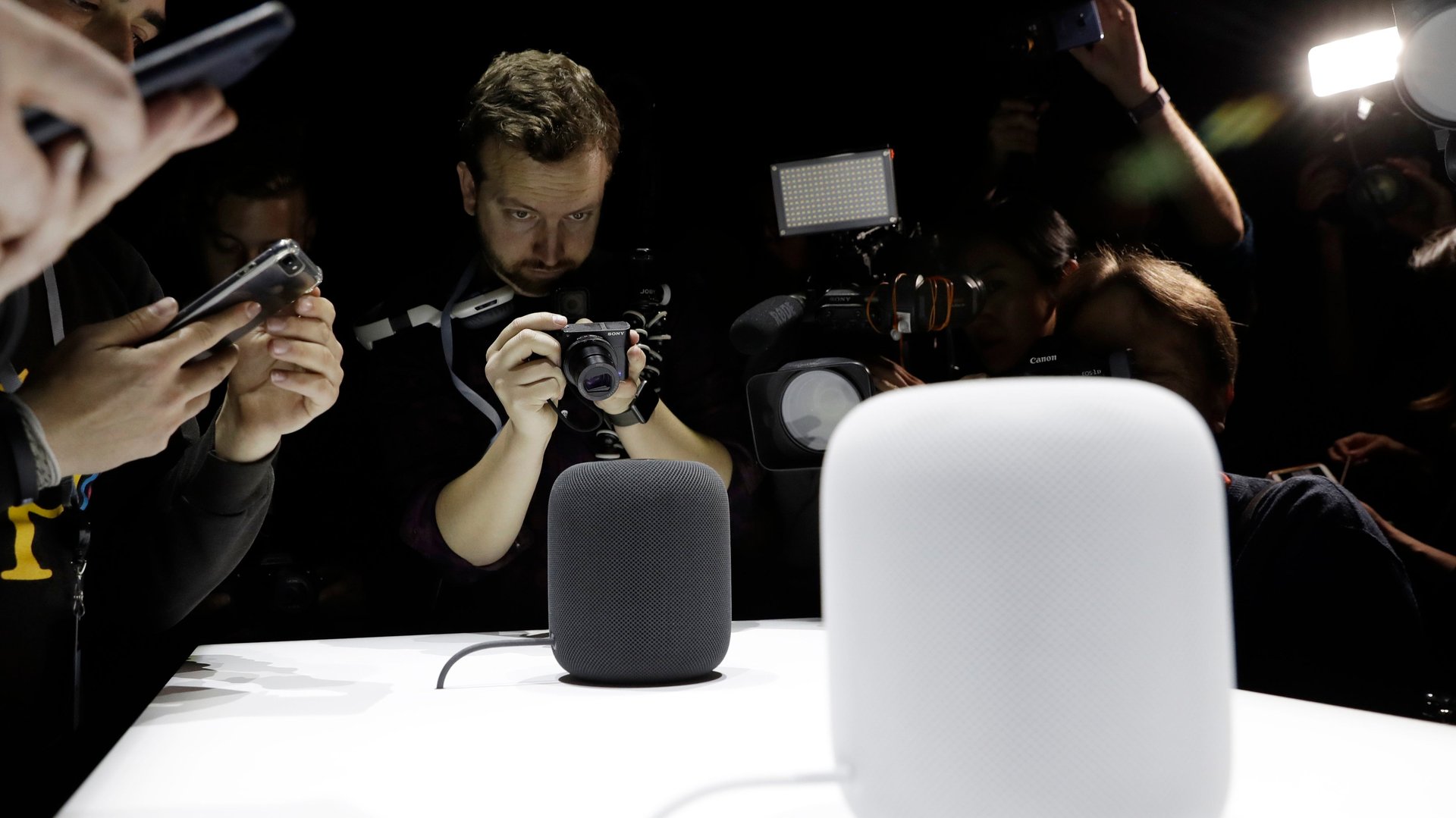
At an event in San Francisco on Wednesday (June 6), the home-audio company Sonos launched an affordable, Alexa-powered TV sound bar. But a smaller announcement at the event was perhaps more interesting, and solidified the company’s argument that you really don’t need to splash out for Apple $AAPL’s first smart-home speaker, the HomePod.
Sonos said that it will integrate Apple’s new AirPlay 2 connectivity standard into its newer speaker models in July. The company has already partnered with Amazon $AMZN to bring Alexa to its Sonos One speaker, and there are plans
Join 500,000+ readers who start their day with Quartz.
By subscribing, you agree to our Terms of Service and Privacy Policy.
In addition, with the new AirPlay 2 standard, when you do use Apple Music to play songs on a Sonos, the speakers will have a greater understanding of what’s playing than the older devices. For example, you’ll be able to ask Alexa what song is playing on Apple Music, and ask it to pause or skip tracks. (Similar functionality isn’t yet available with Google Assistant.) Of course, this won’t be as seamless an experience as
The Sonos One retails for $200, and its sound quality is unmatched by any other smart speaker around the same price, such as the Amazon Echo or Google Home. Even Apple’s $350 HomePod isn’t a massive step up in quality. Meanwhile, it is a bit of a step down in terms of usefulness. Apple’s Siri, as has been well-documented, often doesn’t understand what users are asking of it, or can’t get the answer to their questions. Since Siri is the backbone of the HomePod, the main way that users are supposed to interact with the device, using the HomePod is a frustrating experience. Sonos, on the other hand, relies on Amazon and Google’s voice systems, which both now have a few years of working well under their belts.
In addition, the HomePod can’t play from any source other than Apple Music, unless you connect the speaker using AirPlay. So if you use Spotify $SPOT or any other streaming service, the HomePod is no more useful than a Sonos or any other wireless speaker. And if you want to connect up another audio device to the HomePod (say, a record player or non-smart TV), you’re out of luck—there’s no auxiliary input on the speaker.
The case for choosing a HomePod over any other wireless speaker was already pretty flimsy, but considering there are now other smart speakers that can play Apple Music and which you can control with voice commands, there’s really no good reason left at all. At least it has a nice power cable, I guess.
