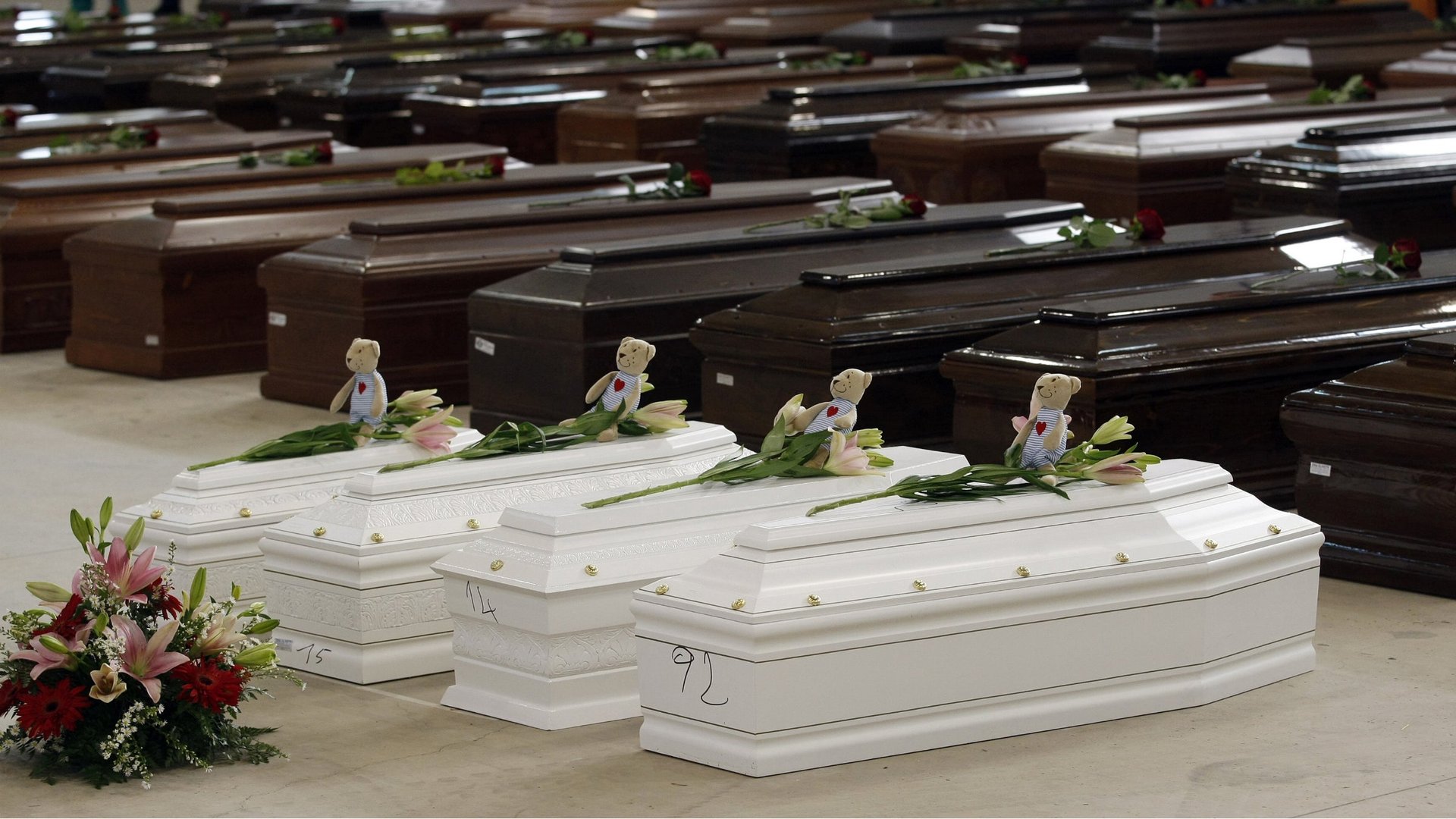
Earlier this month, Italy granted citizenship to 143 foreigners. It won’t be much use to them, though: The new posthumous Italians all died on Oct. 4, when the boat carrying them from North Africa to Lampedusa, an Italian island, caught fire and sank. Some others survived, but as Pablo Ordaz writes in El País (Spanish), their welcome was somewhat colder. Authorities are charging the 114 survivors with illegal immigration, which could incur a fine of up to €5,000 and a forced return to their home country.
It seems dying is pretty much what you have to do to get citizenship these days. Even as another boat just sank off the coast of Malta, bringing the combined death toll of the two incidents to nearly 400, the EU and countries along the Mediterranean have made the crossing more perilous than ever.
To listen to many European officials, the “bad guys” in all this are “human traffickers,” the people who arrange passage to Europe (“trafficking” implies moving people by fraud or force, versus “smuggling,” which means accepting pay to facilitate illegal migration). But the vast majority of people making the journey are usually doing so in search of improved working conditions or because of persecution. They’re not involuntary trafficking victims. Aware of the stakes of finding a better life, they’re taking a calculated risk.
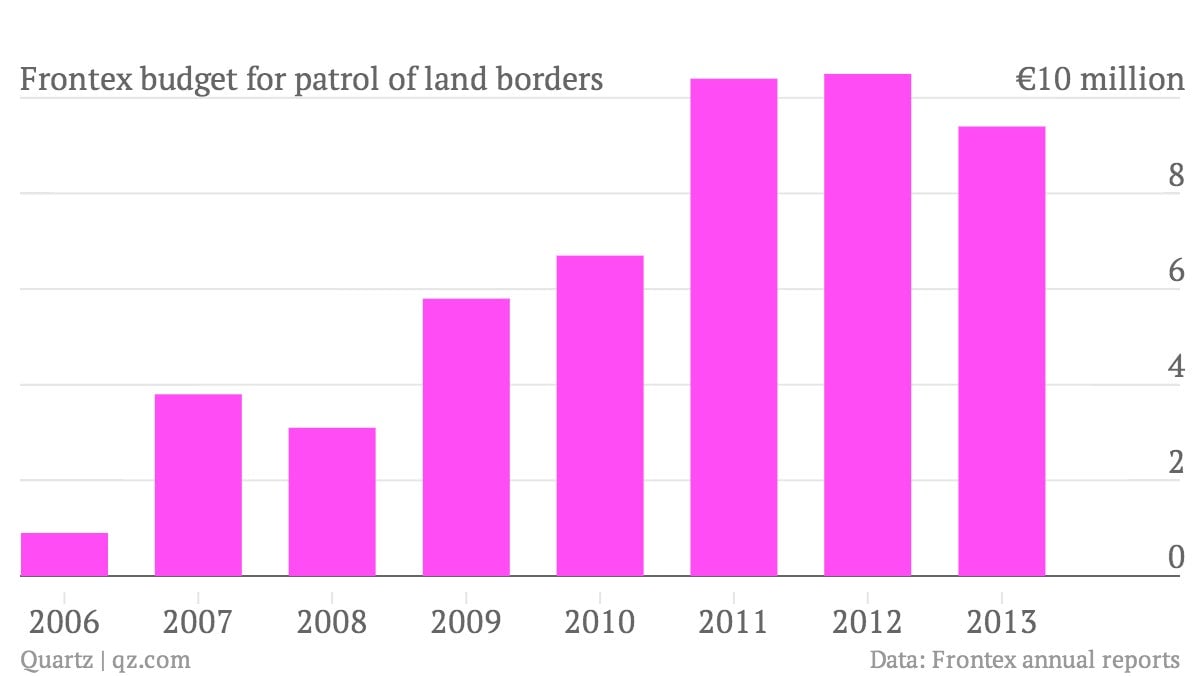
Those risks have increased thanks to recent EU policy that has beefed up patrol of land borders, sealing off a more common route to the EU. Frontex, the border patrol agency the EU created in 2005, budgeted a combined €20.9 million patrolling land borders in 2011 and 2012—more than it did from 2006 to 2010 combined:
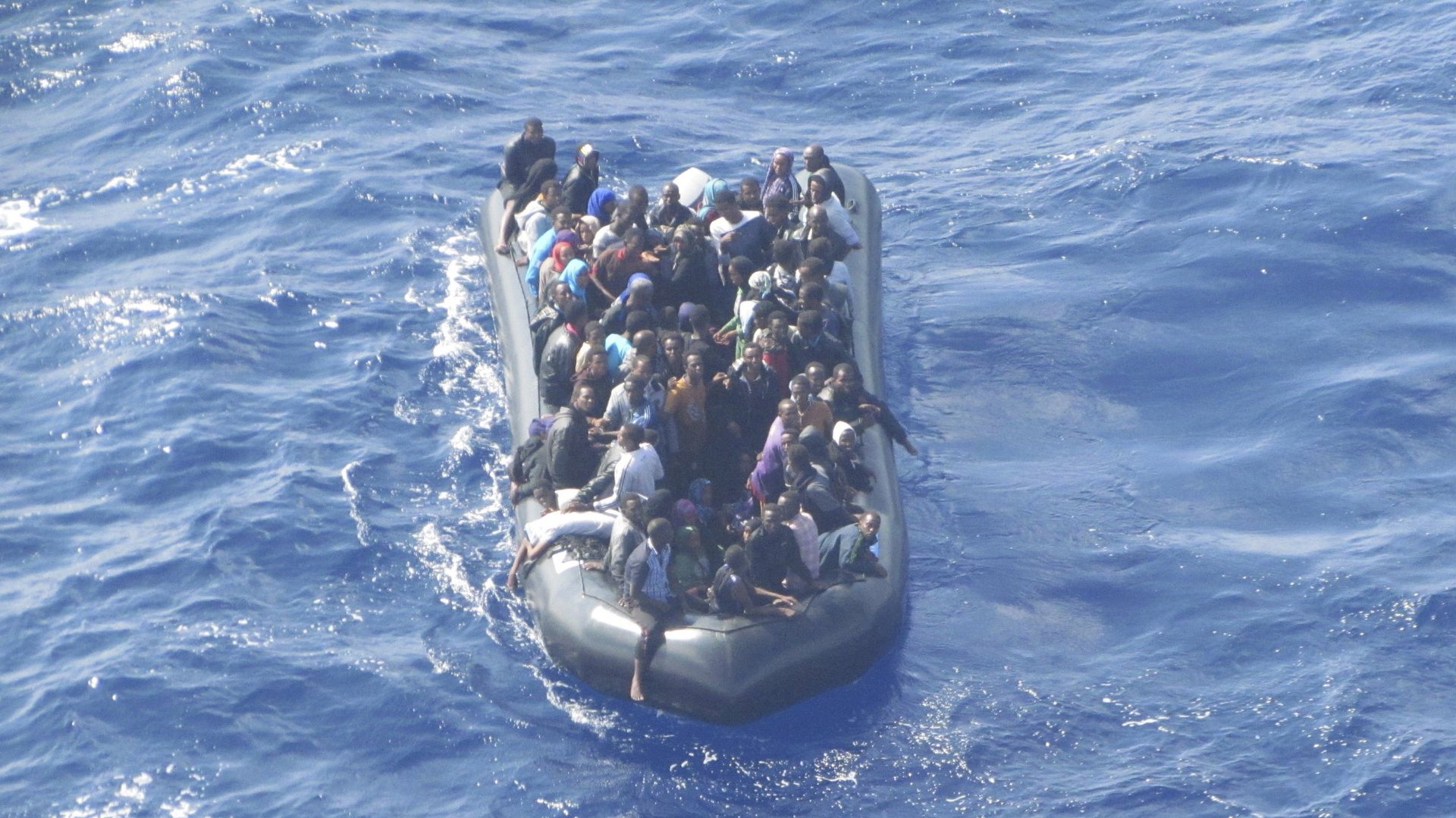
Those moves have pushed migrants to travel more and more by sea instead. Traveling by sea is more dangerous, which is why tighter land borders have “increased the vulnerability of migrants, their reliance on smuggling and caused the deaths of an estimated number of at least 17,000 people over the past two decades,” as Oxford professor Hein de Hass argues.
The current law allows European patrol officers leeway in determining when a boat is “in distress,” reports Deutsche Welle. Italian coastguard officials “refused to take on board some people we’d already saved because they said protocol forbade it,” a fisherman who witnessed the October 4 disaster told Ansa News, as reported by the BBC. On top of that, Italian members of parliament say that parts of the illegal immigration law implicate those who help migrants in distress. (Many residents of Lampedusa still rescue migrants anyway.)
EU governments have been furiously signing treaties to return migrants to the countries from where they embarked. Frontex’s budget for “return operations” is €10 million (pdf, p.3)—four times what it was in 2008, even though it doesn’t deter many from trying again. The captain of one of the ships that sank recently had been sent back to Tunisia after having landed in Italy. It does, however, risk exposing them to criminal punishment or persecution in their home countries.
Though Frontex agents often decide whether to report asylum claims (pdf, p.17) to immigration authorities, they have no duty to pass this information on. Since migrants frequently lack identification, it’s easy to dismiss their claims. And current regulations require that refugees claim asylum in the first European country where they land—usually Italy, Malta or Spain—even though “most migrants do have contacts, relatives, friends and opportunities for support and work” in other countries, Laura Zanfrini, professor of sociology at the Catholic University of Milan, told Quartz.
Rigid immigration laws throughout the EU (pdf, p.3) make it hard for migrants to legally enter Europe. Even though the number of migrants to Europe has generally fallen since the great recession—2011 was a big exception due to a surge in migrants from Tunisia and Pakistan—the EU’s high unemployment rates make politicians unwilling to open more legal immigration channels.
By the end of 2013, the EU will launch Eurosur, as its $460-million European Border Surveillance System is known. The program will use drones and satellites to monitor the Mediterranean, dispatching coast guards when they see boats. Many are hailing it as a move to “help in saving the lives of those who put themselves in danger to reach Europe’s shores,” as Cecilia Malström, EU home affairs commissioner, put it. Others differ. ”Eurosur is to serve the battle against illegal migration,” Ska Keller, a Green Party member of the European Parliament, told Deutsche Welle. “It’s not at all for rescue operations, as is now being portrayed.”
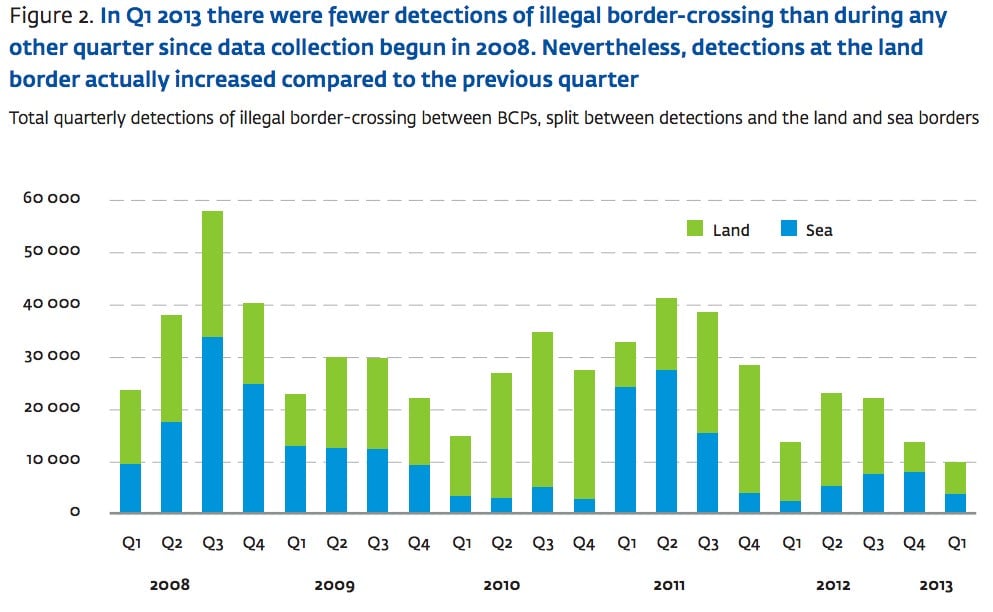
Given all that spending, you’d think Mediterranean shores are the single biggest point of entry for illegal migrants, that most illegal migrants are poor Africans and that the numbers of migrants is climbing. Here’s what’s really going on:
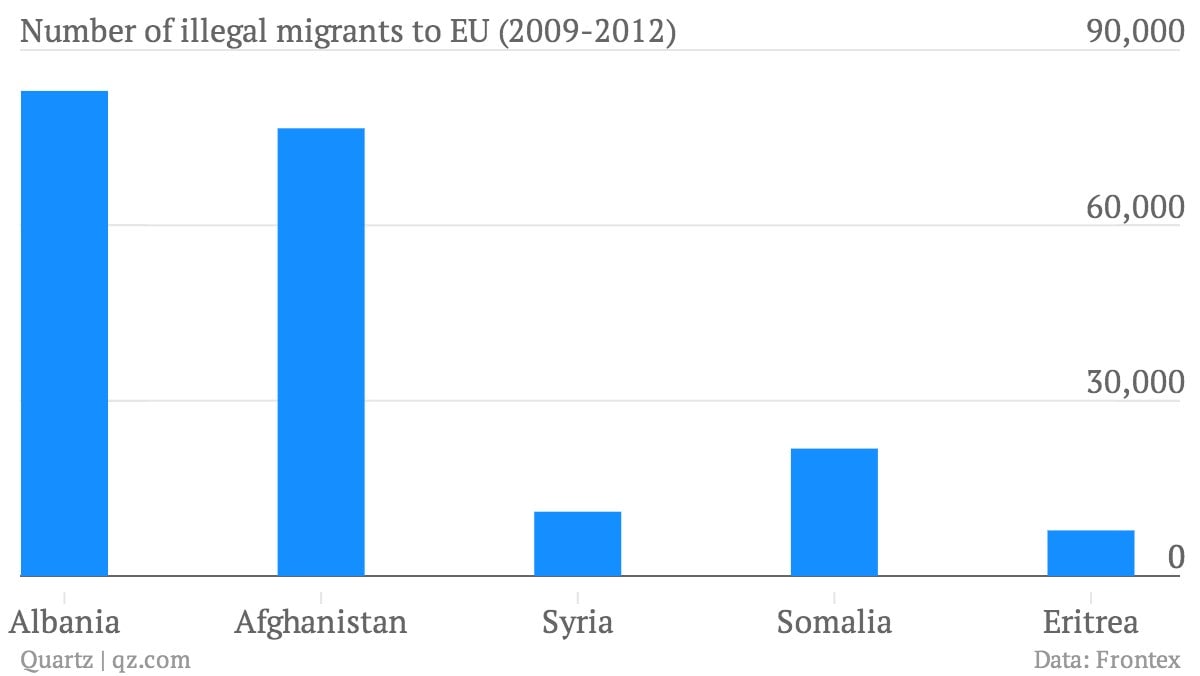
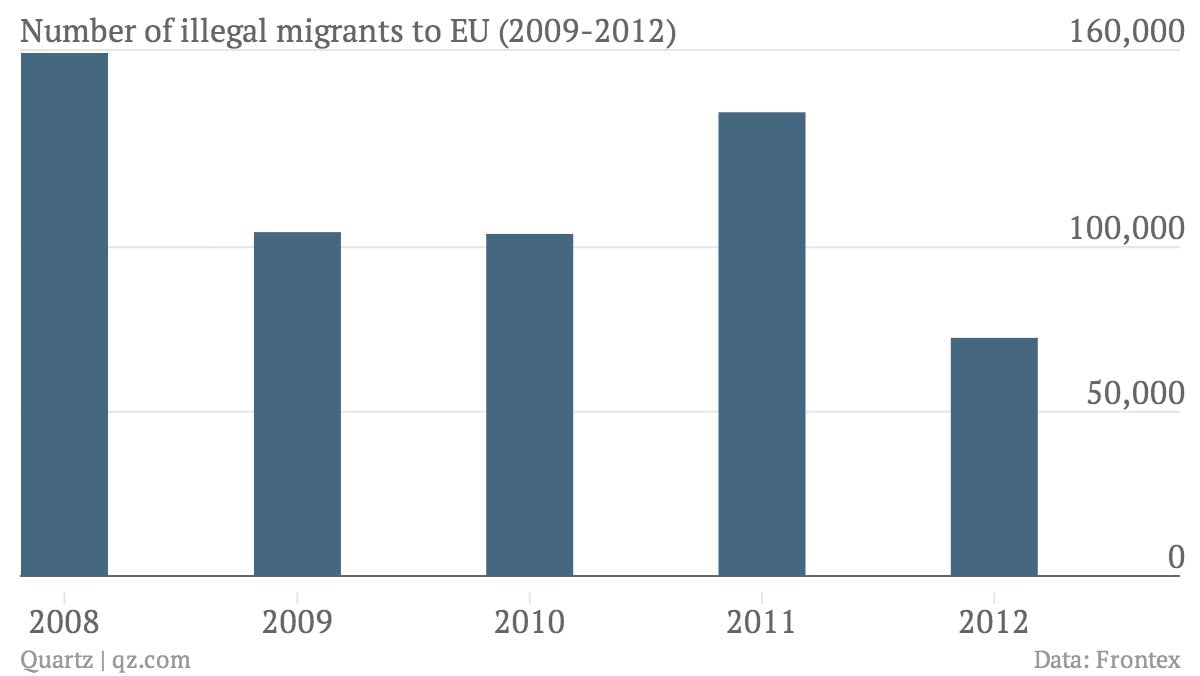
Unless the EU presents an alternative to smugglers—ideally, more legal immigration and asylum channels—the aim of “combating human trafficking” with Eurosur and beefed up Frontex budgets really translates as “stopping migrants from coming.” And that will almost certainly result in more dead bodies in the Mediterranean.
