Sweden has found a faster way to treat people experiencing cardiac emergencies through a text message and a few thousand volunteers.
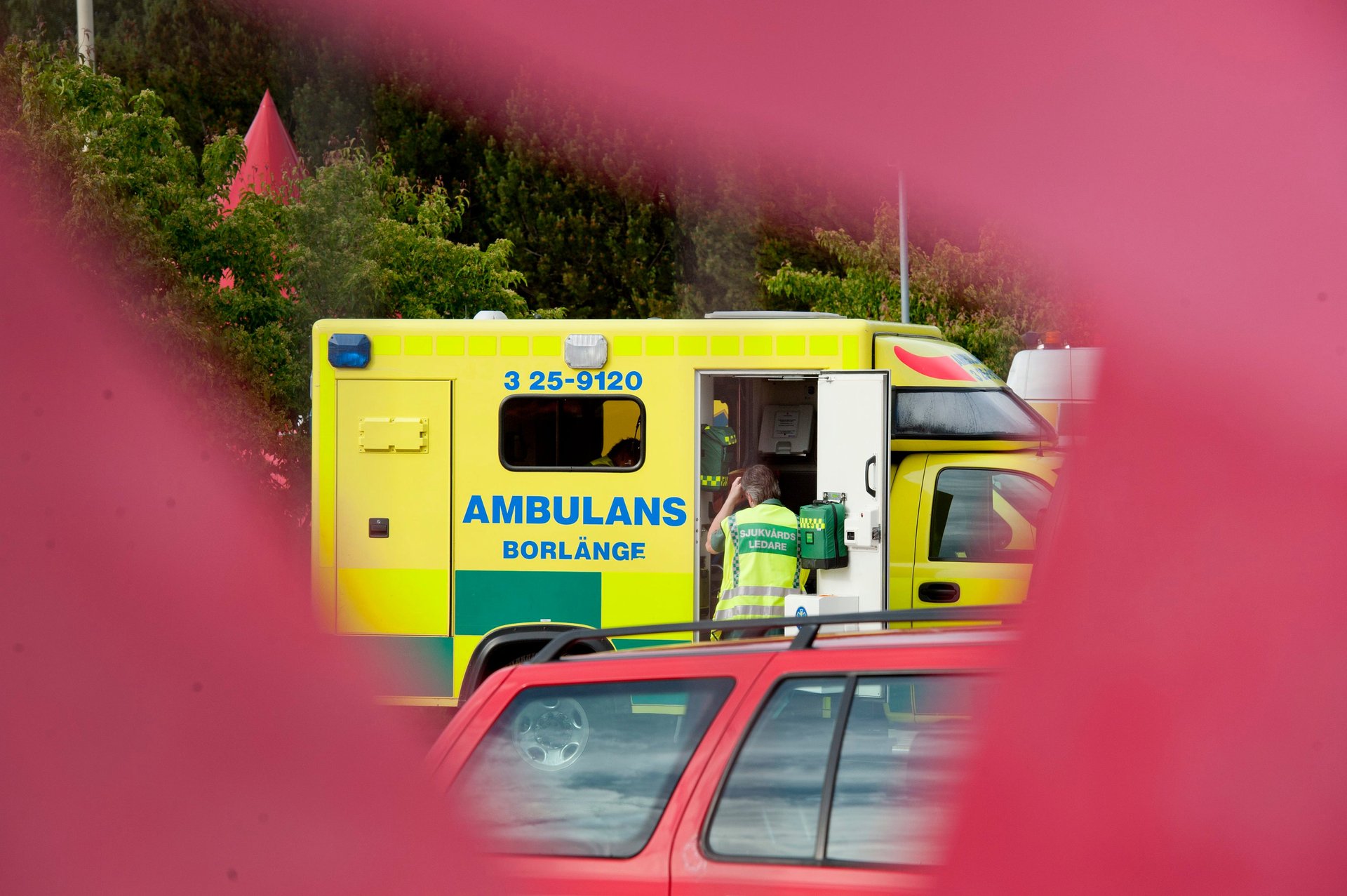
Sweden has found a faster way to treat people experiencing cardiac emergencies through a text message and a few thousand volunteers.
A program called SMSlivräddare, (or SMSLifesaver) (link in Swedish) solicits people who’ve been trained in cardiopulmonary resuscitation (CPR). When a Stockholm resident dials 112 for emergency services, a text message is sent to all volunteers within 500 meters of the person in need. The volunteer then arrives at the location within the crucial first minutes to perform lifesaving CPR. The odds for surviving cardiac arrest drop 10% for every minute it takes first responders to arrive.
Join 500,000+ readers who start their day with Quartz.
By subscribing, you agree to our Terms of Service and Privacy Policy.
“The traditional emergency services, especially the ambulance—they have problems in the Stockholm area,” said Dr. Mårten Rosenqvist, a professor of cardiology and spokesperson for the group. “First there are not so many, second there is heavy traffic in Stockholm, and third, they are usually occupied by doing other things: transporting patients to the emergency room, or transporting patients between hospitals.”
With ambulance resources stretched thin, the average response time is some eight minutes, allowing SMS-livräddare-volunteers to reach victims before ambulances in 54% of cases.
Through a combination of techniques, including SMS-livräddare, Stockholm County has seen survival rates after cardiac arrest rise from 3% to nearly 11%, over the last decade. Local officials have also enlisted fire and police departments to respond to cardiac emergencies, but the Lifesavers routinely arrive before them as well.
Currently 9,600 Stockholm residents are registered SMS-livräddare-volunteers and there are plans to continue to increase enrollment. An estimated 200,000 Swedes have completed the necessary CPR training, and could, potentially, join the program.
Though volunteer emergency services have existed for some time in the US, especially in rural areas, Rosenqvist called the program “a world unique project,” because most programs require volunteers to undertake costly full emergency medical technician (EMT) training, not just CPR certification. Also, distinctive to SMS-livräddare is the practice of utilizing volunteers’ home addresses to create a tight, local radius of volunteer responders.
Medical officials in other countries, including Scotland, are now considering similar community-based programs for cardiac arrest.
