Unemployment is the lowest it’s been in 50 years, at a national average of 3.7%, according to new data from the Bureau of Labor Statistics. In Hawaii, it’s even lower: 2.3%. More incredibly, that’s actually an increase on the state’s April and May low of 2%.
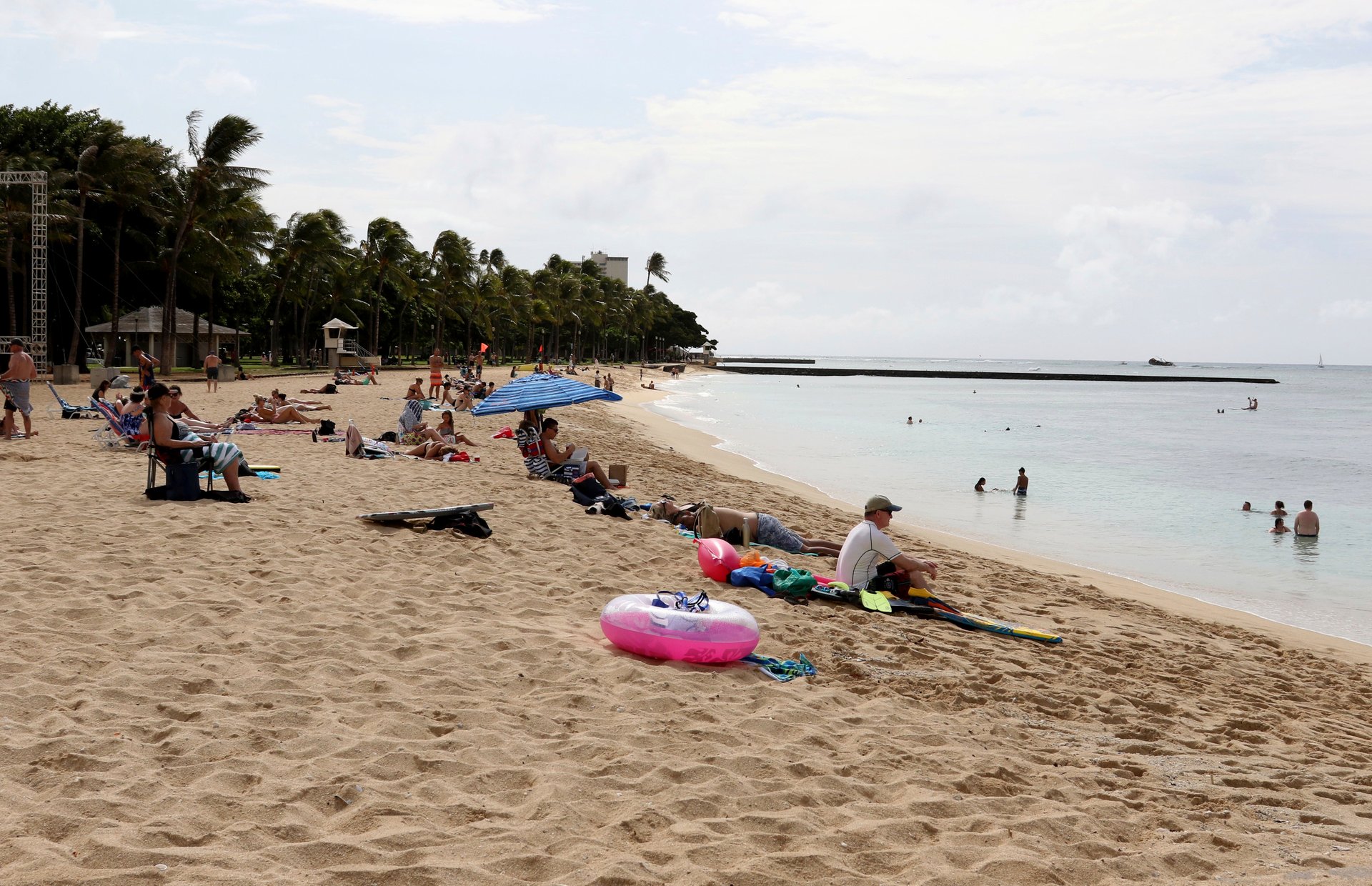
Unemployment is the lowest it’s been in 50 years, at a national average of 3.7%, according to new data from the Bureau of Labor Statistics. In Hawaii, it’s even lower: 2.3%. More incredibly, that’s actually an increase on the state’s April and May low of 2%.
It sounds great, but it isn’t necessarily such good news for locals. “This may indicate that our economy has entered into a slow growth path,” Eugene Tian, chief economist for the state Department of Business, Economic Development and Tourism, told the Honolulu-based Star Advertiser.
Join 500,000+ readers who start their day with Quartz.
By subscribing, you agree to our Terms of Service and Privacy Policy.
The national number is not unambiguously positive either, despite trumpeted claims from the US president to the contrary. A very low unemployment rate often indicates dark clouds ahead, as it’s all but impossible to sustain such rates for very long. In 1929, for example, unemployment dipped to 3.2%, then soared to 15.9% within two years, sparked by the Depression. In 1952, the rate’s most recent extreme low, it sat at 2.7%, then shot up to 5% when the Dow returned to 1929 levels. Finally, in 1970, unemployment moved from a low of 3.5% up to 6.1%, as a recession took hold.
This low rate doesn’t guarantee that a crisis is on the horizon—but it does suggest that we should expect a return to what’s sometimes called the “natural rate” of unemployment, or roughly 5%, which accounts for fluctuations in the job market and the ordinary movements of workers between jobs.
