Update, Jan. 18, 2019: A new report alleges Donald Trump told Michael Cohen to lie to Congress, potentially implicating the president further.
Update, Jan. 18, 2019: A new report alleges Donald Trump told Michael Cohen to lie to Congress, potentially implicating the president further.
Questions about potential impeachment have dogged Donald Trump since the very early days of his presidency. Those questions have a new urgency this week.
Join 500,000+ readers who start their day with Quartz.
By subscribing, you agree to our Terms of Service and Privacy Policy.
Trump’s longtime personal lawyer, Michael Cohen, confessed today (Nov. 29) to lying to Congress about the president’s real estate deals in Russia: Negotiations about a Trump Tower deal in Moscow went on through June of 2016, far longer than earlier admitted, Cohen told a federal court in Manhattan.
Trump’s campaign manager Paul Manafort was also accused by the FBI of lying about a number of unspecified subjects, breaching a guilty plea deal. Now Trump himself is openly dangling the idea of a presidential pardon for Manafort, both major breaches of protocol.
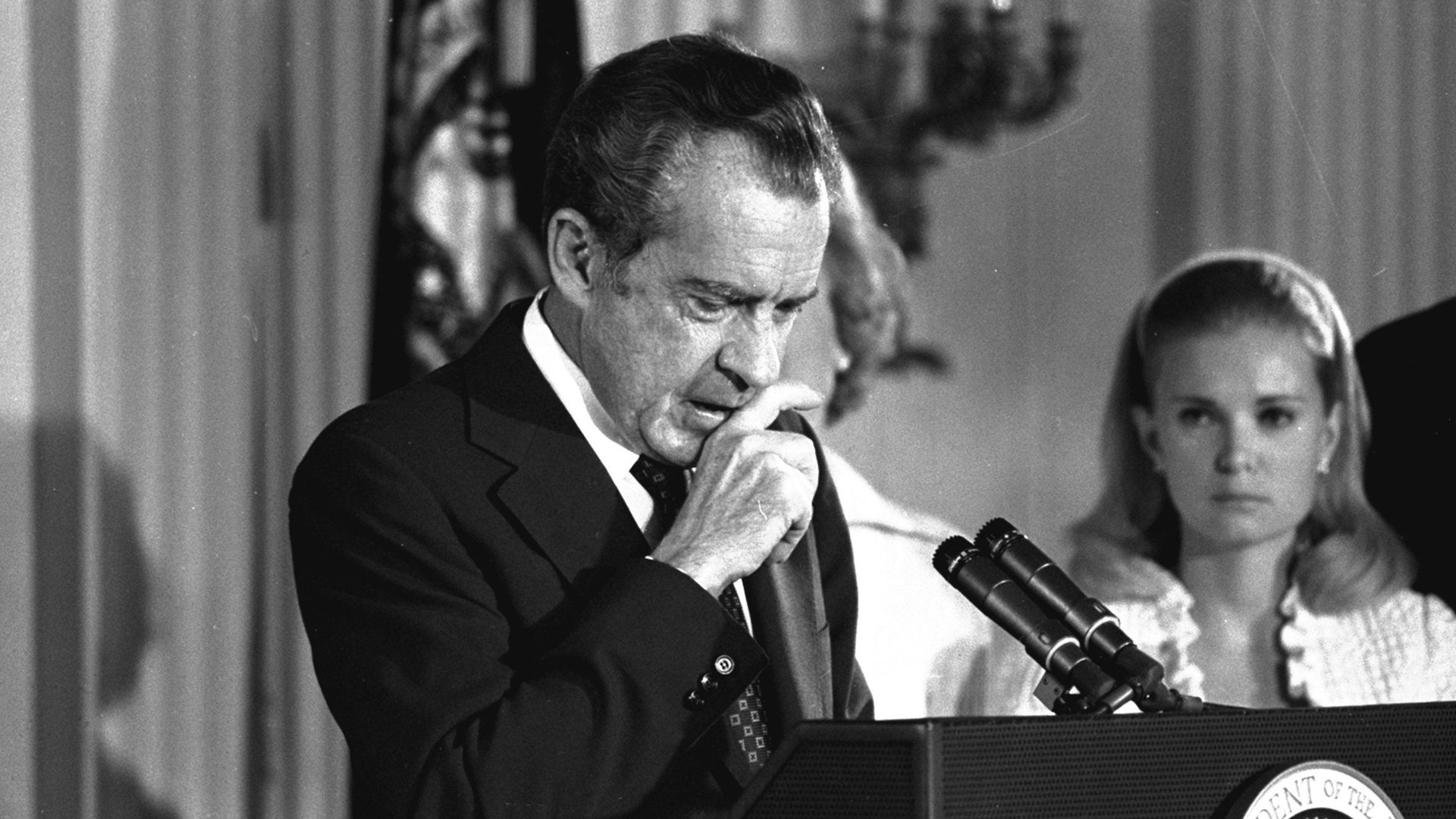
What better time to review the three reasons that the House Judiciary Committee voted to pursue impeachment proceedings against then-president Richard Nixon in July of 1974, which ultimately resulted in his resignation days later. Here’s the full text of the articles of impeachment adopted by the committee:
RESOLVED, That Richard M. Nixon, President of the United States, is impeached for high crimes and misdemeanours, and that the following articles of impeachment to be exhibited to the Senate:
ARTICLES OF IMPEACHMENT EXHIBITED BY THE HOUSE OF REPRESENTATIVES OF THE UNITED STATES OF AMERICA IN THE NAME OF ITSELF AND OF ALL OF THE PEOPLE OF THE UNITED STATES OF AMERICA, AGAINST RICHARD M. NIXON, PRESIDENT OF THE UNITED STATES OF AMERICA, IN MAINTENANCE AND SUPPORT OF ITS IMPEACHMENT AGAINST HIM FOR HIGH CRIMES AND MISDEMEANOURS.
In his conduct of the office of President of the United States, Richard M. Nixon, in violation of his constitutional oath faithfully to execute the office of President of the United States and, to the best of his ability, preserve, protect, and defend the Constitution of the United States, and in violation of his consitutional duty to take care that the laws be faithfully executed, has prevented, obstructed, and impeded the administration of justice, in that:
On June 17, 1972, and prior thereto, agents of the Committee for the Re-election of the President committed unlawful entry of the headquarters of the Democratic National Committee in Washington, District of Columbia, for the purpose of securing political intelligence. Subsequent thereto, Richard M. Nixon, using the powers of his high office, engaged personally and through his close subordinates and agents, in a course of conduct or plan designed to delay, impede, and obstruct the investigation of such illegal entry; to cover up, conceal and protect those responsible; and to conceal the existence and scope of other unlawful covert activities.
The means used to implement this course of conduct or plan included one or more of the following:
In all of this, Richard M. Nixon has acted in a manner contrary to his trust as President and subversive of constitutional government, to the great prejudice of the cause of law and justice and to the manifest injury of the people of the United States.
Wherefore Richard M. Nixon, by such conduct, warrants impeachment and trial, and removal from office.
(Adopted by the House Judiciary Committee on a 27-11 vote)
Using the powers of the office of President of the United States, Richard M. Nixon, in violation of his constitutional oath faithfully to execute the office of President of the United States and, to the best of his ability, preserve, protect, and defend the Constitution of the United States, and in disregard of his constitutional duty to take care that the laws be faithfully executed, has repeatedly engaged in conduct violating the constitutional rights of citizens, impairing the due and proper administration of justice and the conduct of lawful inquiries, or contravening the laws governing agencies of the executive branch and the purposed of these agencies.
This conduct has included one or more of the following:
In all of this, Richard M. Nixon has acted in a manner contrary to his trust as President and subversive of constitutional government, to the great prejudice of the cause of law and justice and to the manifest injury of the people of the United States.
Wherefore Richard M. Nixon, by such conduct, warrants impeachment and trial, and removal from office.
(Adopted by the House Judiciary Committee on a 28-10 vote)
In his conduct of the office of President of the United States, Richard M. Nixon, contrary to his oath faithfully to execute the office of President of the United States and, to the best of his ability, preserve, protect, and defend the Constitution of the United States, and in violation of his constitutional duty to take care that the laws be faithfully executed, has failed without lawful cause or excuse to produce papers and things as directed by duly authorized subpoenas issued by the Committee on the Judiciary of the House of Representatives on April 11, 1974, May 15, 1974, May 30, 1974, and June 24, 1974, and willfully disobeyed such subpoenas. The subpoenaed papers and things were deemed necessary by the Committee in order to resolve by direct evidence fundamental, factual questions relating to Presidential direction, knowledge or approval of actions demonstrated by other evidence to be substantial grounds for impeachment of the President. In refusing to produce these papers and things Richard M. Nixon, substituting his judgment as to what materials were necessary for the inquiry, interposed the powers of the Presidency against the the lawful subpoenas of the House of Representatives, thereby assuming to himself functions and judgments necessary to the exercise of the sole power of impeachment vested by the Constitution in the House of Representatives.
In all of this, Richard M. Nixon has acted in a manner contrary to his trust as President and subversive of constitutional government, to the great prejudice of the cause of law and justice, and to the manifest injury of the people of the United States.
Wherefore, Richard M. Nixon, by such conduct, warrants impeachment and trial, and removal from office.
(Adopted by the House Judiciary Committee on a 21-17 vote)
Nixon resigned from office on August 8, 1974, after it became clear that the full House would vote to impeach him, and that he didn’t have enough support in the Senate to remain in office.
