The US Centers for Disease Control and Prevention released three separate reports today (Nov. 29) on the declining life expectancy of Americans.
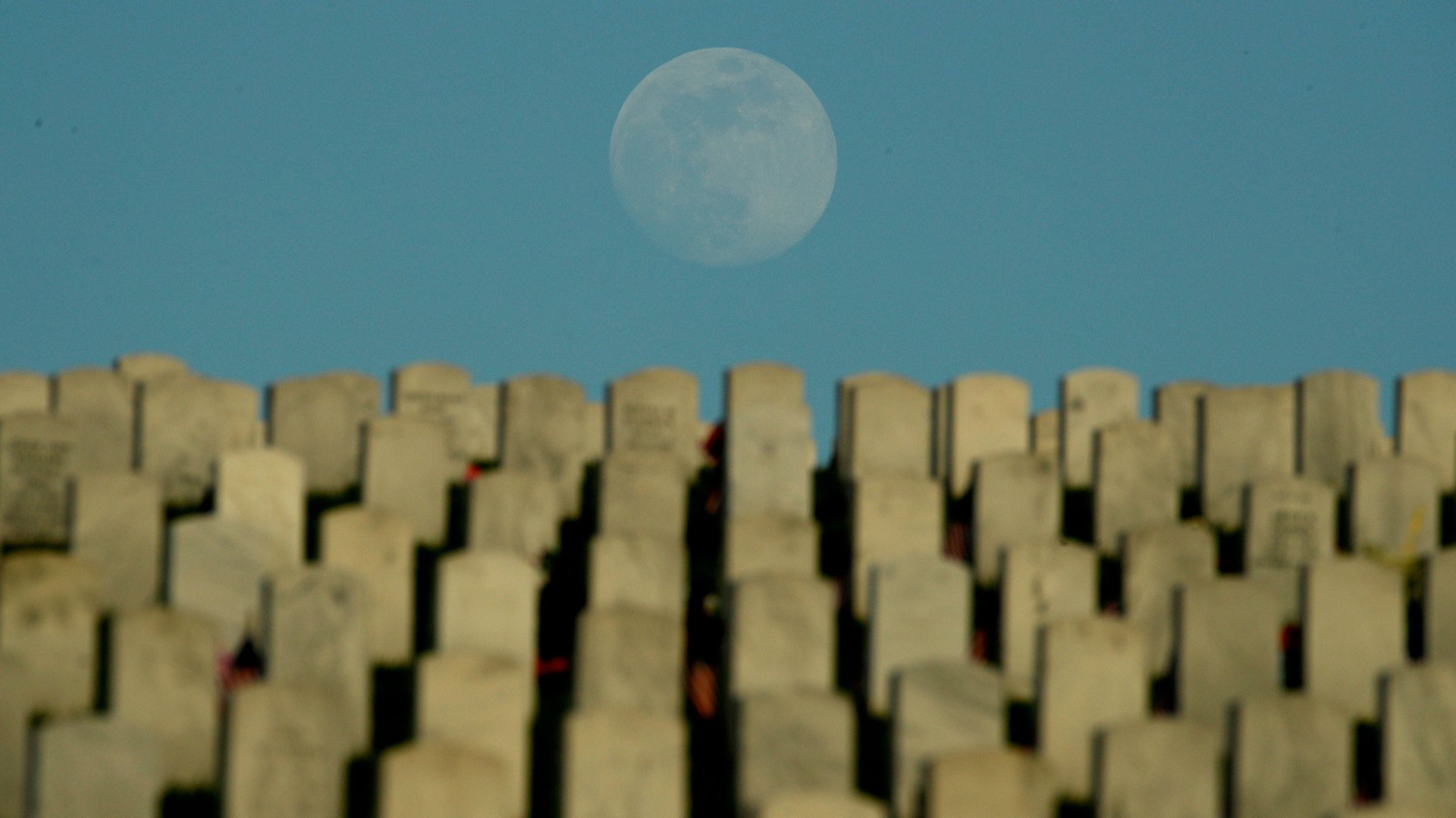
The US Centers for Disease Control and Prevention released three separate reports today (Nov. 29) on the declining life expectancy of Americans.
Between 2016 and 2017, the average life expectancy of someone born in the US decreased from 78.7 to 78.6 years. Although that may not seem like much, it adds to a more worrying trend: the only other time in US history that death rates have fallen steadily was a century ago, between 1915 and 1918. In that time frame, the US entered World War I, and the Spanish flu pandemic, which would ultimately kill 1 million Americans, began.
Join 500,000+ readers who start their day with Quartz.
By subscribing, you agree to our Terms of Service and Privacy Policy.
There were roughly 69,000 more deaths in 2017 than there were in 2016. Heart disease has been the number-one overall killer for many years and still topped the list in 2017. But it doesn’t explain the falling overall life expectancy; in fact, death rates from heart disease are on the decline. Instead, the CDC suggests life expectancy rates stagnated in the early 2010s and have since started to fall because of the sharp increase over that timeframe of two types of highly preventable causes of death: drug overdoses and suicides.
In total, there were roughly 6,600 more overdoses in 2017 than 2016. Many of those were related to abuse of opioids, including both prescription painkillers like fentanyl and illegal formulations like heroin.
Suicides rates in the US haven’t been as high as they are now—14 deaths per 100,000 people—since 1975. The problem is particularly acute in rural areas, where the rate is 20 deaths per 100,000 people. Keith Humphreys, a psychology professor at Stanford University, told the Washington Post this is likely because more people in rural areas own guns. “Having easily available lethal means is a big risk factor for suicide,” he said.
“Life expectancy is improving in many places in the world. It shouldn’t be declining in the [US],” Joshua Sharfstein, a physician and dean of the Johns Hopkins school of public health, told the Post. “I think this is a very dismal picture of health in the United States.” In neighboring Canada, for example, life expectancy is 82.3 years, and has been on the rise without any dip since 1992. Mexico’s life expectancy is currently 77.1, but that number has risen every single year since the World Bank began keeping records in 1960.
