“We’ve launched our last satellite,” John Donovan, CEO of AT&T Communications, said in a meeting with analysts on Nov. 29.
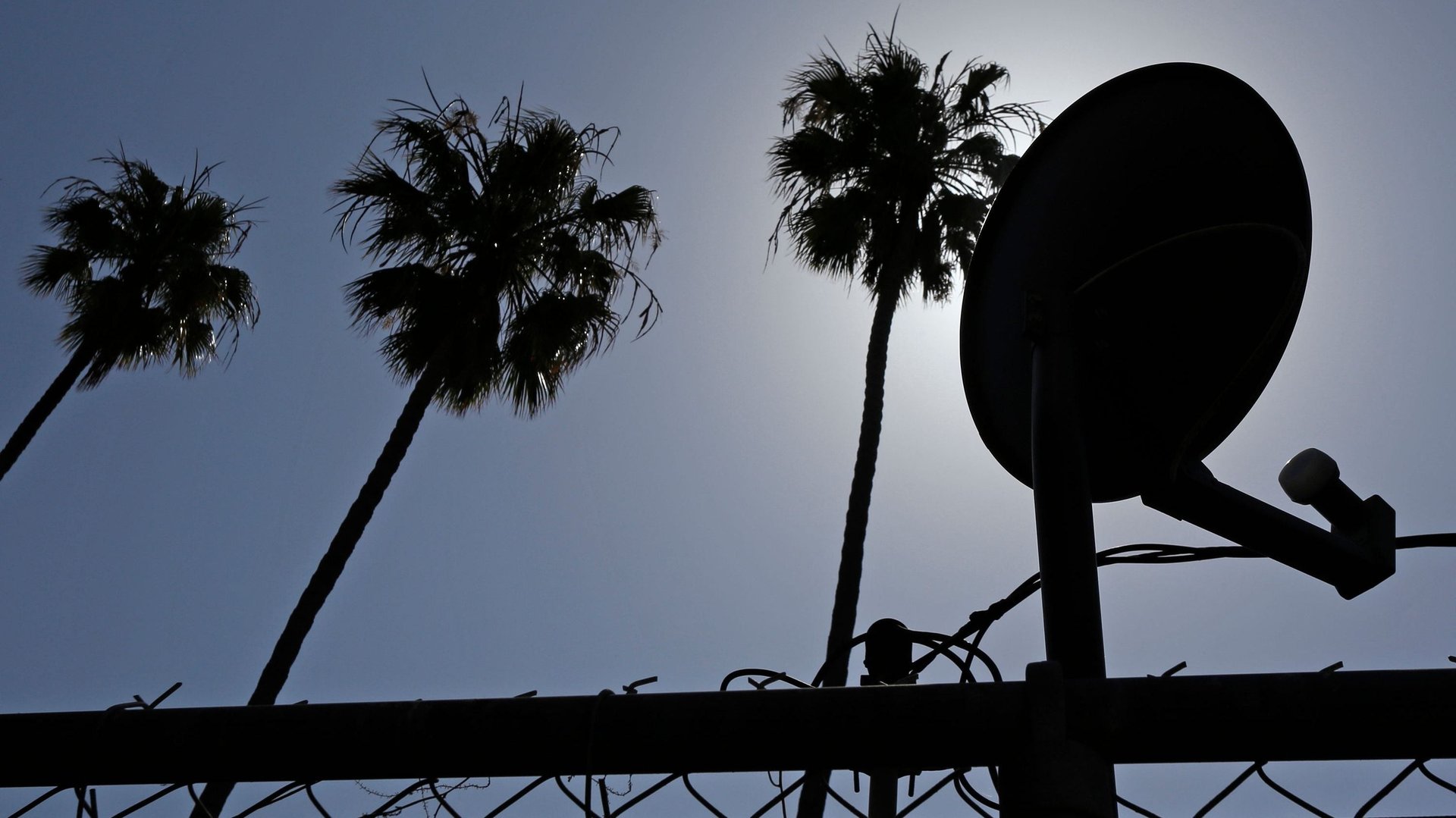
“We’ve launched our last satellite,” John Donovan, CEO of AT&T $T Communications, said in a meeting with analysts on Nov. 29.
The AT&T executive effectively declared the end of the satellite-TV era with that statement. AT&T owns DirecTV, the US’s largest satellite company—and second largest TV provider overall, behind Comcast $CMCSA.
Join 500,000+ readers who start their day with Quartz.
By subscribing, you agree to our Terms of Service and Privacy Policy.
DirecTV will continue offering satellite-TV service—it had nearly 20 million satellite video subscribers as of September, per company filings. But the company will focus on growing its online video business instead, Donovan said. It has a new set-top box, where people can get the same TV service they’d get with satellite, through an internet-connected box they can install themselves. It expects that box to become a greater share of its new premium-TV service installations in the first half of 2019. It also sells cheaper, TV packages with fewer channels through its DirecTV Now and WatchTV streaming services, which work with many smart TVs and streaming media players like Roku $ROKU and Amazon $AMZN Fire TV devices.
The practice of getting TV through satellite dishes propped up in backyards and perched on rooftops first took hold in the US in the last 1970s and early 1980s, after TV networks like HBO and Turner Broadcasting System started sending TV signals to cable providers via satellites. People in areas without cable or broadcast TV began putting up their own dishes to receive the TV signals, and that grew into a TV business of its own. But in recent years, consumers have shifted to new digital TV offerings like Netflix $NFLX and Hulu or the live, PlayStation Vue service. That shift away from traditional TV services has hit satellite particularly hard. The US pay-TV industry reportedly lost a record number of TV subscribers last quarter, and the satellite services from DirecTV and Dish Network (which also owns internet-TV service Sling TV) were the hardest hit.
In 2017, AT&T lost 554,000 satellite video subscribers, and it continued to hemorrhage customers this year, according to company filings.
“He’s not going to launch more satellites,” AT&T’s top boss, chairman and CEO Randall Stephenson, said of Donovan, during the meeting. “We’re kind of done.”
Looking for more in-depth coverage from Quartz? Become a member to read our premium content and master your understanding of the global economy.
