China faces an unusual dilemma.
China faces an unusual dilemma.
It has an aging population and, as a result of its one-child policy, there are fewer young people to support the elderly. One obvious solution is requiring elderly Chinese people to delay their retirement. In 2016 the Chinese government announced plans to gradually increase the retirement age from between 50 to 60 to age 65.
Join 500,000+ readers who start their day with Quartz.
By subscribing, you agree to our Terms of Service and Privacy Policy.
It seemed like a great idea, with more workers contributing to the economy and fewer people in need of state support. Economists have spent years, often in vain, fighting the “lump of labor fallacy.” The fallacy assumes there is a finite amount of jobs in an economy so if people work longer, they crowd out younger people looking to get their start. Evidence has shown this is not how it works. More people working creates more wealth, which in turn leads to the creation of more jobs.
But it turns out China may be an exception that proves it’s not a fallacy after all. A recent paper by Chinese economists at Dongbei University and the Norwegian Central Bank argues that encouraging older people to work longer keeps young women out of the labor force.
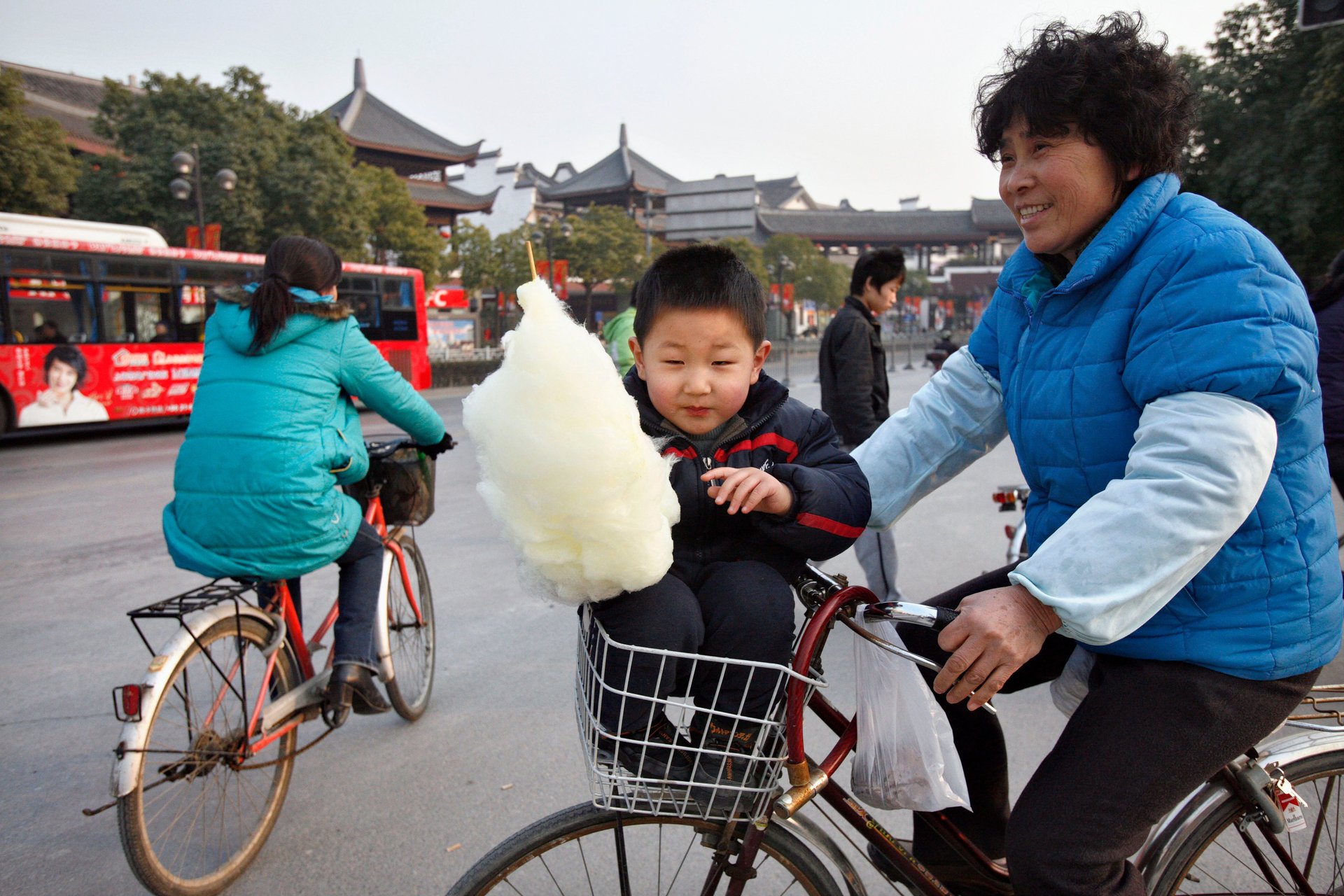
In China, child care is often provided by grandparents, and more than 50% of 2-year-olds are looked after by a grandparent, the paper estimates. The economists estimate that the free child care provided by grandparents is a major factor in a woman’s decision to stay in the labor force. It’s why China has some of the highest female labor force participation rates in the world; 61.5% of women are in the labor force, compared to 55.7% in the US and 60% in Scandinavia. This is in spite of few protections, like maternity leave, for new mothers. Fewer than 6% of Chinese women leave the labor force when they have a baby, compared to 25% of US mothers.
Grandparent support is associated with 81% higher wages for women; the impact is felt later in the careers of women. There is evidence from other countries shows a woman’s career never fully recovers from time off to look after their children. The Chinese research estimates women who had grandparent support still earn higher wages, 75% higher than women without that support, when their children were school-aged, 7 to 11 years old.
Grandparent child care is critical for women to keep working and earn more. So the push to keep older people working—which means they aren’t no longer available to watch children—is expected to lead to women dropping out of the work force. “Overall, the potential adverse impact on young females’ post-childbirth employment and lifetime income may even undo the new retirement policy that aims to increase China’s aggregate labour supply,” the economists warn.
They urge the government to offer alternative child care options or labor protections if they increase the retirement age. It seems when you are facing a demographic crunch, there are no easy solutions.
