Donald Trump is spending most of his time in unscheduled “executive time,” watching television, reading newspapers, and making unlogged phone calls, according to a report based on a leaked copy of his daily agenda.
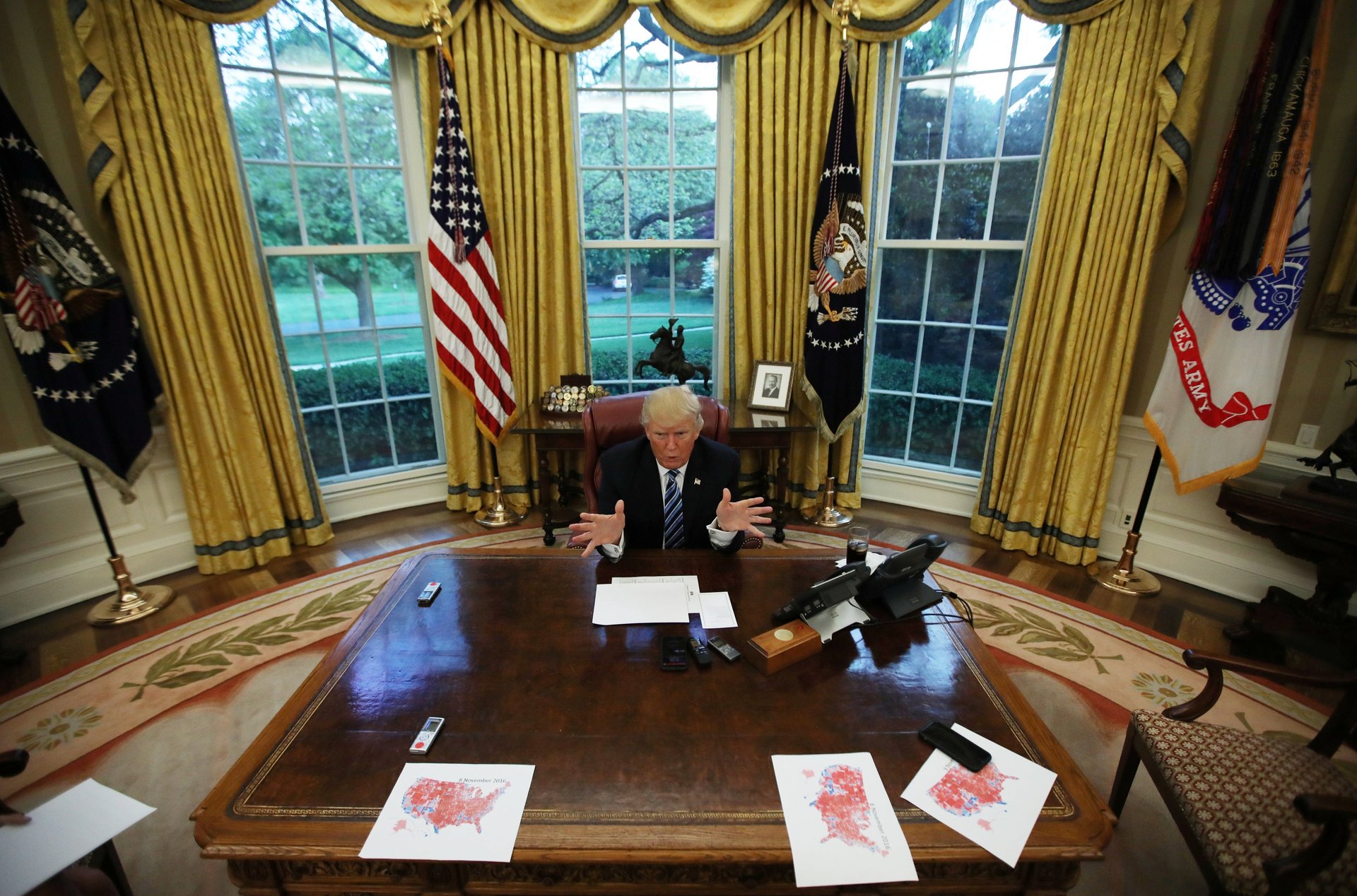
Donald Trump is spending most of his time in unscheduled “executive time,” watching television, reading newspapers, and making unlogged phone calls, according to a report based on a leaked copy of his daily agenda.
The president spent about 60% of his time in the months after the 2018 midterm elections in what the White House calls “executive time,” much of that in the mornings, Axios reports. His first public scheduled event is normally in late morning and he spends the hours beforehand in the executive residence, not the Oval Office. Trump spent just 15% of his working time in meetings, and less than 8% in public events, Axios reports. Previous presidents have not had “executive time” on their schedules.
Join 500,000+ readers who start their day with Quartz.
By subscribing, you agree to our Terms of Service and Privacy Policy.
Madeleine Westerhout, director of Oval Office operations, is among the officials who are defending Trump, tweeting that he had “hundreds of calls and meetings” every day that aren’t part of his public schedule.
Her defense raises more questions than it answers. If Trump is, in fact, meeting or calling “hundreds” of people every day, who are they? What is he discussing? We do know he likes to tweet early in his day.
There’s no way for anyone but Trump to know. He has dispensed with transparency measures put in place by previous presidents, ignored scheduling and organizational precedents, and shed staffers whose job it was to keep track of his movements. Here’s what has changed during his term:
These omissions may put the Trump administration in violation of the US Presidential Records Act, several lawsuits allege. The act states the White House must retain all the information “created or received by the President, the President’s immediate staff, or a unit or individual of the Executive Office of the President whose function is to advise or assist the President” that relates to presidential duties. That includes all:
books, correspondence, memoranda, documents, papers, pamphlets, works of art, models, pictures, photographs, plats, maps, films, and motion pictures, including, but not limited to, audio and visual records, or other electronic or mechanical recordations, whether in analog, digital, or any other form.
That information is the property of the US government, not the president’s or his advisors’, and an administration can only delete records after getting written permission from the archivist of the United States.
