As Congressional leaders in Washington, DC remain stalled out on climate-related legislation, states are moving forward, even in conservative parts of the country. New Mexico is the latest.
As Congressional leaders in Washington, DC remain stalled out on climate-related legislation, states are moving forward, even in conservative parts of the country. New Mexico is the latest.
The southwestern state is the latest to embrace carbon-free electricity, passing a bill that will require all electricity from public utilities to come from carbon-free sources. The bill, which passed 43-22 in New Mexico’s increasingly Democratic legislature, requires the state (now one of the country’s top oil, gas, and coal producers) to get 50% of its energy from renewables by 2030 and 80% by 2040. By 2045, it must go entirely carbon-free.
Join 500,000+ readers who start their day with Quartz.
By subscribing, you agree to our Terms of Service and Privacy Policy.
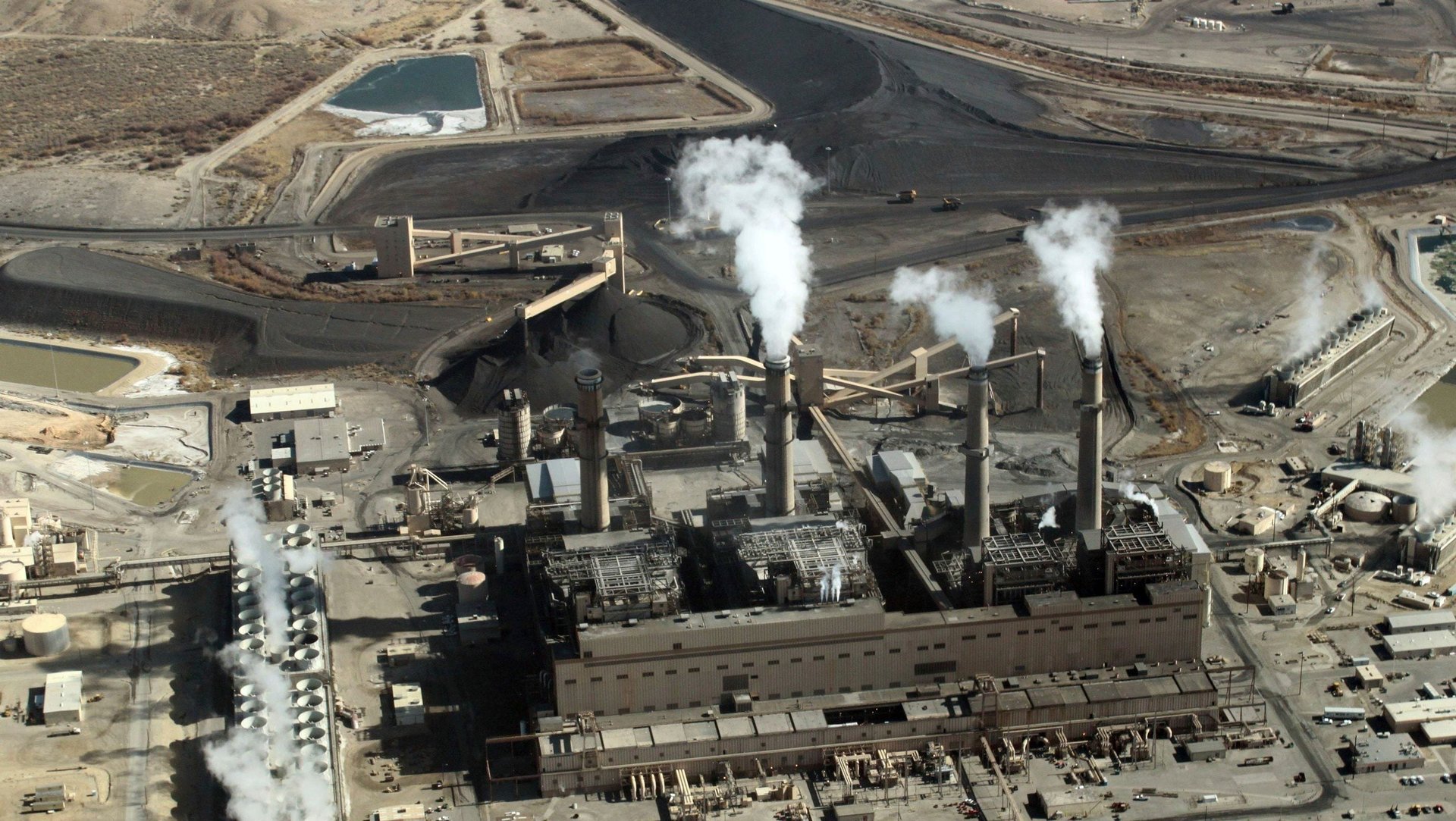
Most of the new electricity is expected to come from wind and solar sources. Opponents of the bill cast doubt on the state’s ability to move beyond fossil fuels; for example, it will require that the 847 MW San Juan Generating Station, one of the nation’s major coal plants, to close by 2022.
To compensate for the loss of coal revenue, the bill sends $40 million to regions expected to lose coal production and required 450 MW of new carbon-free generating capacity to be built there. The bill also allows utilities to recoup losses with a low-cost financing option to shutter existing coal infrastructure and build new assets. Utilities will be able to charge customers “for the recovery of energy-transition costs,” according to Greentech Media. It’s unclear how much ratepayers will have to fork over in the short-term, but experts say the transition will save customers money in the long run. This sort of managed transition from fossil fuels is “an example to states struggling to balance the challenges and opportunities of the energy transition,” said the Union of Concerned Scientists in a statement.
New Mexico will join two other states, California and Hawaii, as well as Washington, DC, in committing to 100% carbon-free electricity commitments or renewable energy mandates before 2050. Local and state legislators in Arizona, Nevada, Missouri, and Colorado have also passed clean-energy bills that, though less aggressive than California, Hawaii, DC, or New Mexico, still push their jurisdictions toward zero-carbon fuel sources
State-level politics are quickly shifting on the issue. While running for the New Mexico governor’s seat in 2018, Michelle Lujan Grisham’s campaign ran an ad in which she touted the benefits of switching to renewable energy. Lujan Grisham won the election, and is now set to deliver on her campaign promise. No less than five other governors elected in 2018 have said they want their states to become zero-carbon (Colorado and Connecticut) or close to it (Illinois, Nevada, and Maine).
Correction: This article was corrected to note that the New Mexico bill mandates carbon-free electricity (which includes nuclear and carbon capture and storage), not only renewable energy.
