Honeybees are crucial for pollinating large portions of the US food supply (estimates range between 7% and 30%). More than half of America’s tended bees are needed every year to pollinate California’s almond crops.
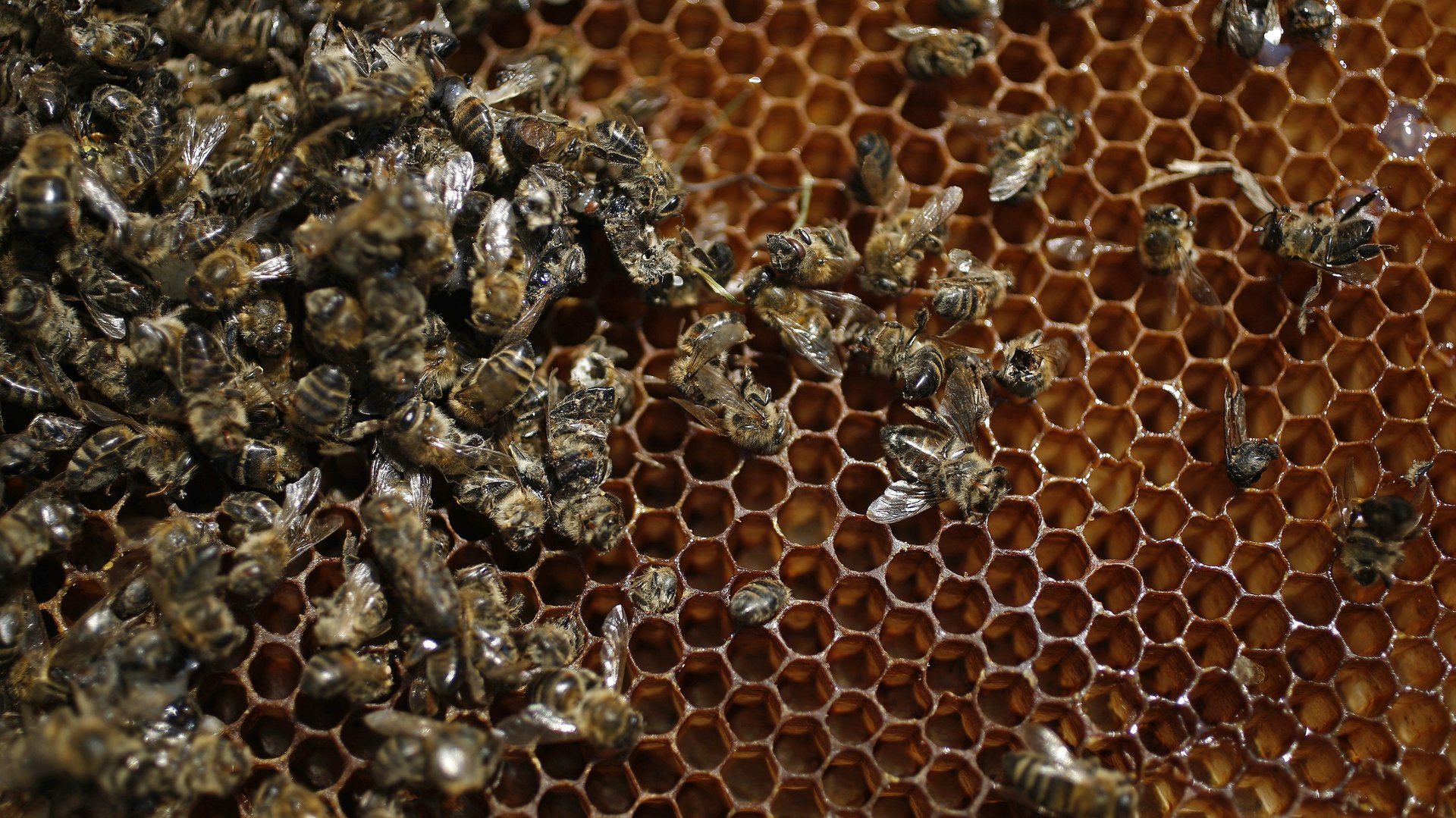
Honeybees are crucial for pollinating large portions of the US food supply (estimates range between 7% and 30%). More than half of America’s tended bees are needed every year to pollinate California’s almond crops.
That demand has made beekeeping a lucrative profession—if you can keep your hives.
“Bee-rustling,” the theft of honeybee hives, is becoming a common crime that can cost beekeepers their entire livelihoods, according to a from National Geographic.
Join 500,000+ readers who start their day with Quartz.
By subscribing, you agree to our Terms of Service and Privacy Policy.
“It’s the perfect crime,” police detective Rowdy Jay Freeman, who commercially raises bees himself, told the magazine. “You see a person in a white suit, and it looks like a beekeeper, but it could be a thief too—you’d never know.”
One farmer who spoke to National Geographic, Jeremy Kuhnhenn, said that he lost $70,000 in bees, equipment, and lost pollination fees just days before the California almond bloom, when the bees are trucked in.
The concentration of bees in California during the almond bloom and nature of pollination—beehives are left outside and typically unattended—mean that they’re easy picking for thieves. Bee-rustlers also need to know how to mollify and transport bees without killing the colonies, meaning that they must have some knowledge of beekeeping as well.
The United States supplies roughly 80% (pdf) of the world’s almonds, and all of that crop is grown in California. An increase in demand for almonds in Asia has made the almond business more lucrative for farmers, according to a report by the Bureau of Labor Statistics, which recorded a 380% increase in US almond exports between 2005 and 2015. While almond prices peaked at $4 per pound in 2014, a recent trend shows that the price is rising once again.
That money means that bees can command a higher price for enabling the crop to reproduce and grow.
“When we first got started, the rental fee was five dollars a hive,” Daljit Rakkar, a second-generation almond farmer, told National Geographic. “Now it’s $180 to $200. The standard is two hives per acre. We’ll spend $500,000 on bees this year.”
