Hundreds of new top-level domain names (the last bit of a web address, like .com) will hit the web this year. Of nearly 2,000 proposed domains, 101 belong to Google, one of the largest single applicants. That’s odd, for Google has worked hard to make domain names as irrelevant as possible.
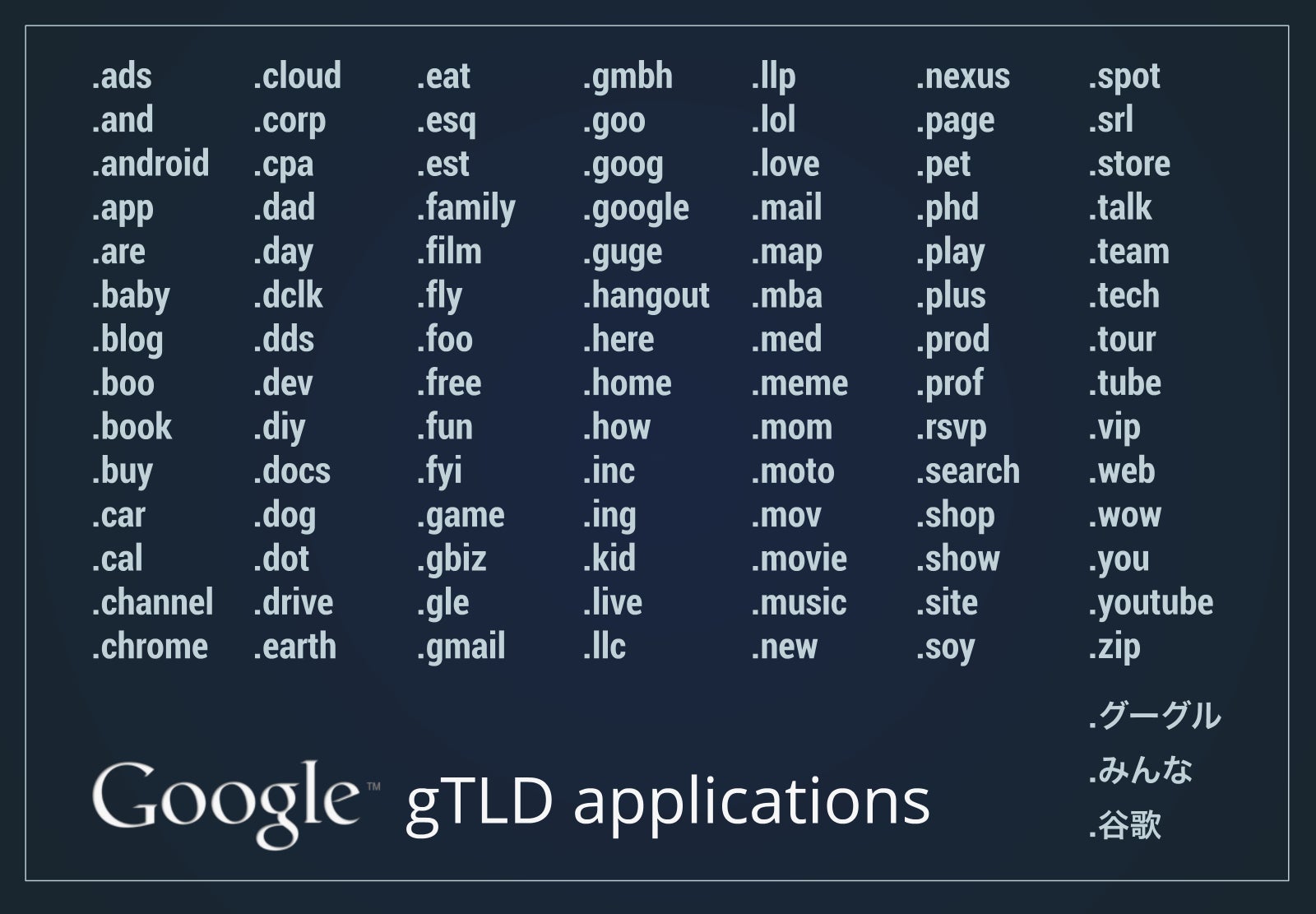
Hundreds of new top-level domain names (the last bit of a web address, like .com) will hit the web this year. Of nearly 2,000 proposed domains, 101 belong to Google $GOOGL, one of the largest single applicants. That’s odd, for Google has worked hard to make domain names as irrelevant as possible.
Google’s web browser, Chrome, was the first to merge the address bar and search box at the top into one “omnibox.” This makes the browser easier to use, but it also makes people more likely to search, including for staple sites like Facebook $META, YouTube, and even Google (pdf, p.224). (It’s quicker to type “facebook” than “facebook.com”.) That means they use .
Join 500,000+ readers who start their day with Quartz.
By subscribing, you agree to our Terms of Service and Privacy Policy.
Let’s imagine that Bob wants a website for his car company in Brooklyn, and can’t find a shorter .com address available than bobscarbrooklyn.com. Bob would love to have a short address like bobs.car instead. But if people search Google for “Bob’s car Brooklyn,” they’ll find him. And they’ll see ads every time. Why, then, should Google care about buying .car and letting Bob have his address on it?
Here’s Google’s answer to that question, in full:
“Our main focus is to make the introduction of new TLDs a good experience for web users. We’re just beginning to explore a new source of innovation on the web, and we are both excited and curious about the potential for these new TLDs. By opening up more choices for Internet domain names, we believe users will have options for more diverse—and perhaps shorter—signposts in cyberspace.”
That doesn’t tell us much, but here’s what’s really going on. Google wants to get the entire world online. It has three ways of doing that. The first is simply to help people get internet connections. One mission of Google’s offices in Africa and Asia is to get people online, through outreach programs or by introducing them to the internet for the first time.
The second is to get people already online to spend more time online. GoogleX, its innovation lab, generally publicized as sexy, out-there inventioneering, has the same purpose. Google Glass? Geared toward keeping you online all the time. Driverless cars? Angling to keep you online while commuting. Delivering the internet through balloons? A way to keep you online in out-of-the-way places.
The third way is getting people to have an online presence. Google’s business is search, but all those people who just came online need things to search for. Just because every cafe in Brooklyn has a website doesn’t mean every grocery store in New Delhi or even Albuquerque, New Mexico does. Google wants everybody to be both an online consumer and producer; that’s what Google+ is all about.
The new domain names are part of that mission. They help Google convince more businesses to finally get their own website—like bobs.car. These websites give Google valuable new data. And, of course, if the owners of the new websites want to be found, they’re best off advertising—with Google.
