When she was 18, Evelyn Beatríz Hernández Cruz, a high-school student from a poor family in Cojutepeque, El Salvador, was raped repeatedly, over the span of few months, by the member of a local gang. She unknowingly became pregnant and, in 2016, suffered a stillbirth during her third trimester.
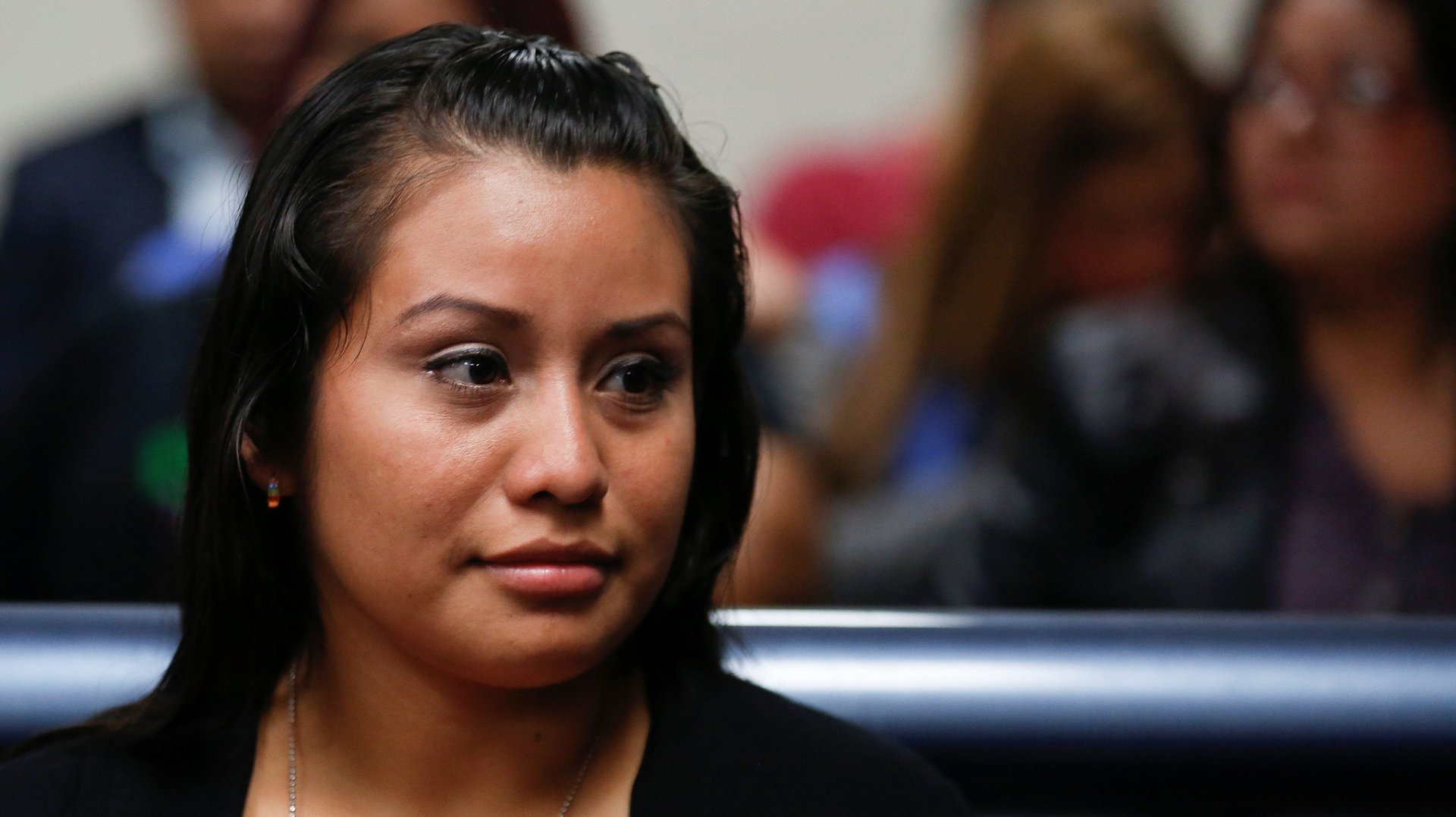
When she was 18, Evelyn Beatríz Hernández Cruz, a high-school student from a poor family in Cojutepeque, El Salvador, was raped repeatedly, over the span of few months, by the member of a local gang. She unknowingly became pregnant and, in 2016, suffered a stillbirth during her third trimester.
She then spent nearly three years in prison, battling the country’s strict abortion laws.
Join 500,000+ readers who start their day with Quartz.
By subscribing, you agree to our Terms of Service and Privacy Policy.
When Hernández Cruz had her stillbirth, her mother—who found her passed out and covered in blood in their family’s home outside a latrine—took her to the hospital to seek medical attention, but found the police instead. An autopsy on the fetus showed that it died of aspiration pneumonia. Yet Hernández Cruz was charged with murder.
She was taken to prison to await her trial, and was later sentenced to 30 years for aggravated murder because, the prosecution argued, she had not sought prenatal care.
In El Salvador, abortion is illegal with no exceptions—including to save the life of the mother. Since the draconian law was adopted in 1998, dozens of women have been tried because they sought to have an abortion. Many others, like Hernández Cruz, have been tried under the suspicion of neglected care.
Hernández Cruz spent nearly three years in prison before the supreme court overturned her sentence. The high court, however, ordered a second trial, accepting the prosecutor’s argument that she didn’t seek antenatal care because she didn’t want the baby and her intent was to kill it.
A court finally acquitted Hernández Cruz on Monday. But her case remains an example of how devastating a total lack of reproduction and abortion rights can be for women. Her story might seem dystopian, something out of The Handmaid’s Tale. But it actually is, in a way, a glimpse into the future some anti-abortion activists seek.
Just last week in Tennessee, during a state committee hearing on a bill that would all but ban abortion, the National Right to Life Committee’s general counsel, Jim Bopp—one of the country’s most influential anti-abortion activists—said his ultimate goal was a nationwide ban on abortion, even in the case of rape and incest. Some state legislatures, most recently Texas’s, have also discussed introducing punishment for abortion (a sentiment channeled by US president Donald Trump in the 2016 campaign)—with positions as extreme as calling for death penalty for women who have abortions.
