People with the world’s best memories—who set world records for reciting pi to 100,000 digits, or win championships for memorizing decks of cards in 18 seconds—aren’t genetically gifted. They’re trained. And most of them use some version of the same technique, called the “mind palace.”
People with the world’s best memories—who set world records for reciting pi to 100,000 digits, or win championships for memorizing decks of cards in 18 seconds—aren’t genetically gifted. They’re trained. And most of them use some version of the same technique, called the “mind palace.”
The premise is to convert arbitrary lists or other information into stories and scenes, which are easier to remember because they’re visual and emotional. The strategy has been used by everyone from the ancient Greek poet Simonides of Ceos to Sherlock Holmes (at least the ).
Join 500,000+ readers who start their day with Quartz.
By subscribing, you agree to our Terms of Service and Privacy Policy.
We’ve released an experimental project in augmented reality to guide you through it. If you have an Apple $AAPL device running iOS 13*, try it out here.
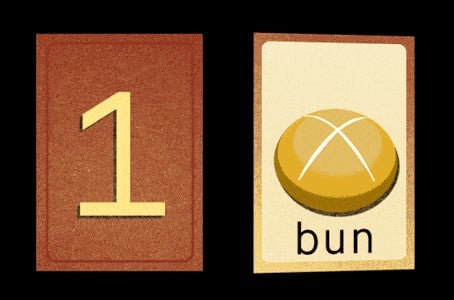
Otherwise, the preview below is accessible on most devices. It shows a method for memorizing an 8-digit number by turning each number into an object, and then combining them into a story. The more interesting the story, the clearer—and longer—you should remember the original sequence of numbers.
If the method seems strange, realize that you’ve probably used something similar for a long time. If you ever learned to read sheet music, your teacher may have taught you the mnemonic “Every Good Boy Does Fine,” to remember the lines of the treble clef. You may recall learning taxonomy with “Kids Prefer Cheese Over Fried Green Spinach”—kingdom – phylum – class – order – family – genus – species. Or for the order of operations, “Please Excuse My Dear Aunt Sally”—parentheses, exponents, multiplication, division, addition, subtraction.
The mind palace is a way to establish your own mnemonics. It’s flexible enough to apply to longer, more complicated information, like learning a language.
Creating your own mind palace can take some time, but almost anyone can do it. And as neuroscientist Boris Konrad explains in the second episode of Exceptional Humans—our video series about people who stretch the limits of what it means to be human—using the method can actually change your brain to be more like that of a memory champion.
*For more information about device compatibility, see the Reality Composer page on the App Store.
