Subway systems carry a lot of people in confined spaces. That’s what makes them such an efficient mode of mass transit—but also high-risk places in times of infectious disease outbreaks.
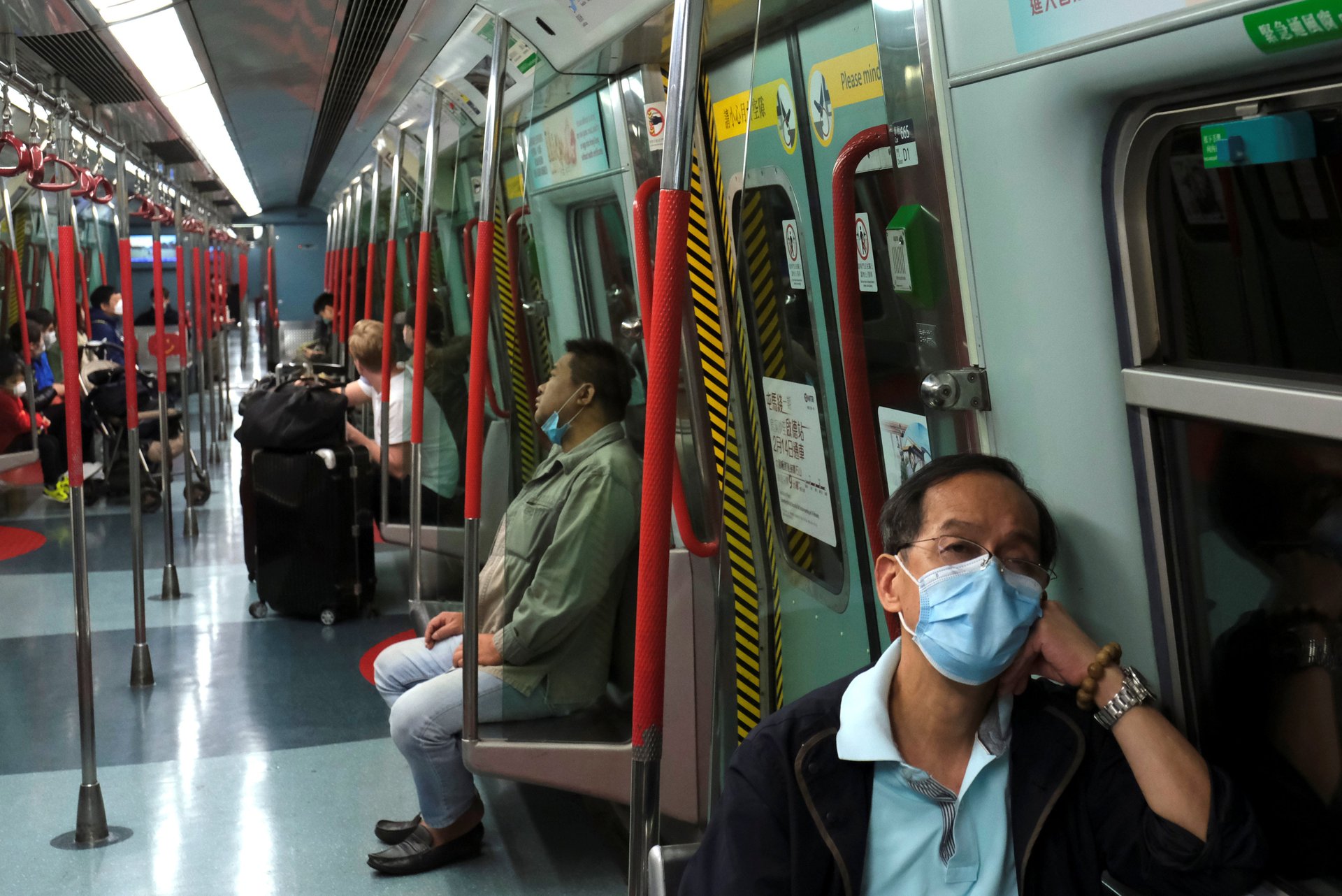
Subway systems carry a lot of people in confined spaces. That’s what makes them such an efficient mode of mass transit—but also high-risk places in times of infectious disease outbreaks.
Hong Kong’s Mass Transit Railway (MTR) subway transports millions of passengers everyday, and to mitigate the effects of community spreading of Covid-19, the majority-government-owned railway operator this week rolled out a robot designed to disinfect trains and stations. Shaped like a mini fridge on wheels, the automated machine sprays a hydrogen peroxide solution to disinfect surfaces . It’s designed to be used on top of regular cleaning by staff, and the spraying mechanism is supposed to disinfect small gaps that are difficult to reach by hand, the company said in a statement (pdf). The robot will also be deployed to areas where a confirmed Covid-19 patient has been to decontaminate the area. The deep-cleaning robots don’t come cheap, though: HK$1 million ($129,000) apiece, for a fleet of 20.
Join 500,000+ readers who start their day with Quartz.
By subscribing, you agree to our Terms of Service and Privacy Policy.
Hong Kong has so far appeared to keep the coronavirus outbreak largely under control, with a total of 129 confirmed cases reported as of Mar. 11, of which 39 were imported. Schools have been closed since late January, many companies have transitioned to working from home, and the overwhelming majority of people on streets wear masks. Hong Kongers appear to have done so well with their social distancing and personal hygiene measures, in fact, that there has been a sharp drop in flu cases compared to previous years, according to data from health officials. Still, many are dissatisfied with what they see as late and piecemeal responses from the government, especially its delay in restricting arrivals from mainland China.
While latest passenger numbers for the month of February are not yet available, anecdotal evidence suggests there has been a sharp drop in ridership since Covid-19 began taking hold in the city of 7.4 million. The MTR has also been battered by months of large-scale protests starting last June. Stations and trains have been vandalized, causing an estimated $204 million in damages. In its annual report released earlier this month, MTR specifically noted (pdf) the “ongoing local public order events in Hong Kong and the Covid-19 outbreak” as challenges and sources of uncertainty going forward.
Other metro stations around the world have stepped up cleaning measures, too. The MTA in New York City announced this week that it would double its daily cleaning to two comprehensive wipe-downs of surfaces each day, while the Boston subway system is sanitizing its station surfaces every four hours. Singapore’s subway is doing the same, with surfaces disinfected three times a day.
