The US Centers for Disease Control and Prevention (CDC) and the Food and Drug Administration have called for the US to suspend the administration of the Covid-19 vaccine made by Johnson & Johnson over concerns about blood clots. Federal sites, as well as local ones in states including New York, Massachusetts, Georgia, and Nebraska, and the drug-store chain CVS, will pause giving J&J shots.
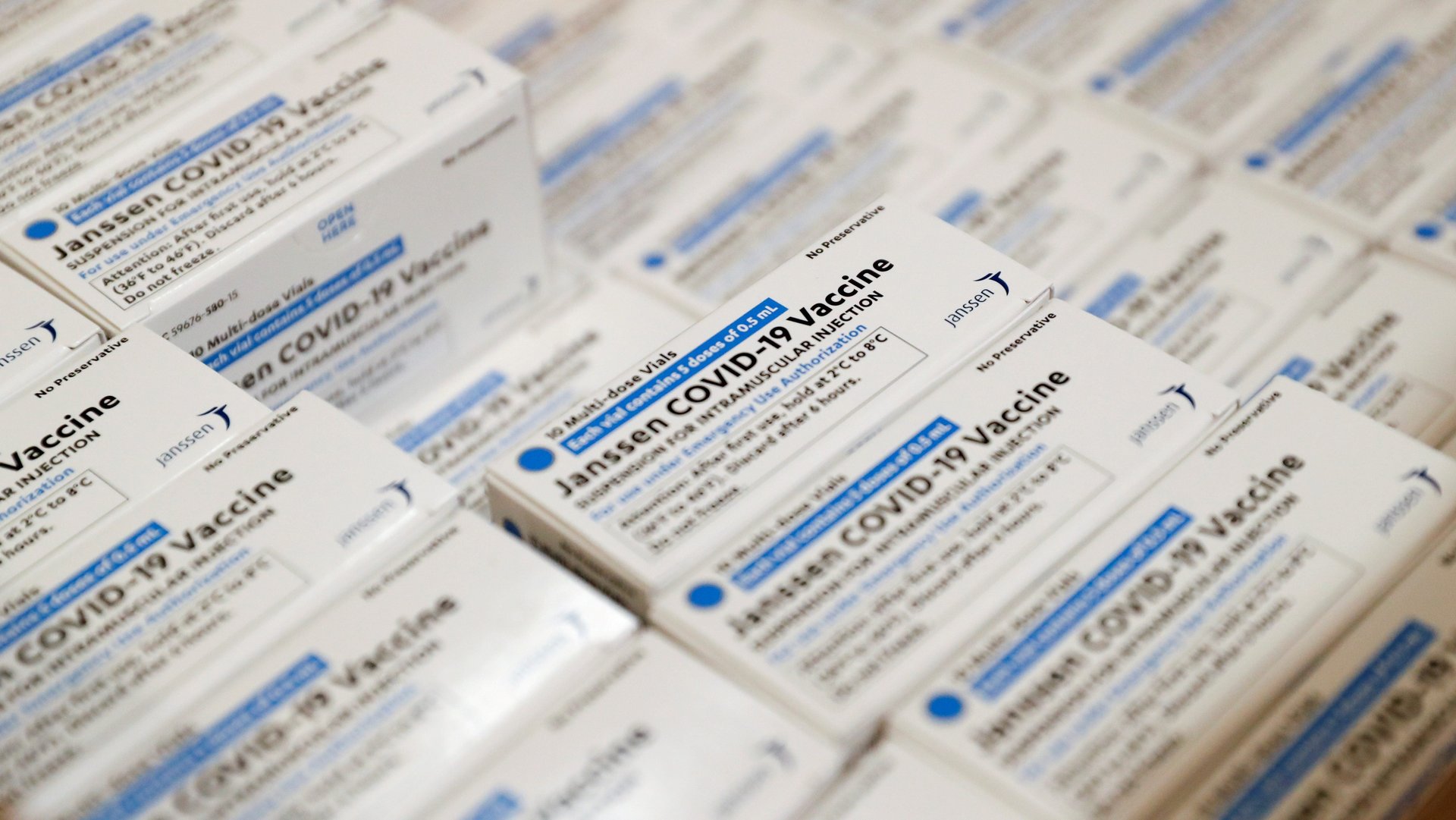
The US Centers for Disease Control and Prevention (CDC) and the Food and Drug Administration have called for the US to suspend the administration of the Covid-19 vaccine made by Johnson & Johnson $JNJ over concerns about blood clots. Federal sites, as well as local ones in states including New York, Massachusetts, Georgia, and Nebraska, and the drug-store chain CVS, will pause giving J&J shots.
Blood clots occurred in six women who received the vaccine, which is administered in a single dose. So far, 7 million patients have received the vaccine, and 9 million more doses are ready to be distributed.
Join 500,000+ readers who start their day with Quartz.
By subscribing, you agree to our Terms of Service and Privacy Policy.
The CDC believes it will be only a matter of days before the concern is investigated, and framed the measure as an abundance of caution. It isn’t yet clear whether it was the vaccine that caused the blood clots, which would still be an extremely rare occurrence. The CDC says pausing the administration gives time to understand whether there is a link with the vaccine, and prepare the health system to treat any blood clots, however rare, that might occur post-vaccine.
Temporary suspension of a drug approved for emergency use is standard practice even in the case of rare side effects, yet the news doesn’t exactly boost vaccine confidence in a climate where as many as a third of Americans foster at least some skepticism.
Something similar happened with the AstraZeneca $AZN vaccine, which in March was temporarily suspended, and later reintroduced, in several European countries following the rare emergence of blood clots after the injection.
The effective risk of blood clots associated with the J&J vaccine is extremely low. Even if all the cases emerged so far were confirmed, that would be only 0.00009% of people who receive the shot—or 9 in 10 million.
That’s fewer than the percentage of people who develop blood clots in America otherwise. According to the CDC, 300,000 to 600,000 people will develop blood clots every year, so more than 1 in 1,000. Blood clots can be fatal. About a quarter of those who develop them die suddenly, and another 10% to 30% of those who are diagnosed with blood clots die within the month.
When it comes to blood clots, too, there are many common drugs and activities that put us at a higher risk of it than the vaccine.
