
The only packing list you'll ever need for a 2-week international trip
A complete 2-week international trip packing list covering clothing, documents, electronics and toiletries so nothing gets left behind or overpacked
Credit: Canva Images
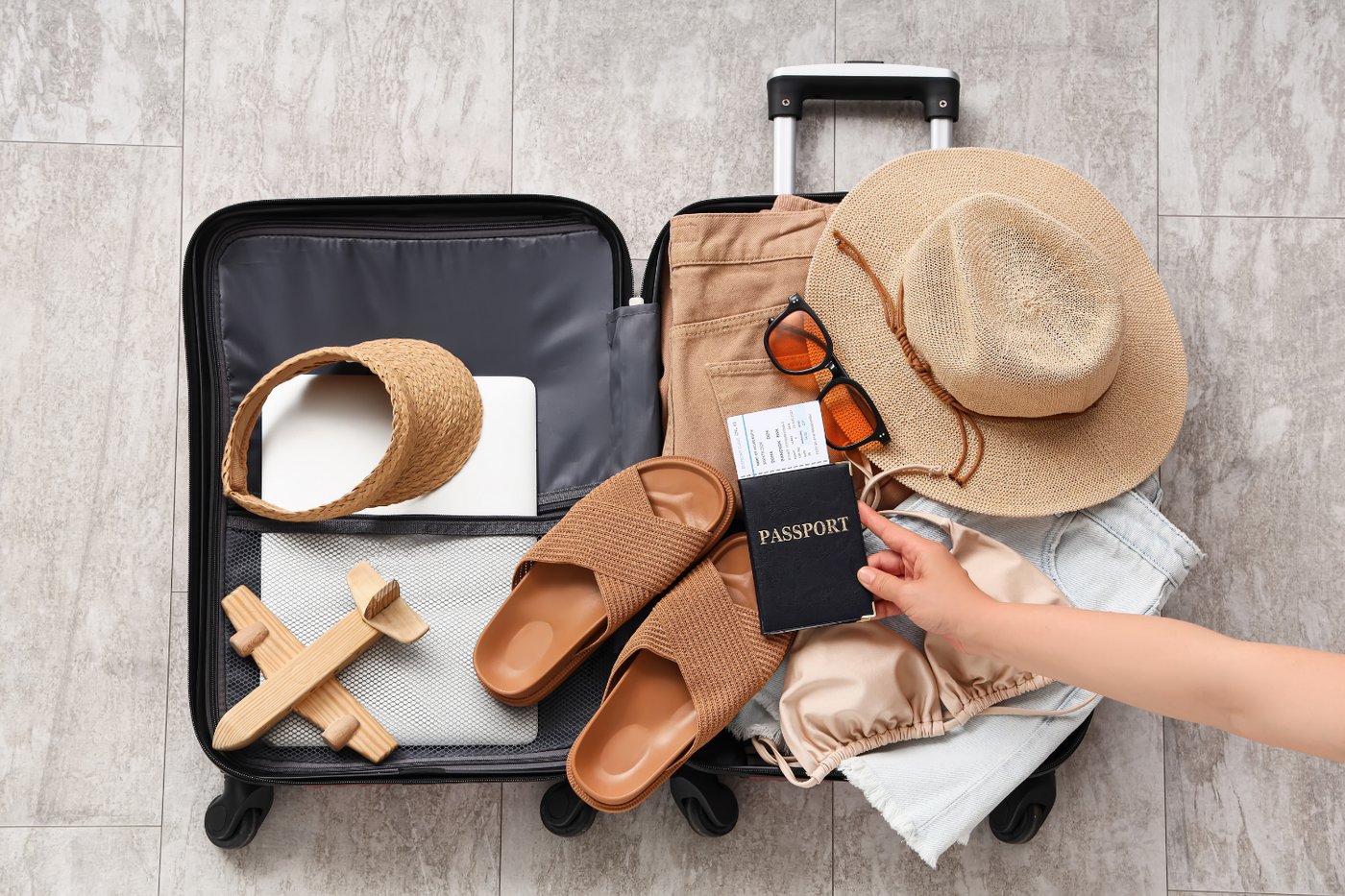
A 2-week international trip creates a packing problem a weekend getaway never does: too many days to just repeat one outfit, but too few pounds of luggage allowance to pack a fresh item for every one of them. Airlines typically cap checked bags around 50 pounds and carry-ons to a set of linear dimensions, and most international itineraries mean at least one connection where a bag can be delayed, misrouted, or simply late. The right approach is not to pack more. It is to pack a smaller set of items that work harder — clothing that layers and repeats, a toiletry kit that clears airport security without a second look, and a carry-on that can function as your entire suitcase for a day or two if your checked bag does not arrive on time.
This packing list is built around that principle. It covers clothing built for repetition rather than variety, the TSA's current 3-1-1 liquid rule and how to pack around it, the electronics and adapters that actually matter across different countries' outlets, and the documents, money, and health items that belong on your body or in your carry-on rather than buried in a checked bag. It also covers the parts of packing people consistently get wrong: overpacking shoes, forgetting a country's specific plug and voltage standard, or packing enough toiletries for two weeks instead of a travel-sized kit and a laundry plan.
None of this requires specialty gear or a particular travel style. It works whether the trip is a single-country stay or a multi-city itinerary, whether the climate is consistent or changes halfway through, and whether the traveler checks a bag or tries to do the whole trip carry-on only. Each section below stands on its own, so it can be used as a full packing plan from the first slide to the last, or as a reference to jump to the one category still causing trouble the night before a flight.
Build a 7-day capsule wardrobe that stretches to 2 weeks
Credit: Timur Weber / Pexels
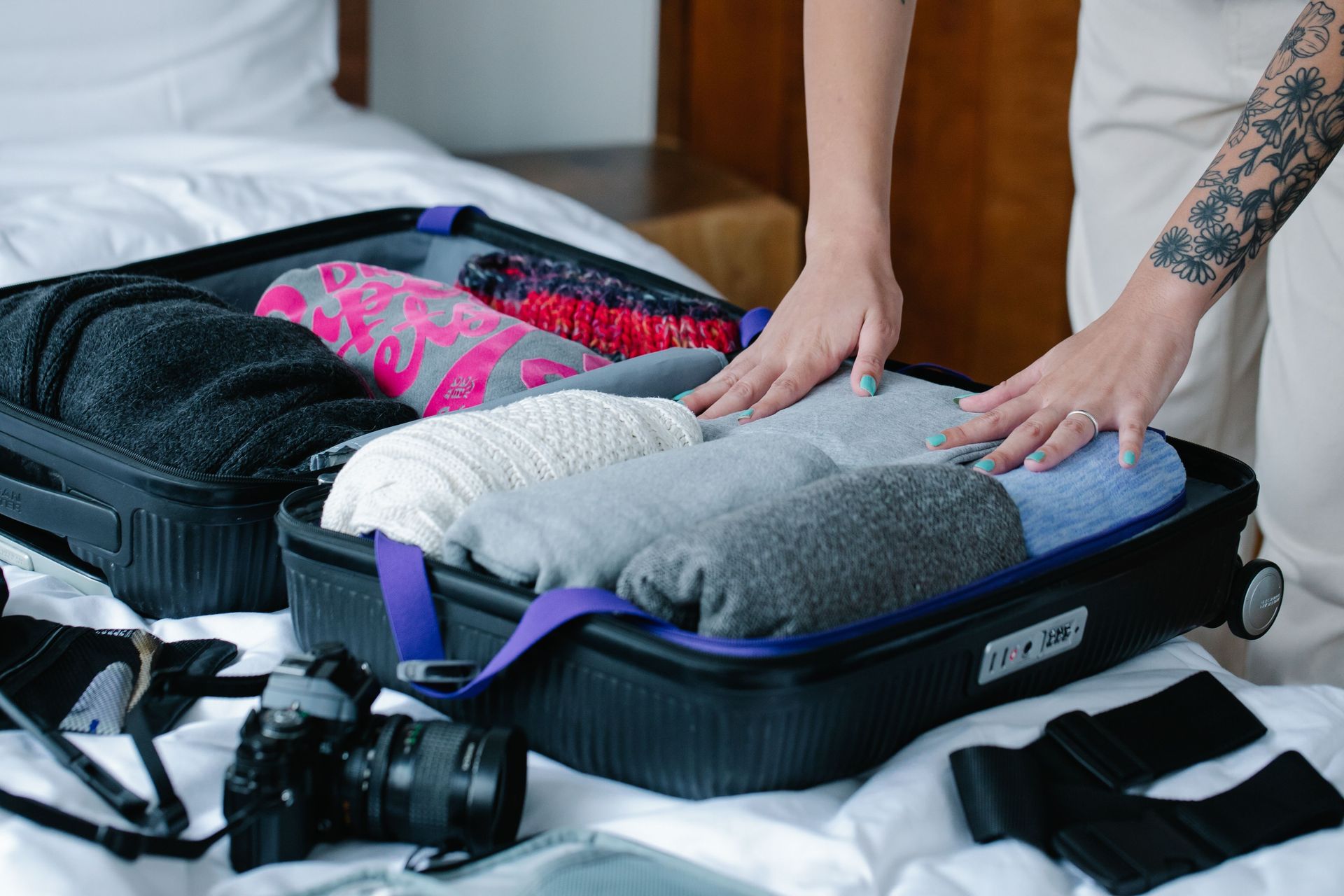
Pack roughly seven days of clothing and repeat it once, rather than packing a fresh item for all 14 days of the trip. A 2-week trip does not require 2 weeks of unique outfits; it requires a small set of pieces that mix and match cleanly and can be worn more than once without looking repetitive.
The math works because most people photograph and remember outfits, not fabric. Choosing four or five tops in complementary colors, two or three bottoms, and one layering piece produces well over a dozen distinct combinations before anything repeats in the exact same pairing. Neutral colors — navy, black, gray, olive, white — do more work here than bright ones, since every neutral top pairs with every neutral bottom, while a bright pattern only pairs with one or two other things packed.
Fabric choice matters as much as color. Merino wool and technical synthetic blends resist odor and wrinkling far better than cotton, which means the same shirt can be worn two or three times before it needs a wash. This is the detail that makes a 7-day wardrobe stretch across a 14-day trip without ever feeling stale or unwashed.
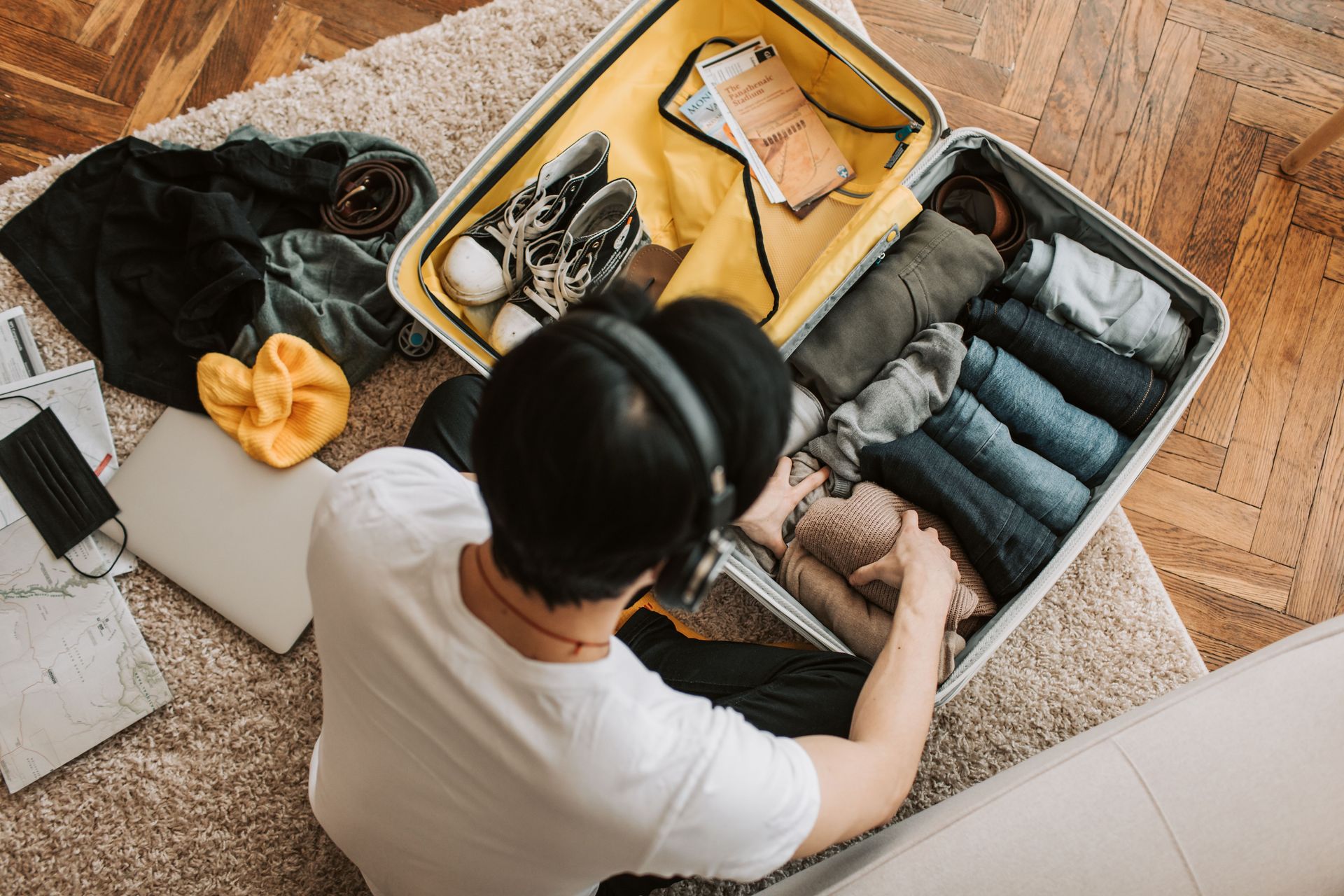
Plan for one set of sleepwear, seven days of underwear and socks (or five days plus a laundry stop, covered later in this list), and one dedicated outfit for transit days that can also double as a backup if something else gets damaged or lost. Pack these items rolled rather than folded flat; rolling reduces wrinkling on natural fibers and takes up meaningfully less space than folding, which matters once packing cubes come into play.
Save one outfit slot for the destination's specific dress norms. Many religious sites across Europe, the Middle East, and Asia require covered shoulders and knees, and some formal restaurants in cities such as Paris or Tokyo still expect collared shirts or closed-toe shoes. One versatile, slightly dressier piece covers both situations without needing a separate outfit for each.
Pack a carry-on that covers the first 24 hours
Credit: nappy / Pexels
Treat the carry-on as a self-contained 24-hour bag, not just a place for a book and a phone charger. International connections carry a higher risk of delayed or misrouted checked luggage than domestic flights, and a carry-on packed with one full day of essentials means a delayed bag is an inconvenience rather than a crisis.
That means one complete change of clothes, including underwear and socks, packed in the carry-on rather than the checked bag. It also means any medication taken daily, since checked bags can be delayed for a day or more and some prescriptions are not easily refilled abroad without a local doctor's visit.
Chargers and cables belong in the carry-on as well, not because they are fragile but because they are the items travelers reach for constantly during a layover or a delay. A portable battery pack, kept below the 100 watt-hour limit most airlines set for carry-on batteries, keeps a phone charged through a long layover without hunting for an open outlet.
Noise-canceling headphones or basic earplugs make a meaningful difference on long-haul flights, particularly for anyone trying to sleep across time zones before an early arrival. A compressible neck pillow and an eye mask take up little space and matter more on an overnight flight than almost anything else in the bag.
Snacks that clear security screening — granola bars, dried fruit, nuts — solve the problem of arriving at a destination outside normal meal hours with nothing open. An empty, collapsible water bottle filled after the security checkpoint keeps hydration up on long flights without paying airport prices for bottled water.
Finally, keep one printed or downloaded copy of the full itinerary, hotel confirmations, and any visa or entry documents in the carry-on. Phone batteries die and Wi-Fi at arrival gates is unreliable; a backup that does not depend on either has saved more travelers at immigration counters than any app.
Toiletries that fit TSA's 3-1-1 rule
Credit: Danielle Rangel / Pexels
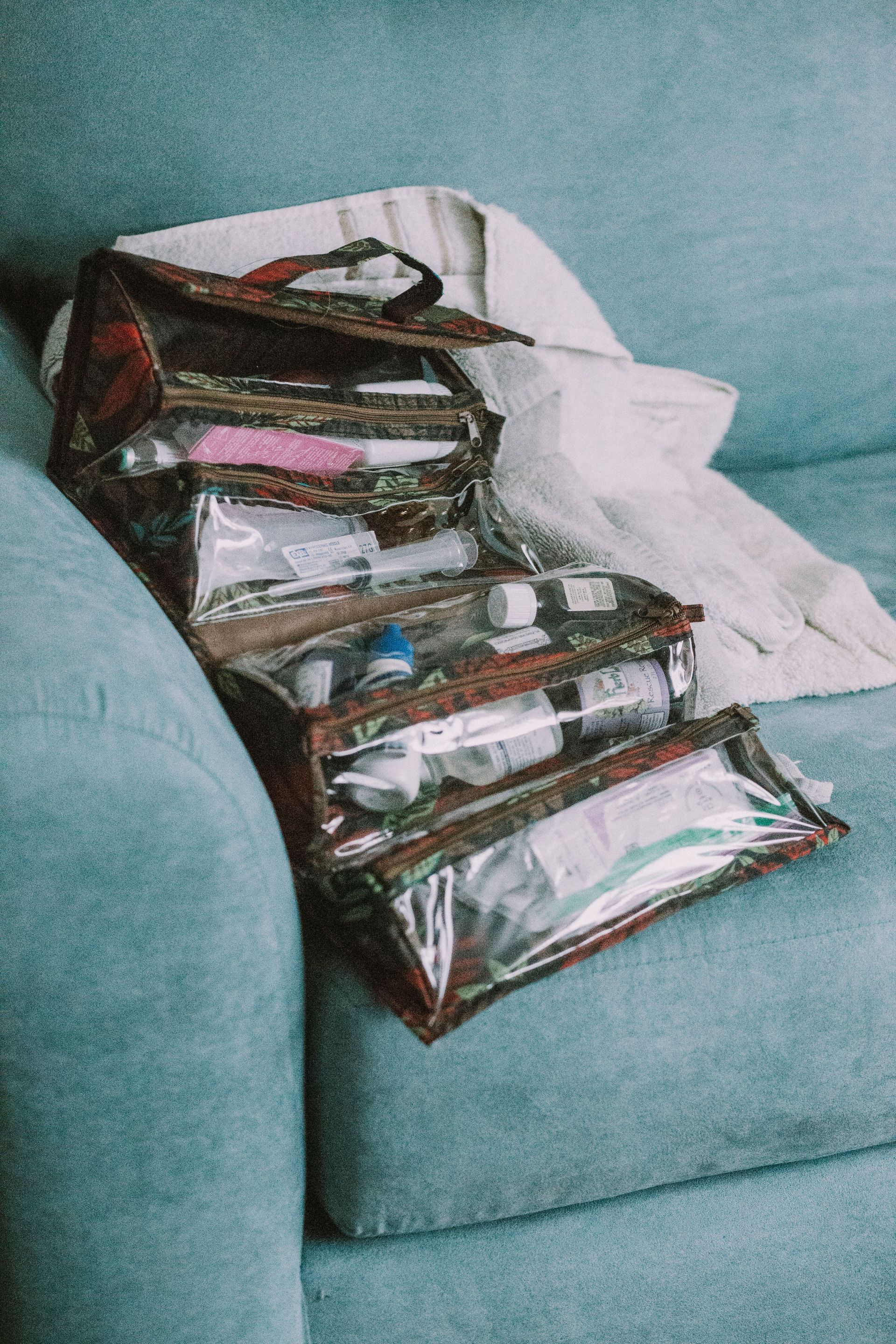
Every liquid, gel, aerosol, cream, or paste in a carry-on must sit in a container of 3.4 ounces or less, with all containers fitting inside a single quart-sized clear bag — the TSA's 3-1-1 rule, which remains the standard at every U.S. checkpoint. This rule has not changed in years despite periodic speculation, and it applies regardless of TSA PreCheck status.
The container size is what gets measured, not how much product remains inside, so a nearly empty six-ounce bottle is still confiscated at the checkpoint. Buying dedicated travel-sized bottles, or decanting a normal-sized product into a labeled 3-ounce bottle, avoids this entirely.
Solid alternatives sidestep the liquid rule altogether. Solid shampoo and conditioner bars, solid perfume, and stick or solid deodorant are not classified as liquids and carry no size limit in a carry-on, which frees up space in the quart bag for items that have no solid equivalent, like sunscreen or contact lens solution.
Medications in liquid form, along with baby formula and breast milk, are exempt from the 3.4-ounce limit but must be declared to the screening officer and may go through additional inspection. Keeping prescription liquids in their original labeled containers avoids questions at the checkpoint.
For a 2-week trip, pack toiletries for about one week and plan to either repurchase basics at the destination or do a load of laundry midway through, rather than trying to fit 2 weeks of full-sized product into carry-on-compliant containers. Most destinations, from major cities to smaller towns, sell toothpaste, shampoo, and sunscreen, which means none of it needs to survive a full 2 weeks from a single travel-sized bottle.
Pack the quart bag near the top of the carry-on, not buried under clothing, since it needs to come out quickly at older, non-CT checkpoints still common outside major U.S. hubs and at many international airports.
Universal adapters and electronics for international outlets
Credit: Canva Images
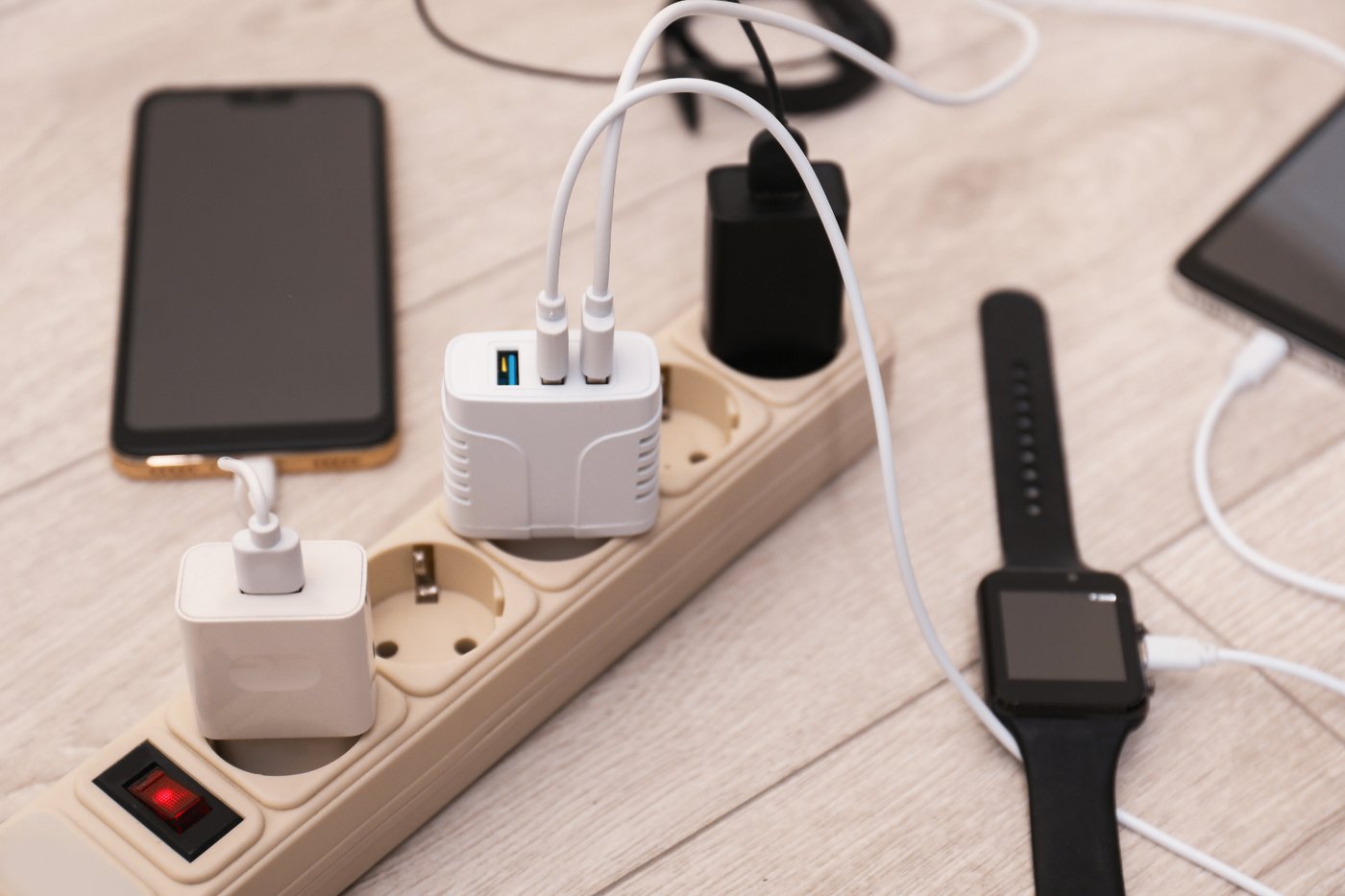
A single universal travel adapter with built-in USB-A and USB-C ports covers the plug shape problem in nearly every country, but it does not solve the voltage problem, which is a separate issue entirely. Plug shape and electrical voltage are two different things, and confusing them is the most common electronics mistake on international trips.
Most of the U.S. and Canada run on 120 volts, while most of Europe, Asia, Africa, and Australia run on 220 to 240 volts. A plug adapter changes the shape of the prongs so they fit a foreign outlet; it does nothing to change the voltage running through that outlet. Phone chargers, laptop chargers, and most modern camera and camcorder chargers are dual-voltage, meaning they accept anywhere from 100 to 240 volts automatically — this is printed directly on the charging brick, usually near the input specifications.
Anything not dual-voltage, such as some hair dryers, flat irons, and electric razors built specifically for 120-volt North American outlets, requires an actual voltage converter, not just a plug adapter, or it can be damaged or become a fire hazard. Checking the input voltage range printed on each device before the trip prevents this problem entirely, and it takes under a minute per device.
One universal adapter with multiple USB ports, rather than several single-plug adapters, cuts down on both bulk and the number of items that can be left behind in a hotel outlet. A short charging cable for each device, rather than the longer cables often used at home, saves meaningful space across a 2-week trip.
An offline map app, downloaded for each city or region before departure, removes dependence on hotel or airport Wi-Fi for basic navigation. A local eSIM or a physical SIM purchased on arrival is generally cheaper than international roaming plans for a 2-week stay, and most recent phone models support eSIMs without needing a physical card swap at all.
Travel documents and money you carry, not check
Credit:DΛVΞ GΛRCIΛ / Pexels
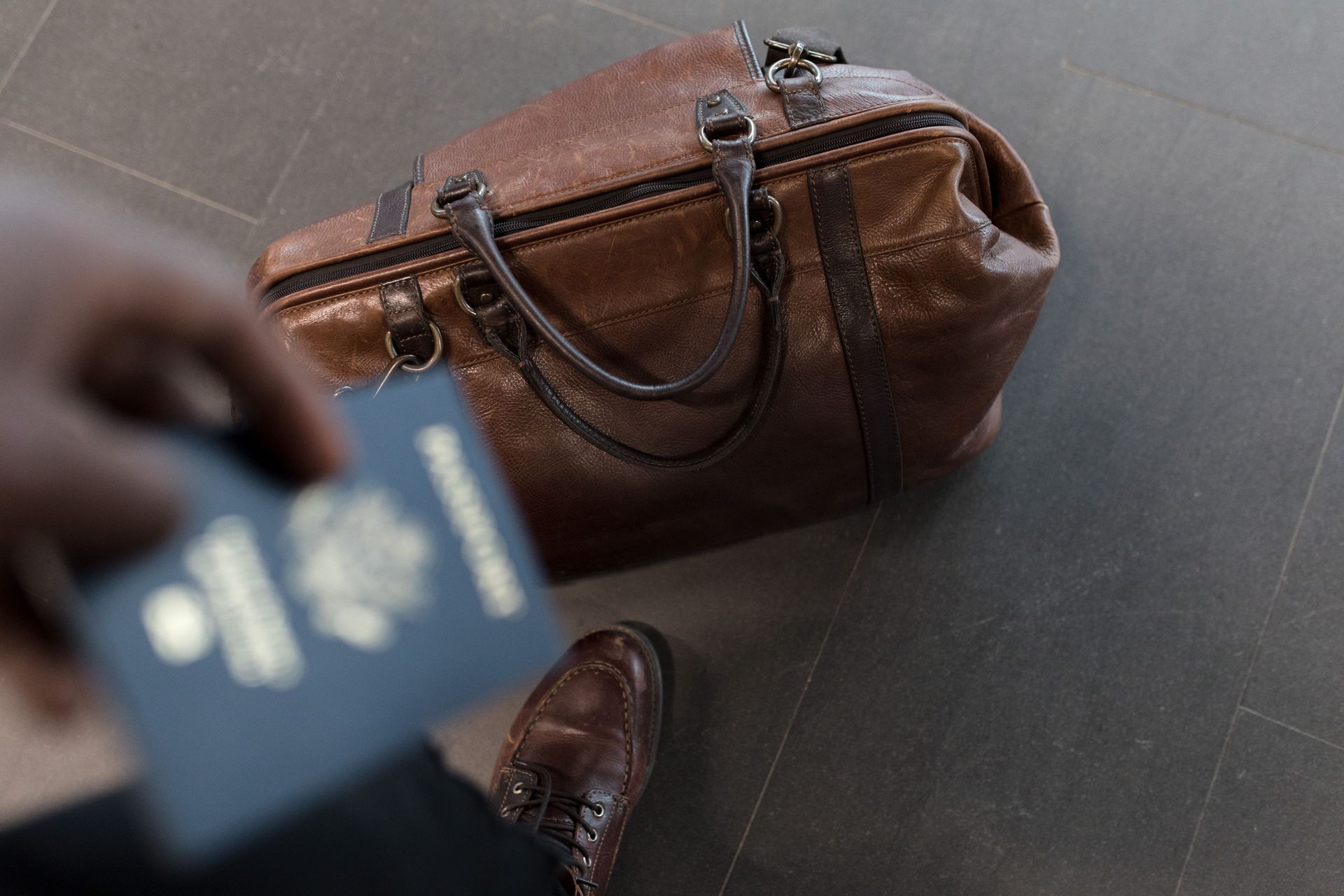
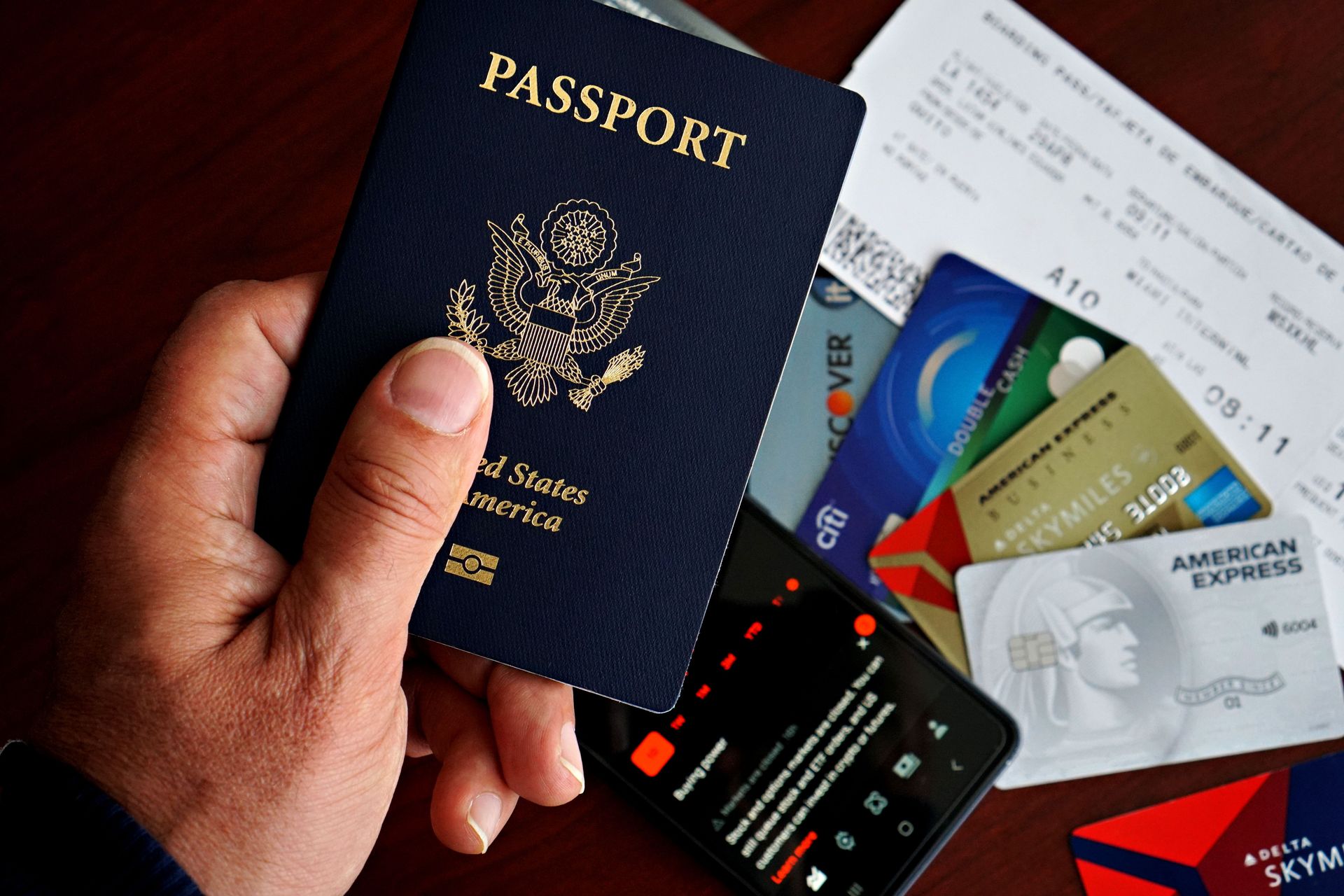
Passports, visas, boarding passes, and payment cards belong on your body or in a bag that never leaves your side, never in a checked bag. A checked bag can be delayed, misrouted, or opened by baggage handlers; a passport inside one turns a delay into a genuine problem at immigration.
A slim document organizer or a neck wallet worn under clothing keeps a passport, a printed copy of any visa, and one backup payment card together and out of a pocket that pickpockets specifically target in crowded transit hubs. A second, separate copy of the passport's photo page — either printed or saved offline on a phone — helps significantly if the physical passport is lost, since it speeds up the replacement process at an embassy or consulate.
Notify your bank and credit card issuer of the travel dates and countries before departure. Many card issuers flag international transactions as suspicious activity and freeze a card mid-trip without this step, which is one of the more common and entirely avoidable problems travelers run into abroad.
Carry two separate payment methods from two different networks — for example, a Visa $V and a Mastercard $MA, or a debit card from a second bank — stored in two different bags or pockets, not in the same wallet. If one card is lost, stolen, or declined, the trip does not stop.
A small amount of local currency, obtained before departure or immediately at an airport ATM on arrival, covers the first few hours before a bank card can be used reliably — taxi fare, a bottle of water, a tip. ATM withdrawals abroad generally offer a better exchange rate than airport currency exchange counters, which routinely charge some of the least favorable rates available.
Finally, keep a written list of emergency contacts, the nearest embassy's address, and any travel insurance policy number somewhere that does not depend on a working phone, since a dead battery or a lost phone should not also mean losing access to this information.
A compact health and medication kit
Credit: Roger Brown / Pexels
Pack all daily prescription medication in original labeled bottles in the carry-on, never in a checked bag, along with several days of buffer supply beyond the trip's actual length in case of a delayed return. Airlines and customs officers generally recognize prescription labels as sufficient documentation, but a printed doctor's note listing the medication and dosage is worth carrying for any country with stricter import rules on controlled substances.
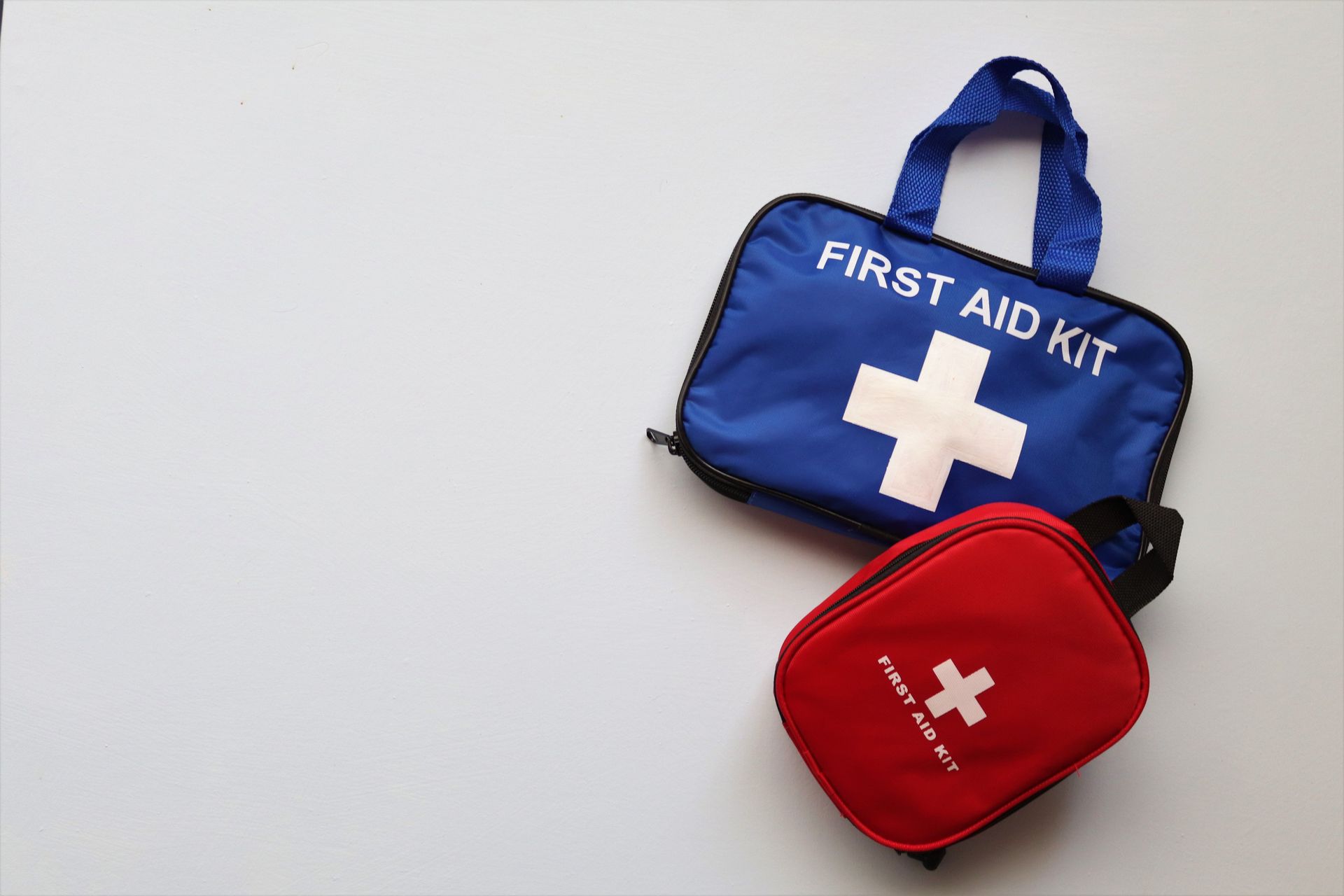
Beyond prescriptions, a compact kit covering the most common minor issues abroad prevents most mid-trip pharmacy runs. This includes pain relievers, anti-diarrheal medication, motion sickness tablets, and oral rehydration salts, which address the most frequent travel-related stomach issues more effectively than water alone.
Adhesive bandages, a small tube of antibiotic ointment, and blister treatment cover the minor cuts and blisters that come with more walking than usual on unfamiliar terrain. Compression socks help on flights longer than about six hours by supporting circulation during extended sitting, particularly on overnight long-haul segments.
Sunscreen and insect repellent matter far beyond tropical destinations; strong sun at altitude and mosquito-borne illness risk in parts of Southeast Asia, Central America, and sub-Saharan Africa apply well outside stereotypically hot climates. Checking whether the destination country requires or recommends specific vaccinations — yellow fever certificates are legally required for entry to some countries — should happen weeks before departure, not the night before, since some vaccines need time to become effective.
A physical copy of any known allergies, blood type, and emergency contact, written in both English and the local language where possible, helps significantly in a medical emergency where a phone may not be accessible or a language barrier slows communication. Travel insurance with medical evacuation coverage is worth the modest cost for any international trip, since a domestic U.S. health plan frequently does not cover treatment abroad at all.
Three pairs of shoes, never more
Credit: Vlada Karpovich / Pexels
Pack exactly three pairs of shoes for a 2-week trip: one walking or athletic shoe, one dressier or more versatile shoe, and one pair worn on the plane. Shoes are consistently the heaviest and most space-consuming items in a suitcase, and a fourth pair rarely gets worn enough to justify the space it takes.
The walking shoe should already be broken in well before departure; a brand-new pair worn for the first time on a full day of sightseeing is one of the more common causes of ruined trip days. Comfort and support matter more than style here, since this pair likely covers more miles per day than any pair of shoes gets at home.
The second pair should be versatile enough to cover a nicer dinner, a religious site requiring closed-toe shoes, or a slightly dressier evening out, without needing yet another dedicated pair for each of those situations. A clean leather or leather-look shoe in a neutral color generally covers all three of these needs at once.
The shoes worn on the plane should be the bulkiest pair, since wearing them rather than packing them saves the most suitcase space of any single packing decision. Slip-on styles make security screening faster, since shoes typically need to come off at U.S. checkpoints and at many international airports as well.
Packing an extra pair of laces and a small tube of shoe glue takes almost no space and solves two of the more common shoe failures on the road. Stuffing socks or small rolled items inside each shoe uses otherwise wasted space inside the shoe itself, which matters more than it seems across a 14-day trip.
Packing cubes and compression bags for organization
Credit: Timur Weber / Pexels
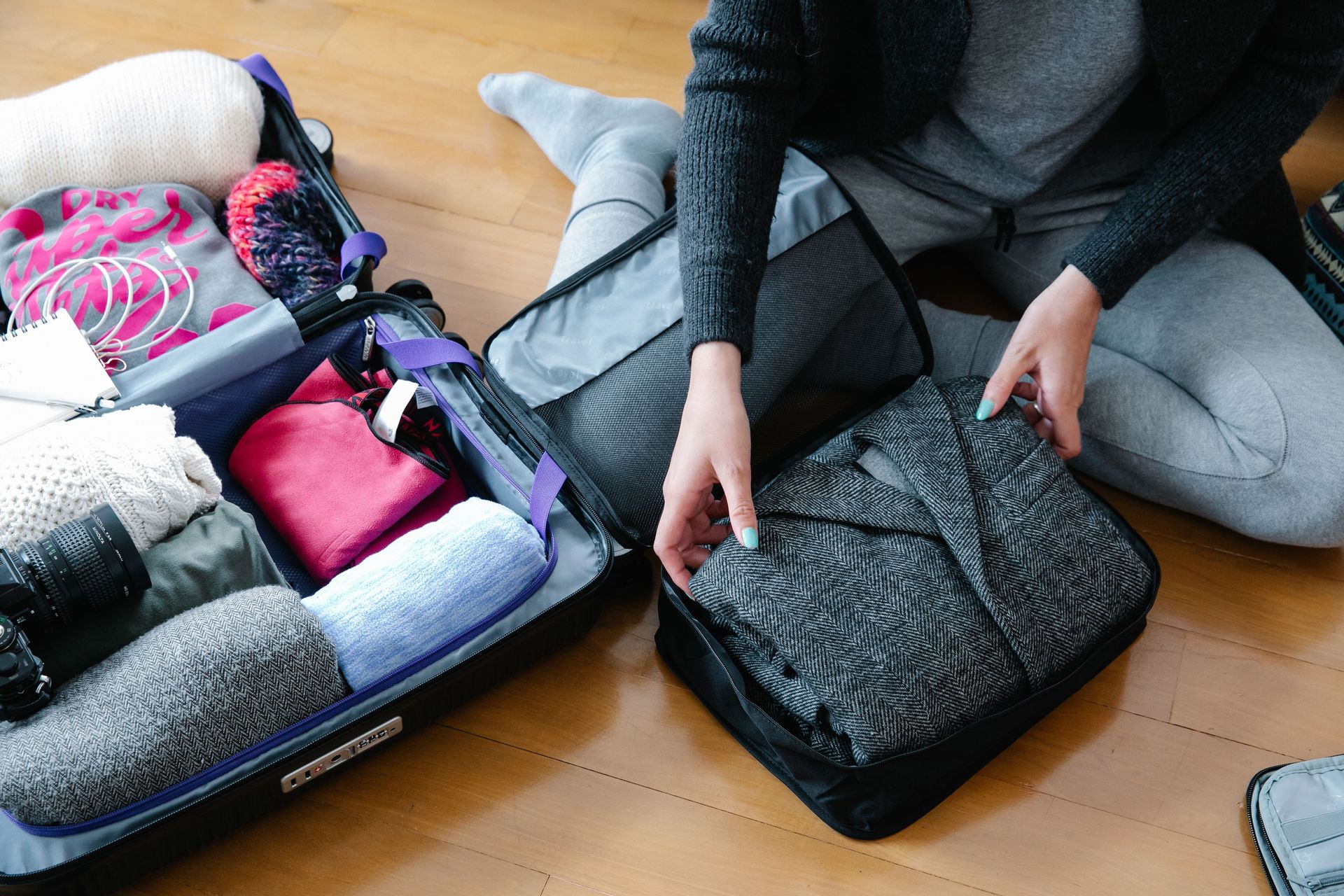
Packing cubes separate clothing categories into distinct, compressible units, which makes a 2-week trip's worth of clothing fit into meaningfully less suitcase space than folding everything loose. Three to four cubes — one each for tops, bottoms, undergarments, and a mixed category for sleepwear and extras — keep the whole system organized without requiring more than a few minutes to sort through at any point in the trip.
Compression cubes, which zip down after packing to physically reduce the volume of the clothing inside, work especially well for bulkier items like a light jacket or a sweater that would otherwise take up disproportionate space. This matters most on a 2-week trip, where the volume of clothing is naturally higher than on a short weekend trip.
A separate, dedicated cube or bag for dirty laundry keeps worn clothing away from clean clothing for the rest of the trip, which matters both for hygiene and for making the halfway point of a 2-week trip easier to manage, since that dirty bag becomes the exact load taken to a laundromat or hotel laundry service.
Packing cubes also solve a problem specific to multi-city itineraries: repacking a suitcase in a hotel room with limited counter space. Instead of unpacking everything to find one specific shirt, a traveler using cubes can pull one labeled cube out, take what is needed, and put it back without disturbing the rest of the suitcase.
A clear zippered pouch, separate from the toiletry quart bag, works well for cables, adapters, and small electronics, keeping them from tangling with clothing or getting lost loose at the bottom of a bag. Labeling cubes by category, even informally, saves meaningful time when packing back up quickly for an early flight or a rushed checkout.
Laundry gear that turns 2 weeks into 5 days of clothes

Credit: Elijah O'Donnell / Pexels
A small packet of travel laundry detergent and a sink stopper turn any hotel bathroom sink into a functional laundry setup, which is what actually makes packing only 5 to 7 days of clothing for a 14-day trip realistic. Washing a few items every third or fourth night, rather than doing one large laundry load, keeps the process quick and avoids needing an entire evening set aside for it.
A compact travel clothesline, which typically uses a twisted cord design that grips fabric without needing clips, dries clothing faster than draping it over a towel rack and works in almost any hotel bathroom or balcony. Merino wool and technical synthetic fabrics, mentioned earlier as good capsule wardrobe choices, dry significantly faster than cotton, which matters when laundry needs to be wearable again within a day.
Many hotels above a basic budget tier offer laundry service, though pricing per item can add up quickly across a 2-week stay; asking about a flat-rate laundry bag price at check-in is usually cheaper than paying per item. Laundromats, common in most cities outside the U.S. as full-service operations where staff wash and fold for a flat fee, are often the most cost-effective option for a larger, one-time load around the midpoint of the trip.
A few plastic clothespins, which weigh almost nothing, keep clothing secured to a travel clothesline in a room with an open window or a breeze from air conditioning. Packing one collapsible mesh laundry bag, distinct from the packing cube system, keeps worn items separated from clean ones without adding rigid structure to the suitcase.
Building one laundry stop into the itinerary around day seven or eight, rather than treating it as an emergency measure, is what actually lets a traveler pack half the clothing a 2-week trip would otherwise seem to require.
Anti-theft basics for crowded destinations
Credit: Murat IŞIK / Pexels
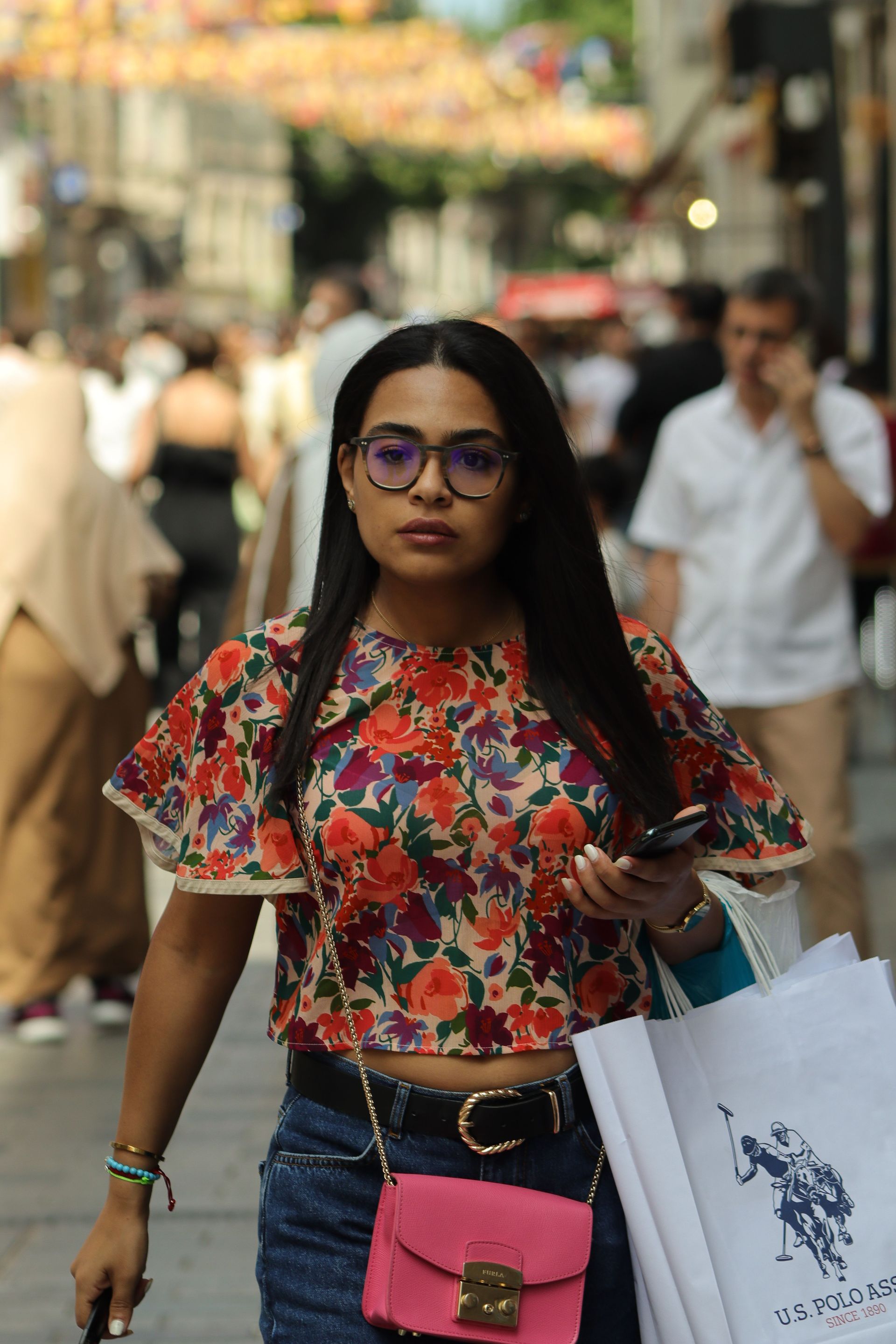
A cross-body bag with a zippered main compartment, worn in front of the body rather than at the hip or back, is harder to open unnoticed in crowded transit stations, markets, and tourist sites than a backpack or a bag worn behind the shoulder. Pickpocketing rates are meaningfully higher in dense tourist areas of cities such as Barcelona, Rome, and Paris than in most other parts of those same countries, which makes bag choice and positioning matter more in specific locations than as a blanket rule.
A slim RFID-blocking sleeve for passports and payment cards prevents a specific, if relatively rare, form of contactless data skimming, and it adds negligible bulk to a document organizer. More common than electronic theft, distraction-based pickpocketing — a bump, a spilled drink, someone asking for directions while an accomplice reaches into a bag — remains the more realistic risk in crowded areas, and keeping a bag zipped and in front of the body defends against both.
A doorstop alarm, which wedges under a hotel room door and triggers a loud alarm if the door is forced open, is inexpensive, weighs almost nothing, and adds a layer of security in destinations where hotel room security varies widely by budget tier. A small combination lock secures a shared hostel or Airbnb $ABNB locker, and a cable lock secures a suitcase to a fixed object during a long layover or an overnight train.
Splitting money and cards across two separate locations — a portion in the main bag, a smaller backup amount in a different pocket or a hidden pouch — means a single theft does not end the trip's access to funds. Photographing the contents of a wallet and any bag before departure gives a usable reference for canceling cards or filing a police report quickly if something does go missing.
None of this requires assuming the worst about a destination; it requires the same basic precautions that make sense in any dense, unfamiliar city, applied consistently for the length of the trip.
Layering for climates that change mid-trip

Credit: Parham Barati / Unsplash
Pack in layers rather than single heavy or single light items, since a 2-week trip crossing multiple cities or climate zones needs flexibility a single-weight wardrobe cannot provide. A base layer, a mid layer such as a fleece or lightweight sweater, and a weatherproof outer shell cover a far wider temperature range than one thick jacket, while taking up comparable suitcase space.
A packable rain shell, which folds down small enough to fit inside a packing cube, matters more than a heavier waterproof coat for most 2-week itineraries, since rain is more common and more disruptive to a travel day than cold alone. Checking each destination's seasonal weather pattern specifically, rather than assuming based on the general region or time of year, avoids the common mistake of packing for summer in a country where the specific city sits at high altitude or has a distinct microclimate.
A lightweight scarf or wrap does more work than it appears to: it functions as a layer against air conditioning on flights and trains, as sun protection in bright climates, and as a modesty covering for religious sites requiring covered shoulders. This single item covers three separate situations that would otherwise each need a dedicated piece.
Merino wool base layers, already recommended for the capsule wardrobe, regulate temperature in both directions better than cotton, staying warmer in cold and cooler in heat, which matters specifically on a multi-climate itinerary where the same base layer needs to work in both conditions.
Checking the specific weather forecast for each city on the itinerary about a week before departure, rather than relying on general climate assumptions made months earlier when the trip was booked, catches unusual weather patterns — an early cold snap, an unseasonable heat wave — before they become a packing problem discovered on arrival.
What to leave home: the most common overpacking mistakes
Credit: Canva Images
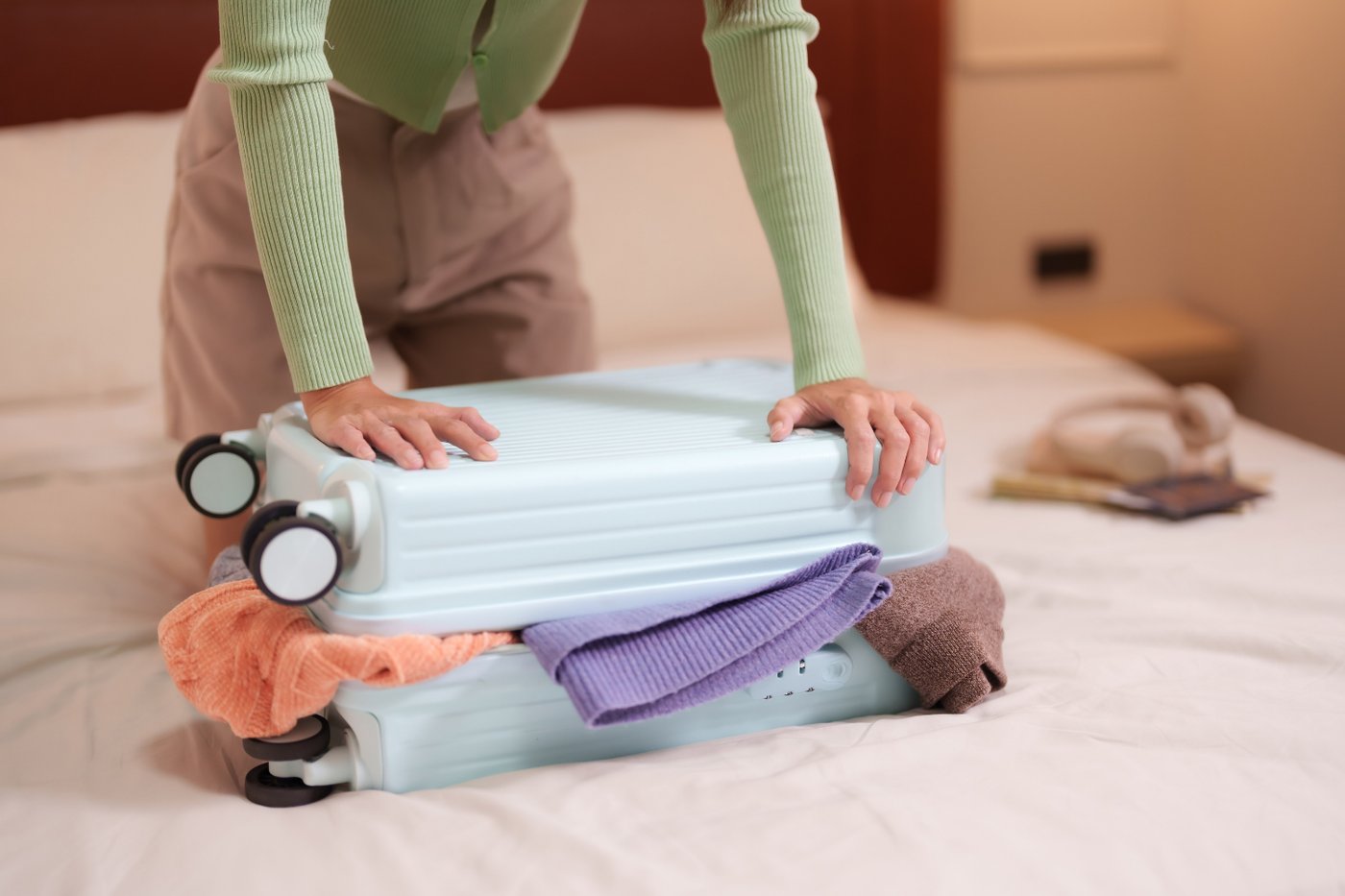
Skip a separate outfit for every single day of a 2-week trip; a repeating capsule wardrobe, covered earlier in this list, does the same job with roughly half the volume. This single change accounts for more suitcase space than any other packing decision on this list.
Leave full-sized toiletries at home. Travel-sized containers that meet the TSA's 3.4-ounce limit, or solid alternatives like shampoo bars, cover the same 2 weeks without the extra weight and bulk of full-sized bottles that will not even fit in a carry-on's quart bag.
Skip a fourth or fifth pair of shoes. Three pairs — walking, versatile, and worn on the plane — cover nearly every situation a 2-week international trip presents, and shoes are consistently the heaviest, least space-efficient items packed.
Leave printed guidebooks and paper novels at home in favor of a phone or e-reader loaded before departure. A single e-reader holds more reading material than an entire shelf and adds negligible weight compared with even one physical book.
Skip "just in case" items packed for a scenario that has a low chance of occurring and an easy local solution if it does. An umbrella for a destination with a low chance of rain, a second raincoat when one packable shell already covers it, or specialty gear for one planned activity that could instead be rented locally all take up space better used elsewhere.
Leave voltage converters at home for any device confirmed to be dual-voltage, since carrying a heavy converter for a device that already accepts 100 to 240 volts solves a problem that does not exist. Checking each device's charging brick before the trip, rather than assuming, prevents this specific and entirely avoidable source of extra weight.
Finally, resist packing a full first-aid kit sized for a family camping trip. The compact health kit covered earlier in this list handles the realistic range of minor issues on a 2-week trip without the bulk of a kit built for a different kind of travel entirely.