The most baffling gaps in invention history are not the complex ones — they are the simple ones, where all the required knowledge existed for centuries and nobody connected the dots

Zeal Creative Studios / Pexels
The history of invention is not a smooth curve of accelerating progress. It is a landscape of inexplicable gaps — moments where a civilization possessed every piece of knowledge required for a particular invention, used the underlying principles in other contexts, and simply failed to make the obvious connection for decades, centuries, or in some cases millennia. These gaps are not explained by the absence of intelligence or curiosity. The ancient Greeks understood steam pressure well enough to build toys that used it. The Romans had concrete that outperforms many modern formulations and then lost the recipe for a thousand years. The wheel existed as a concept and as a practical object for approximately 5,000 years before someone thought to attach wheels to luggage.
The interesting question is not just when these things were invented but why they were not invented earlier — what specific combination of economic incentives, social structures, cultural assumptions, or cognitive habits prevented the connection from being made. The answers vary and are often genuinely surprising. Wheeled luggage was not invented until 1970 because luggage had been carried by porters and the people who owned luggage employed porters — the person carrying the bag and the person who owned it were different people, and neither had the right incentive to solve the problem. Anesthesia was not developed despite relevant plant compounds being available for millennia because surgery and pain were considered inseparable, and the idea that they could be decoupled had to be thought before the decoupling could be attempted.
This list covers 20 such inventions, selected for the combination of simplicity (the underlying principles were available long before the invention appeared) and consequentiality (the delay had real costs in human suffering, inefficiency, or missed capability). Each entry covers when the invention appeared, what earlier civilization could theoretically have produced it and when, and what specifically seems to have prevented the connection from being made.
The gaps are humbling in a specific way: they reveal that the constraints on invention are not primarily technical but conceptual and social — that the hardest part of inventing something is not solving the technical problem but imagining that the problem can be solved.

Gustavo Fring / Pexels
Wheeled luggage — the rolling suitcase with an extendable handle that is now the universal form of personal travel luggage — was not invented until 1970, when Bernard Sadow filed a patent for a suitcase with four wheels and a strap. The retractable-handle rolling suitcase in its current form was invented in 1987 by Robert Plath, a Northwest Airlines pilot who welded wheels and a telescoping handle to an upright case.
The wheel was invented approximately 3500 BCE. Luggage, in various forms, has existed for approximately as long as people have traveled. The combination — luggage with wheels — was not achieved for approximately 5,500 years.
The explanation is economic rather than technical: for most of recorded history, heavy luggage was carried by porters, servants, or slaves. The traveler who owned the luggage was not the person struggling to carry it, and therefore did not experience the problem the invention would solve. When air travel democratized long-distance travel in the mid-20th century — creating a class of travelers who carried their own bags and had no porter — the incentive to solve the problem finally existed for the people with the means to solve it. The 23-year gap between the first commercial transatlantic jet flights (1958) and Sadow's patent (1970) still requires explanation, but the broader 5,500-year gap is explained by the economics of who carried bags.

Anna Shvets / Pexels
General anesthesia — the use of inhaled or injected compounds to render patients unconscious and insensible to pain during surgery — was not developed until 1846, when William Morton demonstrated ether anesthesia at Massachusetts General Hospital. Before this date, surgery was performed on conscious patients restrained by assistants, and speed was the primary surgical virtue because the faster the operation, the less the patient suffered.
The plants that produce anesthetically active compounds — opium poppies, coca plants, mandrake, henbane — were known to ancient civilizations and were used for pain relief in various forms for thousands of years. The Egyptians, Greeks, and Romans all had access to soporific plant preparations that were used medicinally. What they lacked was not the chemical compounds but the conceptual framework — the idea that surgery and consciousness could be decoupled, that an operation could be performed on a body that felt nothing.
The specific barrier was not pharmacological but conceptual: pain during surgery was assumed to be physiologically necessary, and some 18th-century surgeons explicitly argued that surgical pain served a useful stimulant function in recovery. The combination of nitrous oxide's discovery in 1772 and its recreational use in "laughing gas" parties for 70 years before anyone connected it to surgical anesthesia is perhaps the most striking example of a conceptual barrier preventing an obvious application — the anesthetic properties of nitrous oxide were observed and documented repeatedly at these parties, and nobody transferred the observation to surgery.

Sora Shimazaki / Pexels
The understanding that infectious disease is caused by microorganisms — and the corresponding practice of handwashing before surgery and childbirth — was not established until Louis Pasteur and Robert Koch's work in the 1860s and 1870s, and not universally adopted in medical practice until well into the late 19th century. Ignaz Semmelweis demonstrated in 1847 that handwashing with chlorinated lime solution reduced maternal mortality in obstetric wards from approximately 10% to approximately 1% — and was largely ignored, institutionally rejected, and eventually committed to a mental asylum.
The conceptual barrier was the miasma theory of disease — the longstanding belief that disease was caused by "bad air" from decaying organic matter rather than by specific transmissible agents. Miasma theory was not stupid: it correctly identified that disease was more common in unsanitary environments. It was wrong about the mechanism, and the wrong mechanism led to wrong interventions (ventilating operating theaters rather than sterilizing instruments).
The specific cost of the delay is calculable. The approximately 30-year gap between Semmelweis's demonstration and the general adoption of antiseptic surgical practice (following Joseph Lister's work in the 1860s) corresponded to decades of preventable surgical and obstetric deaths in every hospital in Europe and North America. The germ theory of disease required no new technology — microscopes capable of observing bacteria had existed since the late 17th century. It required a conceptual revision of the cause of disease, which the institutional conservatism of medical culture actively resisted.
Popolon / Wikimedia Commons (CC BY-SA 4.0)
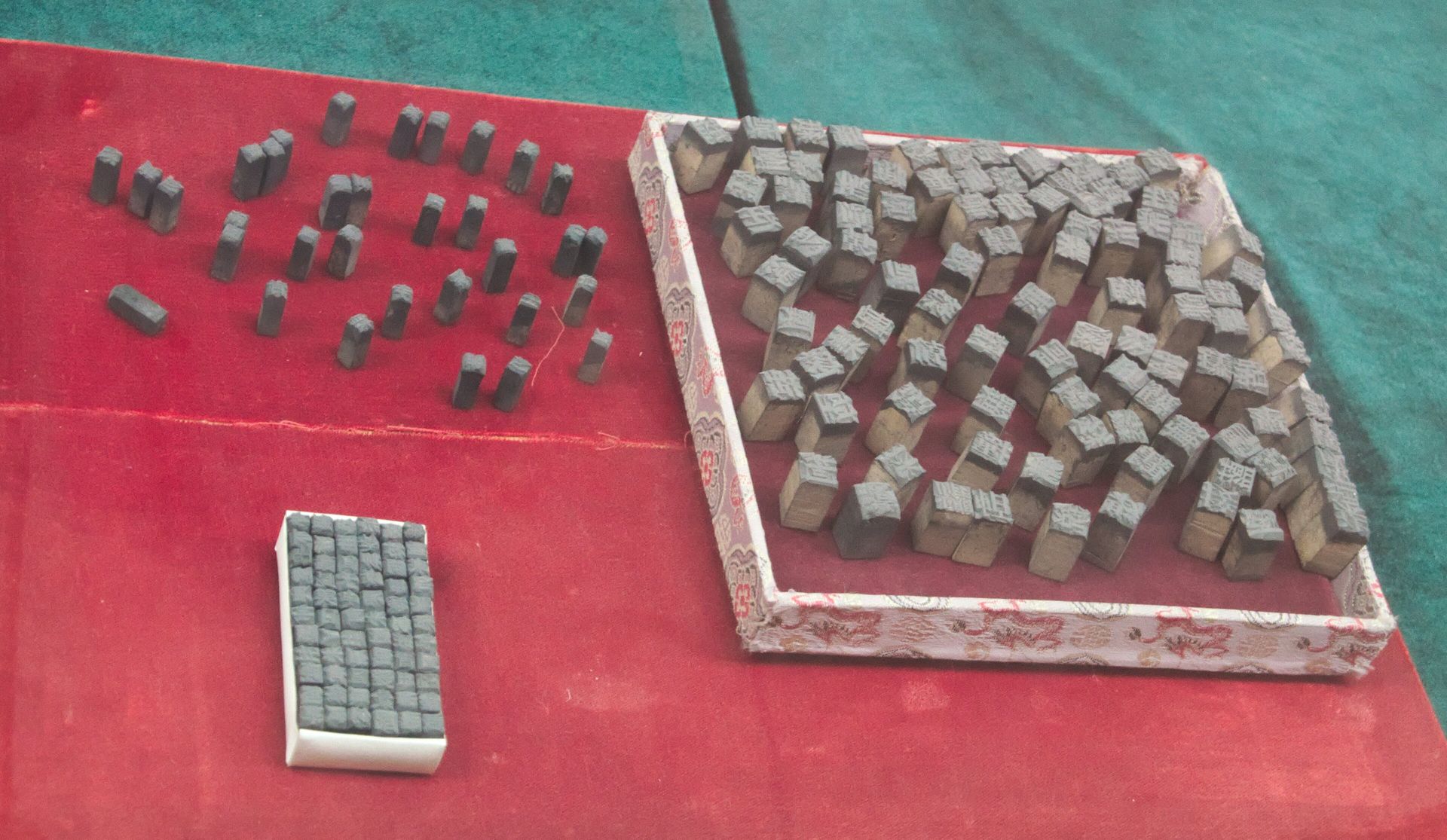
The movable type printing press — independently invented in China by Bi Sheng around 1040 CE, using ceramic movable type — predated Gutenberg's metal movable type press by approximately 400 years. The specific puzzle is not that Gutenberg was late but that Bi Sheng's invention, which had the same potential to transform the reproduction of text, did not produce the same cultural and intellectual transformation in China that Gutenberg's press produced in Europe.
The explanation is the writing system: Chinese writing uses thousands of characters, requiring thousands of individual type pieces, making movable type significantly less efficient relative to woodblock printing (which required carving one block per page but amortized well over long print runs) than it was in alphabetic writing systems, which required only 26 to 40 type pieces to reproduce any text. The economics of movable type in Chinese did not favor it over the alternatives in the same way as in European alphabetic printing.
The more general principle the printing press illustrates: the same invention can have radically different consequences depending on the context into which it is introduced. The Chinese movable type press was not a delayed Gutenberg — it was a functionally different invention deployed in a fundamentally different information environment.

Janusz Walczak / Pexels
The stirrup — the loop hung from a saddle that allows a rider to stand while mounted, dramatically increasing the stability and effectiveness of mounted combat — appears to have been developed in Central Asia or India in approximately the 2nd century BCE, reached China by the 5th century CE, and arrived in Europe via the Avars (a nomadic people from Central Asia) in the late 6th and early 7th centuries CE — approximately 700 to 800 years after its initial development elsewhere.
The historian Lynn White Jr. argued in his influential 1962 book Medieval Technology and Social Change that the adoption of the stirrup was the primary cause of feudalism — that the stirrup enabled the heavily armored mounted knight, which was so militarily decisive that it required the entire social reorganization of feudal land tenure to support. Whether or not this causal claim is correct (it has been significantly contested), the 700-year gap in transmission from Central Asia to Europe is real and had military and political consequences throughout the early medieval period.
The specific puzzle: trade routes between Central Asia and Europe existed throughout this period, and the peoples who used the stirrup (Huns, Avars) interacted militarily with European populations. The gap appears to reflect cultural barriers to technology adoption rather than genuine ignorance of the technology's existence.

Polina Tankilevitch / Pexels
Inoculation against smallpox — the practice of deliberately infecting a healthy person with material from a mild smallpox lesion to produce immunity — was practiced in China and the Ottoman Empire from at least the early 18th century, and was introduced to Britain by Lady Mary Wortley Montagu in 1721 after she observed the practice in Constantinople. Edward Jenner's safer cowpox vaccination followed in 1796.
The conceptual barrier was the same that delayed germ theory: the mechanism of immunity was not understood, which made deliberate infection of healthy people with disease material seem like a dangerous form of witchcraft or superstition to Western European medicine, despite clear empirical evidence that the practice worked. The Ottoman Empire had been using inoculation for decades before the West adopted it, and the adoption in Britain was driven by Montagu's personal advocacy rather than by systematic evaluation of the Ottoman evidence.
The Chinese had practiced a form of inoculation (blowing dried smallpox crusts into the nostrils) since approximately the 10th century CE — a full 700 years before the West. The cost of the European delay is calculable in smallpox mortality across the 18th century.
.webp-900x939.png)
Logg Tandy / Wikimedia Commons (CC BY-SA 4.0)
The Antikythera mechanism — the sophisticated Greek astronomical calculator with at least 30 bronze gears, capable of predicting planetary positions and eclipse cycles, dated to approximately 100 to 150 BCE — represents a level of mechanical sophistication that was not equaled in the West until the astronomical clocks of medieval Europe, approximately 1,400 years later. The specific mechanical knowledge required to build the Antikythera mechanism — differential gearing, precise gear-tooth cutting — appears to have been largely lost after the mechanism's construction and was not rediscovered until the 14th century.
This is a case of genuine regression rather than delayed invention: the mechanical capability existed, was demonstrated in a single extraordinary artifact, and then was not built upon for over a millennium. The fragility of technical knowledge in ancient and medieval societies — its dependence on specific practitioners who might not pass it on, on institutions that might not survive, on written records in languages that might not be read — is illustrated by the Antikythera mechanism more clearly than almost any other artifact.

Rodolfo Quirós / Pexels
Roman concrete — opus caementicium, developed approximately 300 BCE and used extensively through the Imperial period — was in some respects superior to modern Portland cement concrete for specific applications. Roman marine concrete, which used volcanic ash (pozzolana) mixed with seawater and lime, produced structures that have survived 2,000 years of constant wave action; the chemical reaction between seawater and the volcanic ash actually strengthened the concrete over time rather than degrading it.
The formula for Roman concrete was not a secret — it was described in detail by Vitruvius in his architectural treatise De Architectura (circa 30 BCE). Nevertheless, following the decline of the Western Roman Empire, the production of high-quality concrete effectively ceased in Western Europe for approximately 1,300 years, until Portland cement was developed in the early 19th century. The medieval period produced no concrete comparable to Roman concrete despite having access to the written description.
The explanation involves the collapse of the supply chains and institutional knowledge required to produce the material — the Roman concrete industry required specific volcanic ash sourced from particular locations, organized quarrying and transport operations, and skilled workers who understood the mixture ratios. The loss of the Roman administrative and economic system took the concrete industry with it.

Credit: Wikimedia Commons
The heavy moldboard plow — a plow design capable of turning the heavy, wet clay soils of Northern Europe, featuring a coulter to cut through the soil, a plowshare to cut horizontally, and a moldboard to flip the cut sod — appears to have been used in Slavic lands by approximately the 6th century CE but was not widely adopted in Western Europe until approximately the 9th and 10th centuries, despite the fact that Western European agriculture was severely limited by the inability to cultivate heavy clay soils with the older scratch plow (the ard) that worked well in the light soils of the Mediterranean.
The ard — an ancient plow that scratched the soil without turning it — was adequate for the dry, light soils of the Mediterranean and Near East where agriculture had developed. When European agriculture expanded into the heavier soils of Northern Europe, the ard's limitations became critical but were not immediately solved. The moldboard plow required a substantially heavier construction (requiring teams of oxen rather than a single ox) and a different approach to field layout (long strips rather than square fields, to minimize the number of turns), which reorganized the economics and social structure of Northern European agriculture when it was finally adopted.

U.S. Gov / Wikipedia (CC BY-SA 4.0)
Steam-powered ships used paddle wheels for propulsion for approximately 30 years before the screw propeller — a more efficient, more reliable, and less weather-dependent alternative — was adopted. The screw propeller was patented simultaneously and independently by Francis Pettit Smith and John Ericsson in 1836, and was decisively demonstrated as superior to the paddle wheel in the famous 1845 tug-of-war between HMS Rattler (screw) and HMS Alecto (paddle wheel), in which the screw-driven Rattler towed the identical-power paddle-driven Alecto astern at approximately 2.5 knots.
The specific puzzle is the 30-year gap: the principles of the screw propeller were not obscure (Archimedes screws had been used for millennia to move fluids), and the limitations of the paddle wheel in rough seas were obvious from the first Atlantic crossings. The gap appears to reflect a combination of the engineering conservatism of the Royal Navy (which controlled most of the relevant investment decisions) and the practical difficulty of achieving the low-drag underwater shaft sealing required for a screw propeller.
Credit: Wikipedia
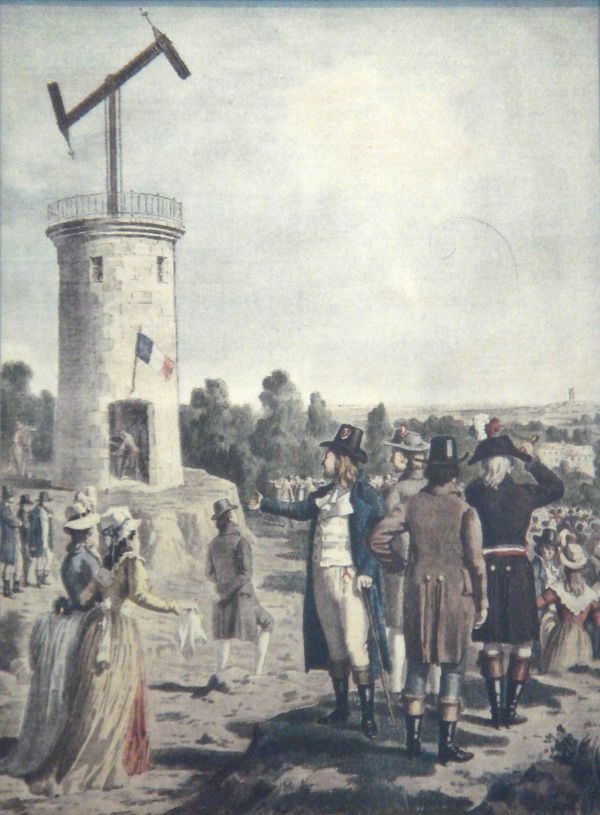
The optical semaphore telegraph — a system of signaling towers using mechanical arms to encode messages — was developed in France in 1792 and spread across Europe in the early 19th century, providing long-distance communication at speeds dramatically faster than messengers on horseback. The electric telegraph, which could transmit the same messages faster, farther, and in any weather, was developed independently by multiple inventors in the 1830s and 1840s and was commercially deployed from 1844.
The puzzle is not the gap between semaphore and electric telegraph (which involved genuine technical development) but the question of why long-distance electrical signaling took until the 1830s when the required electrical knowledge had existed since Benjamin Franklin's experiments in the 1740s and the voltaic pile (the first battery) was invented in 1800. The 30-year gap between the voltaic pile and the electric telegraph, during which the tool required to build the telegraph existed but the telegraph was not built, reflects the difficulty of recognizing a new technology's communication applications — the voltaic pile was used for electrochemical experiments, not immediately understood as the power source for a long-distance signaling system.

Dietmar Rabich / Wikimedia Commons (CC BY-SA 4.0)
Eyeglasses were invented in Italy approximately 1286 — the specific inventor is disputed, but the technology spread rapidly through Europe in the late 13th and early 14th centuries. The telescope, which requires the same basic optical principles (two lenses in combination) and the same grinding technology, was not invented until 1608 — a gap of approximately 320 years.
The glass-grinding technology and the optical knowledge required to combine two lenses were available throughout those 320 years; eyeglass makers ground lenses continuously and had direct hands-on experience with their optical properties. The combination that produces a telescope — a concave and a convex lens at the correct separation — was apparently arrived at accidentally (the traditional account involves a lens maker's apprentice holding two lenses at different distances and noticing the magnification effect) rather than through any systematic exploration of what lens combinations could do.
The 320-year gap represents 320 years in which the night sky was not magnifiable by human observers who possessed every technical requirement to magnify it.

Finoskov / Wikimedia Commons (CC BY-SA 4.0)
Women in Western Europe rode sidesaddle for centuries — a position with no stirrup for the lower leg, requiring the rider to balance entirely through the upper body — before the side saddle horn, which allowed the right knee to hook around for stability, was developed in approximately the 15th century, and before the second horn (allowing a secure two-horn seat with genuine security) appeared around 1830. The specific safety improvement that allowed women to ride with relative security comparable to astride riding was not available until the early 19th century, despite the underlying metalworking capability being available throughout the preceding centuries.
The specific delay reflects a social constraint rather than a technical one: the mechanics of a secure sidesaddle were not technically challenging. The delay in solving the problem reflects the degree to which women's physical safety and mobility were not prioritized as engineering problems requiring solutions.
Milk Plant Monthly / Wikimedia Commons
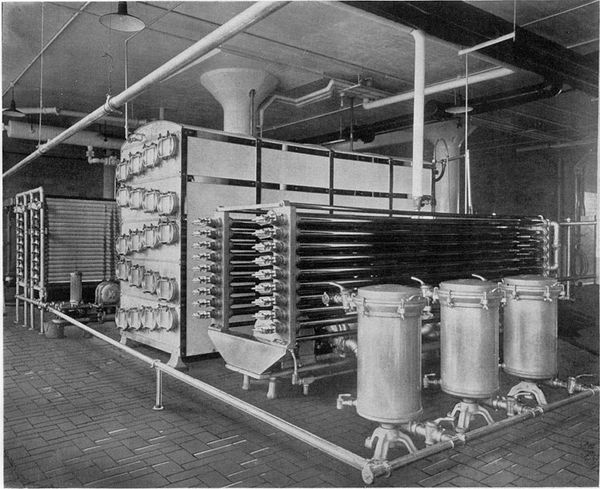
Pasteurization — the process of heating food and drink to a specific temperature for a specific duration to kill pathogenic microorganisms — was developed by Louis Pasteur in the 1860s for wine and subsequently applied to milk, beer, and other beverages. The process requires only a controlled heat source, a thermometer, and the knowledge that specific temperatures kill specific microorganisms.
The delay relative to what was possible reflects the conceptual barrier of germ theory: before understanding that disease was caused by microorganisms, the idea of preserving food by controlled heating to kill those organisms had no theoretical framework to rest on. The technology of controlled heating was ancient; the knowledge that applying it to food would kill dangerous microorganisms required the conceptual revolution that germ theory represented.
The mortality costs of the delay — in milk-borne tuberculosis, typhoid fever from contaminated water, and botulism from improperly preserved food — were enormous. Pasteur's germ theory work preceded the application to food safety by only a few years, suggesting that the technology was available essentially as soon as the concept was established.
Ввласенко / Wikimedia Commons (CC BY-SA 3.0)
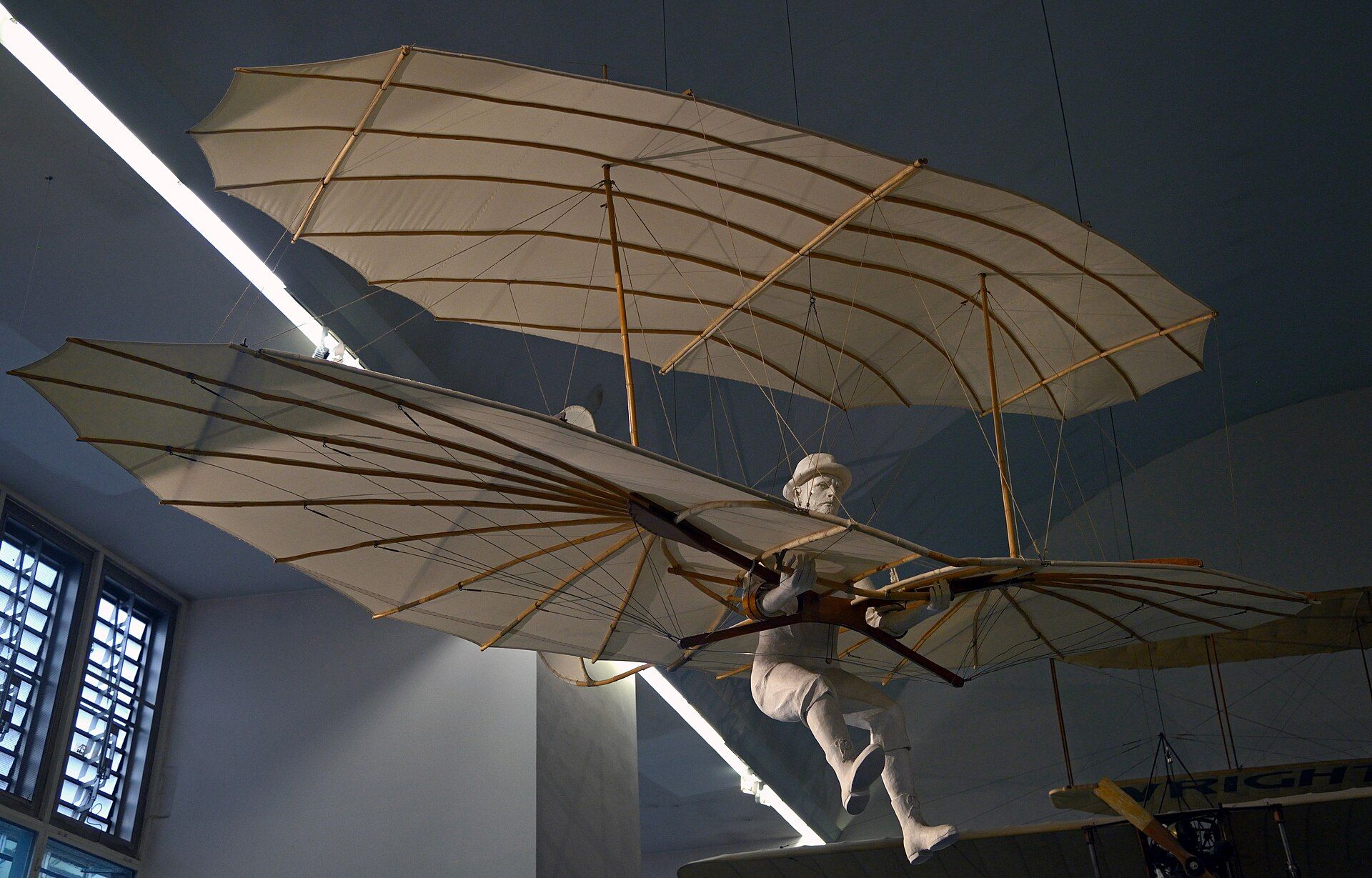
The Wright brothers' first powered, controlled flight occurred in 1903. The principles of aerodynamics required to design a successful aircraft — the relationship between wing shape, angle of attack, and lift — were described mathematically by Daniel Bernoulli in 1738 and were the subject of extensive experimental investigation throughout the 19th century. Gliders capable of sustaining human flight had been built by Otto Lilienthal in Germany in the 1890s and by George Cayley in England as early as 1853.
The specific gap between Cayley's glider (which carried a human passenger in controlled gliding flight in 1853) and the Wright brothers' powered flight (1903) is 50 years — during which the required understanding of aerodynamics was available, the required internal combustion engine technology was developed, and the specific combination was not made by any of the many engineers and inventors attempting it until the Wrights' systematic experimental approach produced the breakthrough.
The Wright brothers' specific contribution was not the understanding of aerodynamics (which was well-developed) or the engine (which was available) but the three-axis control system — the ability to control roll, pitch, and yaw simultaneously — that made the aircraft steerable rather than simply capable of sustained level flight. No previous designer had given adequate attention to control, focusing instead on stability, and this conceptual misprioritization is the specific explanation for the 50-year gap.
Credit: Wikimedia Commons
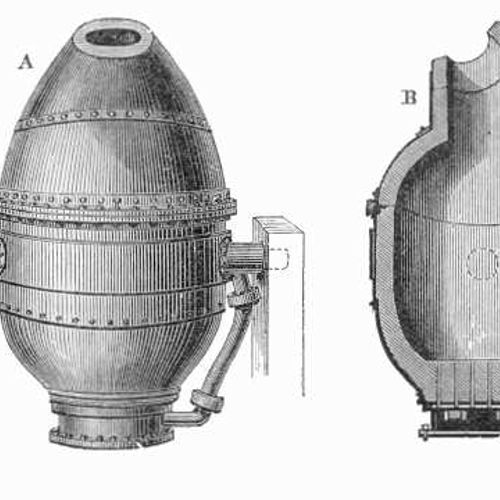
Steel — an alloy of iron with controlled carbon content — had been produced in small quantities for thousands of years through laborious wrought iron and blister steel processes. The Bessemer process, developed by Henry Bessemer in 1856, allowed the mass production of steel by blowing air through molten pig iron to burn off excess carbon — a process that reduced the time to produce a batch of steel from days to approximately 20 minutes and reduced the cost by approximately 80%.
The specific puzzle is why the Bessemer process took until 1856 given that the underlying principle — using oxidation to remove carbon from iron — was not chemically obscure and that the economic incentive for cheap structural steel was enormous and long-standing. The industrial revolution had been underway for nearly a century; railways were expanding rapidly and their demand for rail steel was constrained by production cost and speed.
Bessemer himself described the invention as an accidental observation — he noticed, during an experiment with a different objective, that a pig of iron exposed to an air blast had converted to steel on its surface while remaining molten. The accident was possible because he was experimenting, but the accidental character of the discovery suggests that nobody had been specifically working on the problem of rapid, cheap steel production through oxidation, despite the obvious economic incentive.

Queenslander / Wikimedia Commons
Artificial mechanical refrigeration — the use of a compression cycle to produce cold for food preservation — was developed in the 1850s and 1860s, with practical commercial refrigeration systems deployed from approximately the 1870s. Before mechanical refrigeration, ice was harvested from frozen lakes and ponds in winter and stored in insulated ice houses for summer use — a system that worked tolerably in cold climates and failed in warm ones.
The compression refrigeration cycle — the same cycle used in modern refrigerators — requires a compressor, an expansion valve, and a working fluid (refrigerant). The compressor technology was available from the early steam engine period; the thermodynamic principles were described by Carnot in 1824. The specific gap between the availability of the required components (approximately the 1820s) and their combination into a commercial refrigeration system (approximately the 1870s) is approximately 50 years.
The gap reflects the economic competition from the natural ice industry, which was a substantial commercial operation with significant investment in harvesting and distribution infrastructure, and the engineering challenge of achieving reliable, leak-free compression systems with the manufacturing tolerances of the period. The artificial ice machine and the commercial refrigeration system had to be better than natural ice by a sufficient margin to justify displacing an established industry.

Franco Meriño / Pexels
Blood transfusion between humans — the direct transfer of blood from one person to another — was attempted as early as the 17th century, following William Harvey's description of blood circulation in 1628. Early attempts produced erratic results: some patients recovered, some died from what we now understand as transfusion reactions. Blood typing — the identification of the ABO blood groups that determine compatibility — was discovered by Karl Landsteiner in 1900.
The gap between the first transfusion attempts (1660s) and the discovery of blood typing (1900) is approximately 240 years, during which transfusion was intermittently practiced and frequently fatal, and the explanation for the variability (some patients survive, some die from the same procedure) was not understood.
The specific conceptual barrier was the absence of a framework for understanding biological individuality at the molecular level — the idea that human blood was not interchangeable between individuals could not be formulated without a concept of what specifically made each person's blood their own. The existence of distinct blood types was not a priori obvious; it required the specific combination of immunological investigation and the availability of sufficient cases to identify the pattern.

Francis E Williams / Wikimedia Commons (CC BY-SA 4.0)
The Haber-Bosch process — the industrial synthesis of ammonia from atmospheric nitrogen and hydrogen, developed by Fritz Haber and Carl Bosch between approximately 1905 and 1913 — is the invention most directly responsible for the ability to feed the current human population. Approximately half of the nitrogen in the bodies of the world's 8 billion people derives from synthetic nitrogen fertilizer produced by the Haber-Bosch process; without it, the maximum sustainable human population would be substantially lower.
The specific puzzle is the centuries-long gap between the understanding that nitrogen was essential for plant growth (established by Liebig and others in the mid-19th century), the demonstration that atmospheric nitrogen was available in essentially unlimited supply, and the development of a process to convert atmospheric nitrogen into a biologically available form. The gap is explained by the extreme chemical stability of the nitrogen molecule (N₂), which requires approximately 400 to 500°C and 150 to 300 atmospheres of pressure to react with hydrogen — conditions that required both the conceptual understanding that such conditions could drive the reaction and the engineering capability to produce and sustain them.

Daniil Kondrashin / Pexels
A different kind of delay: spectacles were invented around 1286 and were immediately used by scholars, monks, and anyone engaged in close reading work. They were expensive — hand-ground glass lenses in handmade frames — and remained luxury items for approximately 200 years until the development of mass production techniques reduced their cost to levels accessible to ordinary working people.
The specific consequence of the 200-year luxury period is the uncountable productivity loss of people who needed corrective lenses during their working lives and did not have access to them — craftsmen whose close work deteriorated in their 40s and 50s, scribes who could no longer copy manuscripts, weavers whose fine work became impossible. The technology existed; the economic system to distribute it broadly did not.
