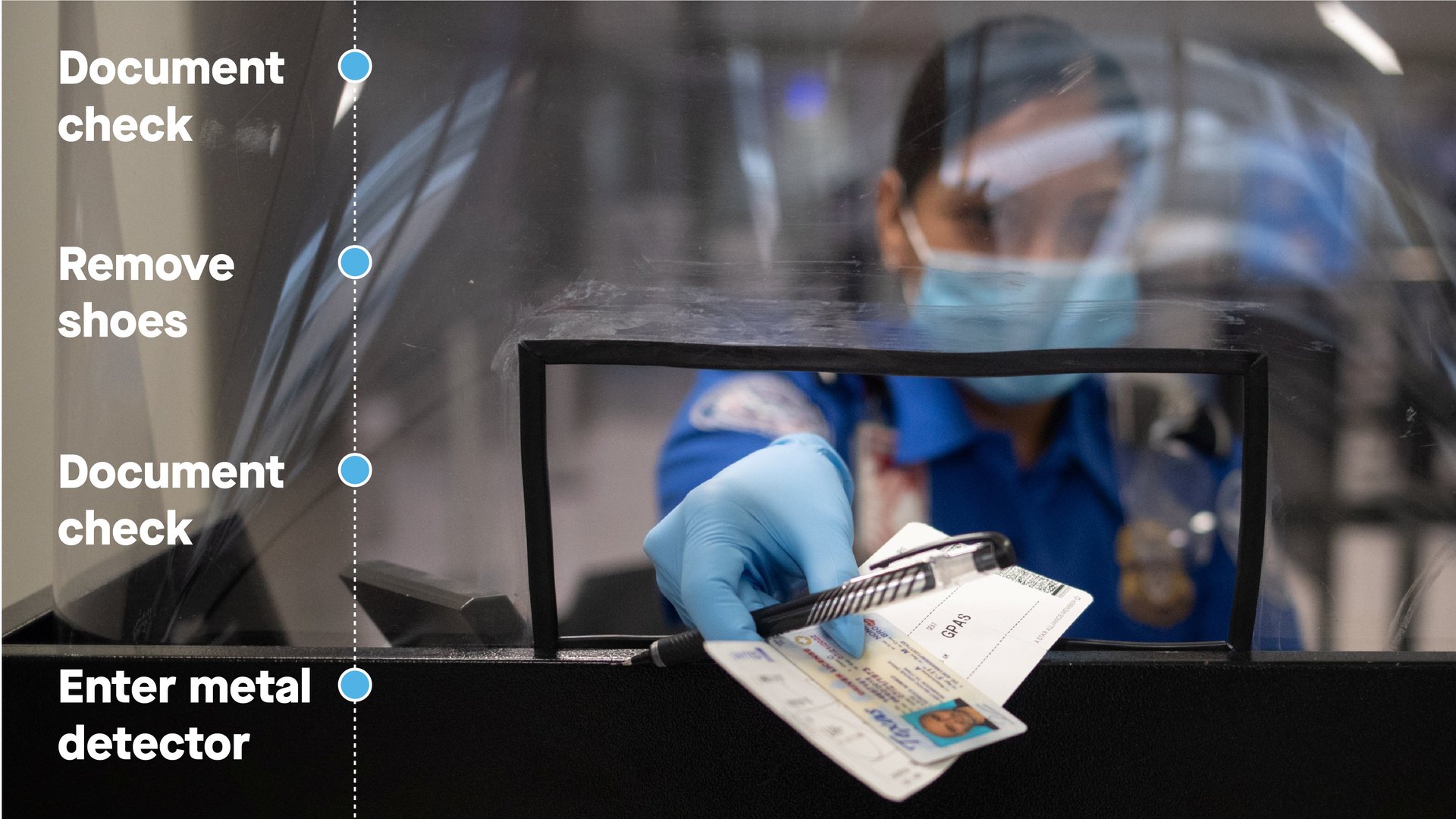
The terrorist events of Sept. 11, 2001 changed airline security forever. In the US, the Transportation Security Administration (TSA) was quickly established, and airport security was heightened to never-before-seen levels.
Two decades later, airline passengers now move through American airports slowly, snaking through queues, routinely removing multiple items of clothing, and facing considerable restrictions on carry-on items. While many of us remember the days when it wasn’t required to shuffle past TSA agents in our socks, there’s already a significant portion of the population that simply don’t know air travel as anything else. In fact, by 2032, the majority of adult airline passengers in the US won’t remember a time before heightened screening.
The median age of adult airline passengers was 41 in 2020, according to data from Airlines for America, an industry lobbyist. If that stays consistent, by 2032 half of travelers will have been born after 1991, making them 10 years old on 9/11. And it might even be sooner than that. The median figure only includes those over 18, so the true median age is younger than 41.
But how different was airport security before 9/11? The truth is—very different.
Before Sept. 11, 2001, passenger and baggage screening was primarily the responsibility of individual airlines and airports.
Prior to 9/11, checked baggage wasn’t routinely searched for weapons or explosives. Only about 5% of checked bags were electronically scanned.
After the events of 9/11 revealed weaknesses in the security screening system, the US enacted legislation to overhaul it.
Since 9/11, passenger and baggage security has evolved along with new information, technology, and threats. Shoes must be removed because of an attempted “shoe bombing” in 2001, full-body scanners increased in use following an attempted “underwear bombing” in 2009, and liquids are severely restricted because of a foiled 2006 transatlantic bombing plot involving liquid explosives. (The US initially banned all carry-on liquids, but soon loosened restrictions to what they are today.)
Modifications to the passenger and baggage screening process were not the only significant security changes made to US air travel following 9/11. Numerous behind-the-scenes actions have been taken to protect the airport, airlines, and passengers. For example,
