Once upon a time, not very long ago—until the first quarter of 2016, in fact—three beautiful dolls named Barbie, Elsa, and Anna lived together. Barbie was 57 but, with her lustrous blonde hair and unfeasible bust-to-waist ratio, didn’t look a day over 19.
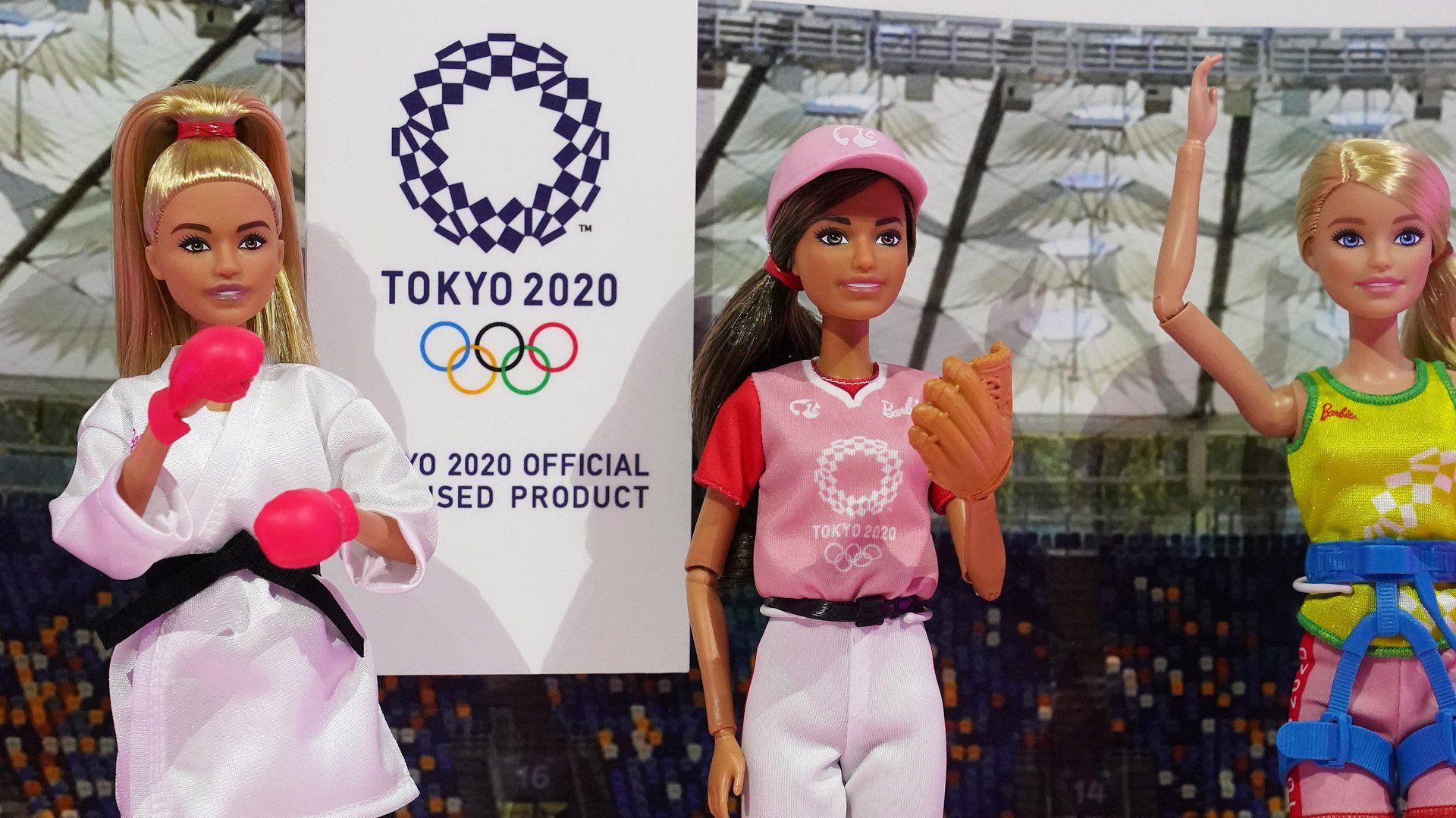
Once upon a time, not very long ago—until the first quarter of 2016, in fact—three beautiful dolls named Barbie, Elsa, and Anna lived together. Barbie was 57 but, with her lustrous blonde hair and unfeasible bust-to-waist ratio, didn’t look a day over 19.
For decades, she’d been used to being the world’s bestselling doll, ruling over her manufacturing house Mattel. But after 2013, Mattel took in two other dolls, Elsa and Anna, modeled after the princesses in the Disney $DIS hit Frozen, and it turned out that little children liked their Elsa and Anna dolls more than their Barbie dolls. Barbie might have said she felt competitive for the first time in forever, except that “For the First Time in Forever” was a song, and she disliked that movie very much.
Join 500,000+ readers who start their day with Quartz.
By subscribing, you agree to our Terms of Service and Privacy Policy.
Then disaster struck. In that cruel winter of 2016, Disney decided to take its princess business to Hasbro—perhaps because Mattel had been making other dolls, based on Cinderella and Snow White, that vied too closely with Disney’s princesses. The departure of Elsa, Anna, and the rest of the Disney gang set Mattel’s revenues back by an estimated $500 million, handing Hasbro a coup that Adweek, one of the kingdom’s foremost journals, compared to the Chicago Cubs winning the World Series.
For this reason, and also for others, Mattel felt sunk in gloom for years. Its kings came and went: four in four years. Its share price fell, and in 2017, Mattel reported a loss of $1.1 billion. But now, in 2022, its fortunes are brightening. Mere months after registering a surprise quarterly profit, Mattel announced on Wednesday (Jan. 26) that it had regained the license to manufacture Elsa, Anna, and other Disney princesses. “It was an important priority, and it’s something we worked hard to win,” Ynon Kreiz, Mattel’s chief executive, told the Wall Street Journal.
Elsa and Anna dolls are still in high demand. In 2019, after Disney released Frozen 2, Hasbro’s revenues for its “partner brands” division increased 24%, to $1.22 billion. But Barbie has spent her time without her housemates well too. By 2019, she had returned to being a billion-dollar-doll, and in 2020, she generated sales of $1.35 billion. Her mojo recovered, Barbie has been waiting for this day when her frenemies Elsa and Anna move back in with her. She’s ready to show herself, she’d say, except that “Show Yourself” is a song from Frozen 2, and she doesn’t care much for that movie either.
