
The West is trying to choke off Russian finances
Western countries are responding to Russia’s incursion on eastern Ukraine with a series of sanctions targeting the country’s financial sector.
Western countries are responding to Russia’s incursion on eastern Ukraine with a series of sanctions targeting the country’s financial sector.
Western countries are responding to Russia’s incursion on eastern Ukraine with a series of sanctions targeting the country’s financial sector.
Russian troops have entered two breakaway regions in Ukraine that were recognized as independent by president Vladimir Putin yesterday (Feb. 21). While Russia is calling the incursion a “peacekeeping” mission, Western leaders are warning the move is one step closer to a full-fledged invasion.
The UK announced sanctions against five Russian banks and several rich individuals, while the US and European Union are expected to finalize additional measures later today.
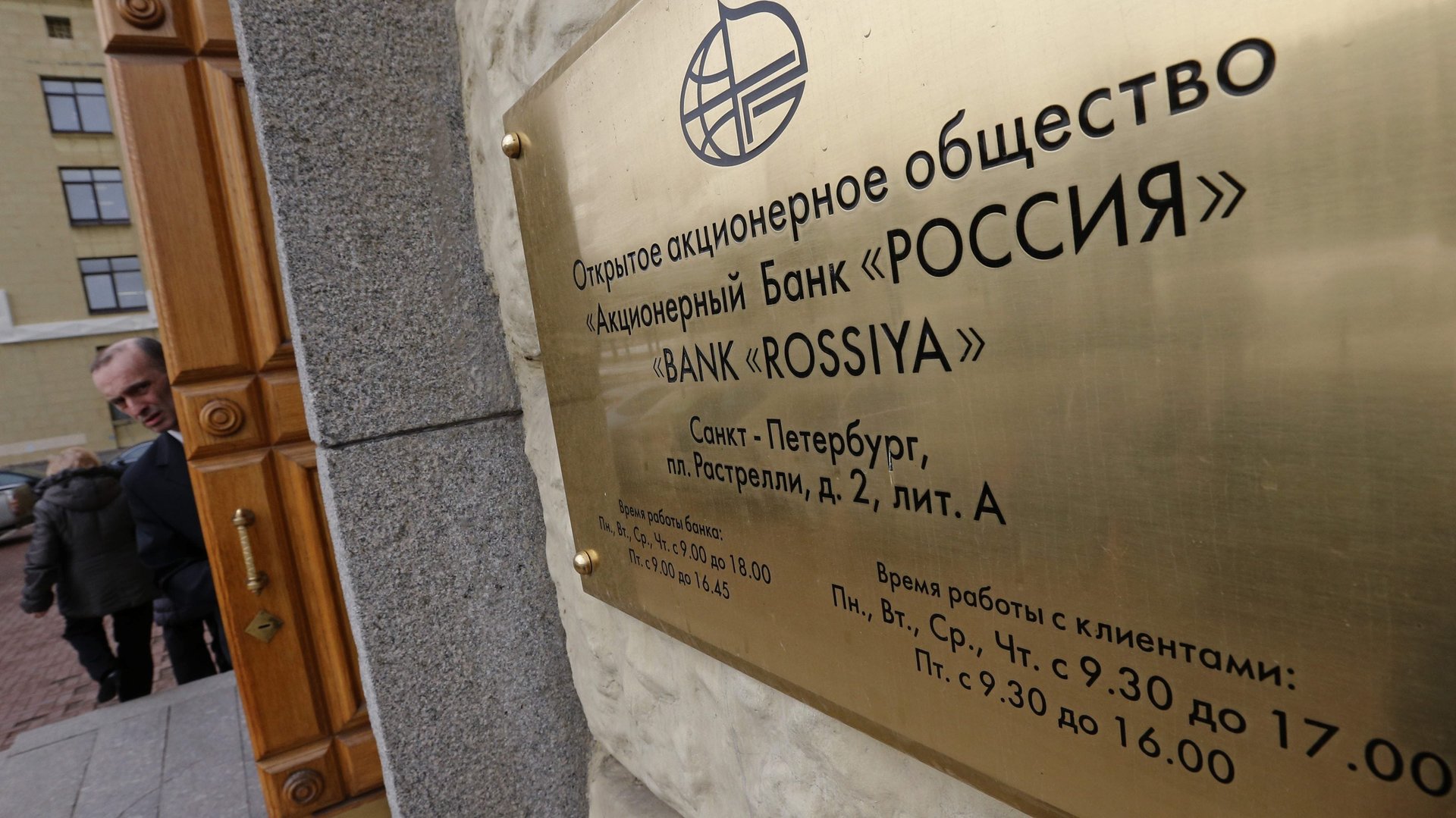
The UK this morning ordered (pdf) the assets of five Russian banks to be frozen:
Additionally, the UK added three Russian billionaires to its sanctions list:
The individuals sanctioned will see their UK assets frozen and be banned from traveling to Britain, said prime minister Boris Johnson. British individuals and entities are also now prohibited from doing business with the three Russian billionaires added to the sanctions list.
“Pretty tepid, if you ask me,” tweeted Bill Browder, once the largest foreign investor in Russia.
The EU agreed to sanctions targeting Russian officials as well as imports and exports with Ukraine’s separatist regions, and banning EU investors from trading in Russian state bonds. The sanctions stopped short of targeting Putin himself, as the bloc still hopes to convince the leader to pull back on Ukraine.
US president Joe Biden issued an executive order yesterday prohibiting “new investment, trade and financing by US persons to, from, or in” Donetsk and Luhansk, the two regions targeted by Russia. Today the US also announced sanctions on Russian bank VEB and its military bank, as well as on Russia’s sovereign debt.
The sanctions mean Russia “can no longer raise money from the West and cannot trade its new debt on our markets. or European markets either,” Biden said today.
Germany took one of the most significant retaliatory moves so far in suspending certification of the Nord Stream 2 gas pipeline from Russia, jeopardizing a potentially vital natural gas supply.
Sanctioning banks has the potential to have a ripple effect across the Russian economy, causing credit to tighten and certain businesses to go under, according to Brian O’Toole, a former senior adviser to the director of the Office of Foreign Assets Control in the US Treasury Department.
But thus far “the UK sanctions don’t look very impressive,” O’Toole told Quartz. The three oligarchs named by the UK have been subject to US sanctions since 2018. What’s more, the four largest state-owned banks, which account for 55% of the Russian banking sector’s total assets, are not on the UK list.
“The US is going to need to toughen up what the UK has done so far to have sufficient deterrent,” O’Toole says.
Nate DiCamillo contributed reporting.
Join 500,000+ readers who start their day with Quartz.
By subscribing, you agree to our Terms of Service and Privacy Policy.