The Vessyl is a $100 glass cup with companion smartphone app that can supposedly detect what liquid you’ve poured into it, describe it, and identify nutritional information such as calories, sugar, and caffeine.

The Vessyl is a $100 glass cup with companion smartphone app that can supposedly detect what liquid you’ve poured into it, describe it, and identify nutritional information such as calories, sugar, and caffeine.
Designed by Yves Behar’s Fuseproject, it is the sort of gadget that might briefly appeal to the quantified self/fitness tracking/early adopter crowd. Or, at least those willing to use only one cup, which must be charged every five to seven days and washed by hand. It’s a fine-looking cup, and with enough publicity muscle, it may find its way into several year-end gadget gift guides. (Shipping “early 2015.”) But it is an absurdity—the sort of gizmo that seems technically impressive but will quickly be forgotten.
Join 500,000+ readers who start their day with Quartz.
By subscribing, you agree to our Terms of Service and Privacy Policy.

The “internet of things” trend seems substantial enough to be real: Over the next several years, previously “dumb” objects—from household tools to parts of cities—will gain sensors, connectivity, and software. But if this movement will eventually become a huge commercial and societal success, it will be driven by actual utility and efficiency, and not by high-priced novelty. Design is how it works, not just how it looks.
That’s not to undermine the value of education and awareness about nutrition and exercise. Health and fitness could almost certainly be aided by technology, and we’ll see improvements and integrations over time. But there’s a reason that half of one study’s subjects (pdf) had already abandoned their fitness tracker: You don’t need a Nike $NKE FuelBand to tell you if you’ve exercised that day.
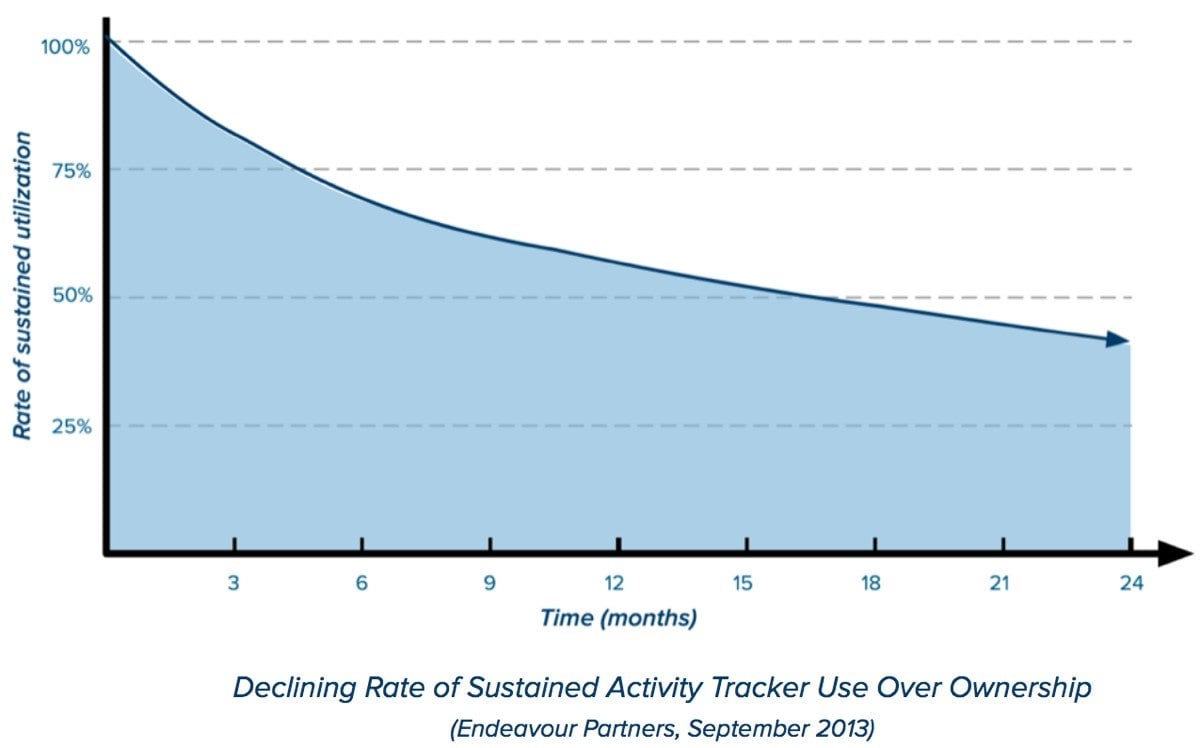
The Vessyl has a similar gap in practicality. Many packaged drinks are already labeled with more nutritional information than people will ever read. And for handmade drinks—which can certainly hide a lot of sugar and calories—are people really going to take the Vessyl to a restaurant and measure their margaritas or fresh-squeezed juice? This seems unlikely.
The good news: Unlike an abandoned FuelBand, which is mostly useless, at least the Vessyl will still always work as a cup.
