If you have ever been to New York, read anything about it, or listened to Frank Sinatra, you know the two most important things about the Big Apple are that it’s the best city on earth and an incredibly tough place to live.
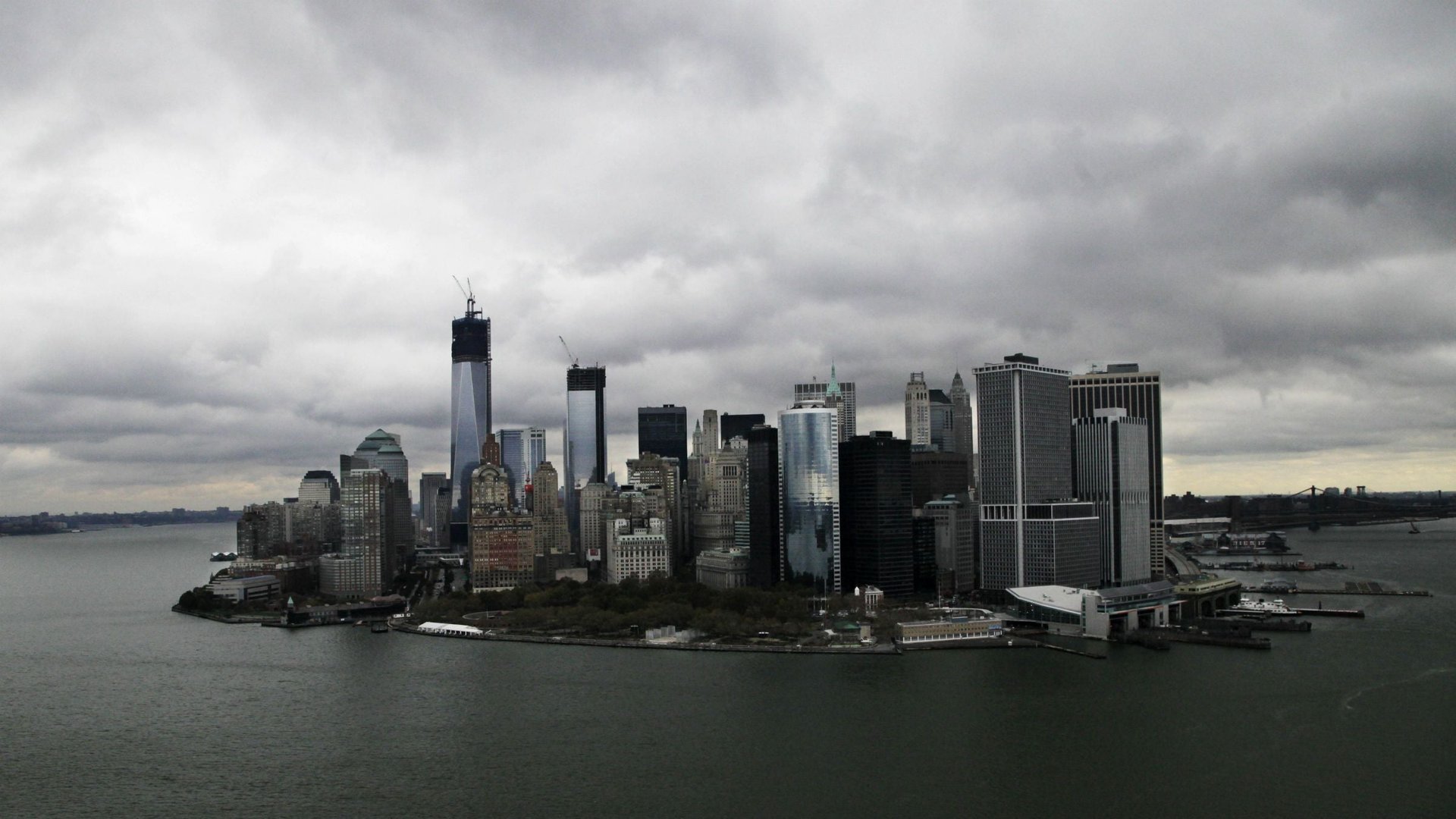
If you have ever been to New York, read anything about it, or listened to Frank Sinatra, you know the two most important things about the Big Apple $AAPL are that it’s the best city on earth and an incredibly tough place to live.
Busy, expensive, dirty, too hot or too cold, New York is a giant rat race—and full of actual rats—with a challenging scarcity of real estate, eligible bachelors, and large sodas (no, just kidding, the soda ban was banned). New York is so tough that a recent study found it to be America’s unhappiest city.
Join 500,000+ readers who start their day with Quartz.
By subscribing, you agree to our Terms of Service and Privacy Policy.
Detroit went bankrupt; Toledo, Ohio has an ongoing drinking-water emergency; Santa Cruz, California was hit by a drought—but New York is unhappier?
New Yorkers have elevated grousing to an art form, so of course a study that takes into account their self-assessment of happiness will find them miserable.
In an attempt to make New Yorkers feel better about themselves, here is some context to their commonest complaints.
True. The rent is high. The rent in most of Manhattan (and some of Brooklyn) is offensively high.
Perhaps New Yorkers would be happier in Monte Carlo, where renting a 1,300 sq ft (120 sq m) apartment costs $10,099 (versus New York’s $6,553), or in Willston, North Dakota, where the shale oil boom means the average rent is about $800 more than New York’s (and people can’t even line up downstairs to get a cronut).
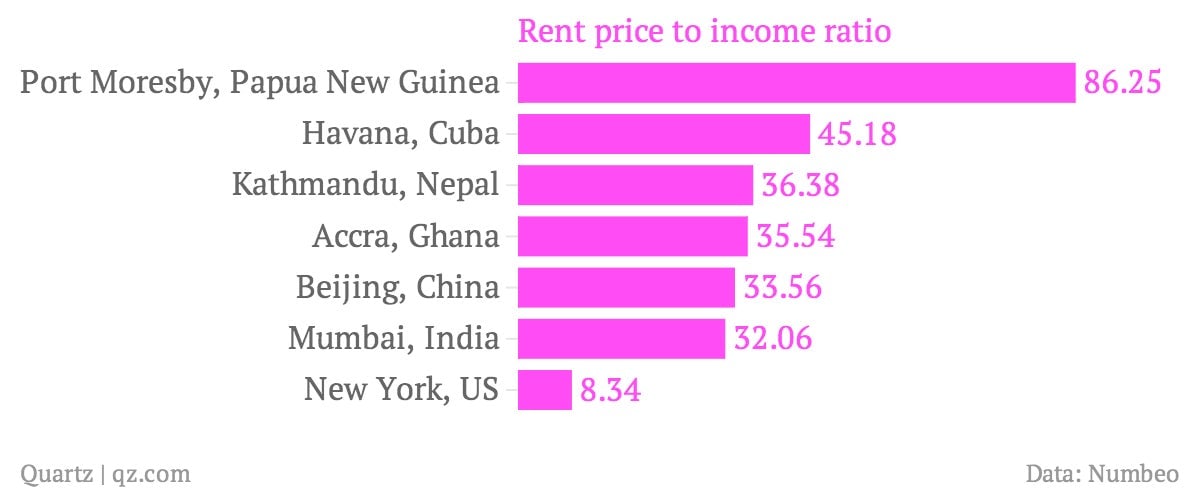
Also, what about the price to income ratio?
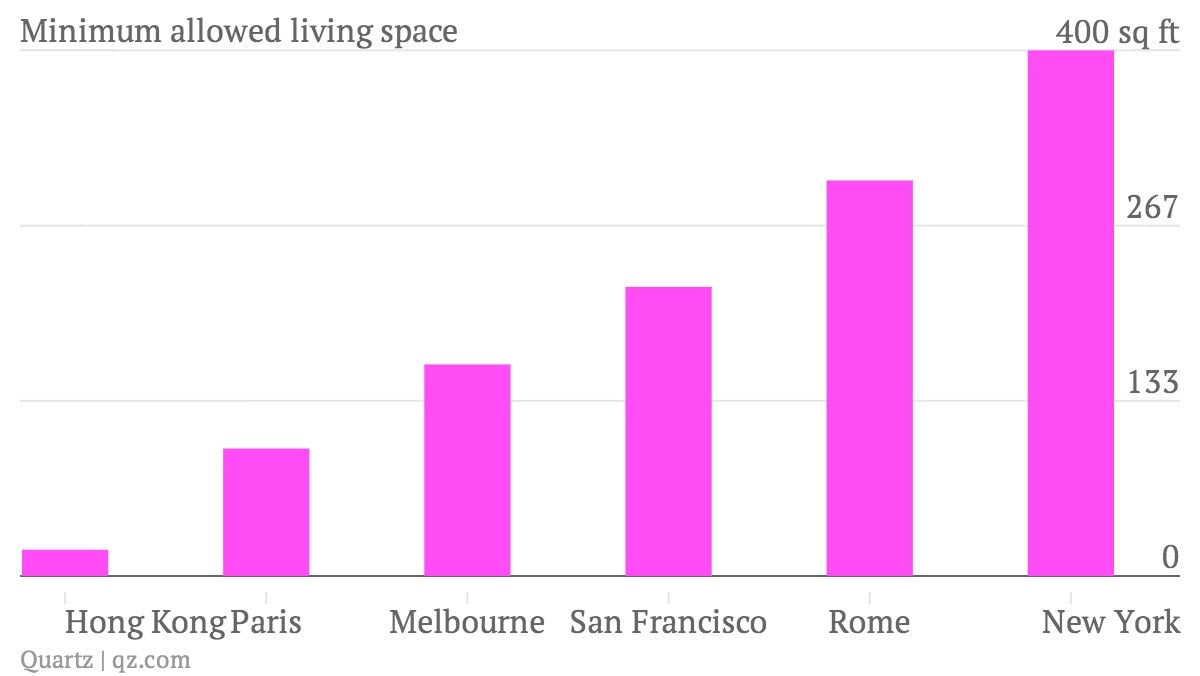
It’s not just the price of homes that makes New Yorkers unhappy. It’s the size.
The city’s minimum size for a unit of living space is 400 sq ft (41 sq m), although there are plans to begin building 300 sq feet micro-units at the end of the year. Now that’s small—as in, a small building in Hong Kong.
A study was published by the Economist Intelligence Unit last year labeling New York “the world’s most competitive city.” Promptly, publications including the New York Times chimed in to prove New Yorkers right, noting that “anyone who has tried to park a car on a Manhattan street may already have deemed New York the world’s most competitive city.”
The study actually looked at how competitive New York is compared to other cities, not at the city’s own competitiveness.
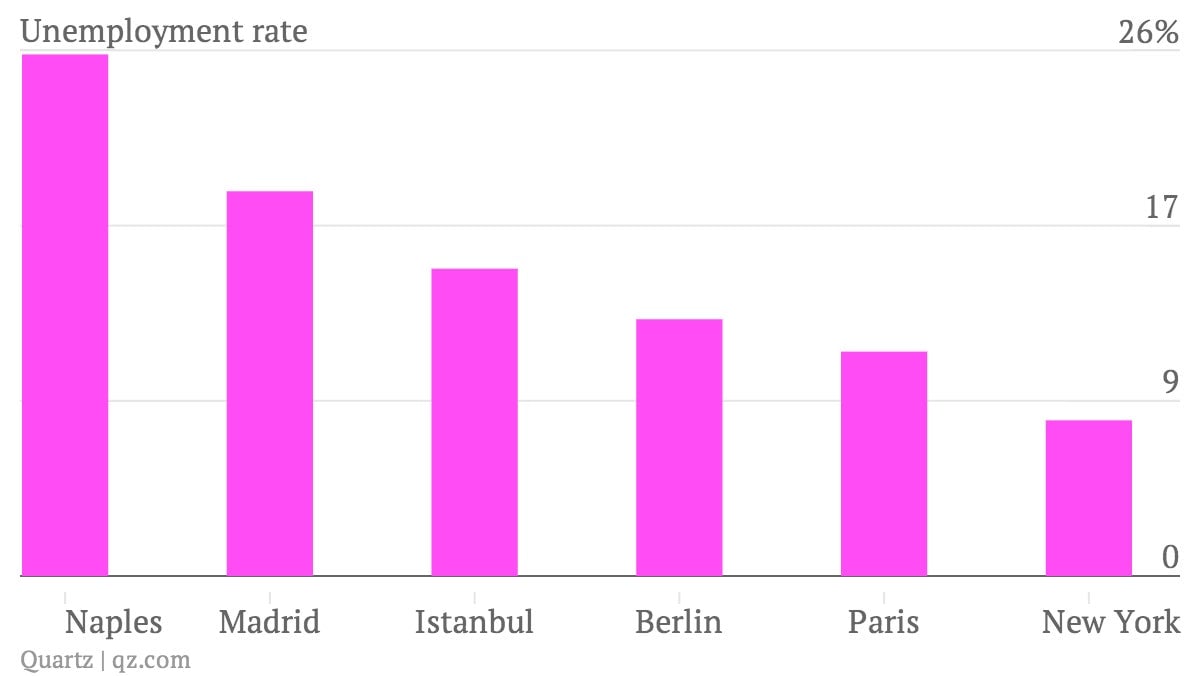
But it sure is hard to make it. For instance, trying to get a job:
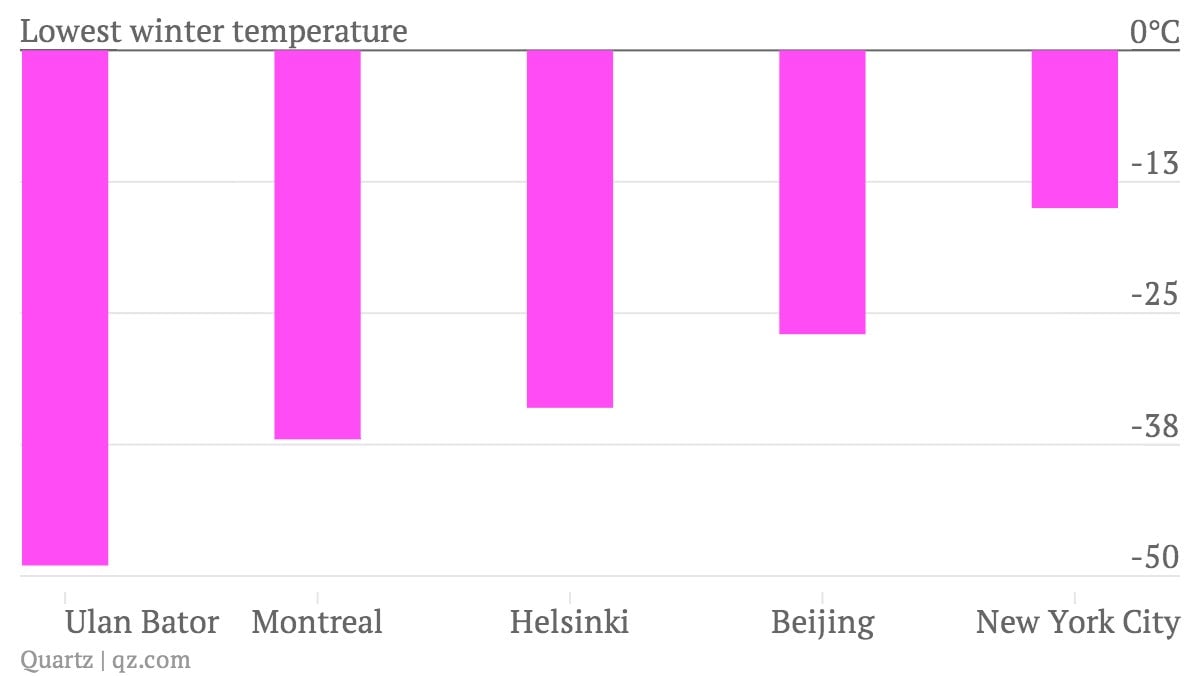
New York winters are rather brutal. But have you ever spent a winter in Montreal? And when’s the last time you heard someone from Ulan Bator (where the temperature gets to -49°C) go on a rant about the freezing weather?
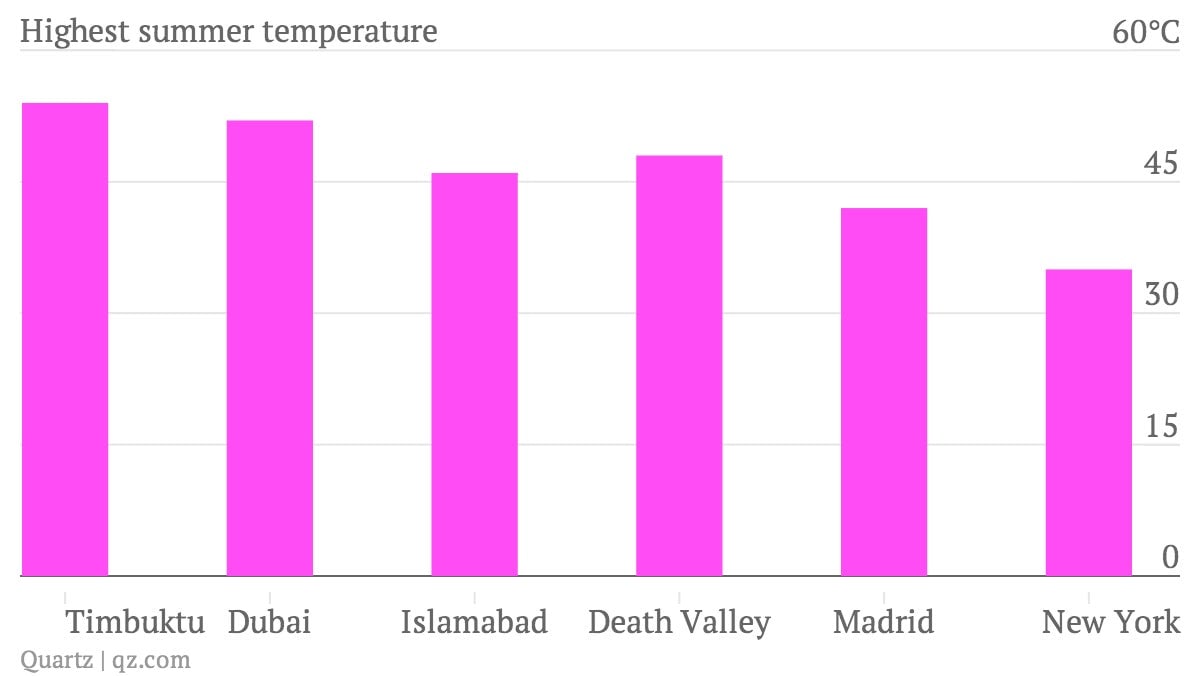
Unless you compare them with the high temperatures of places where it actually is too hot.
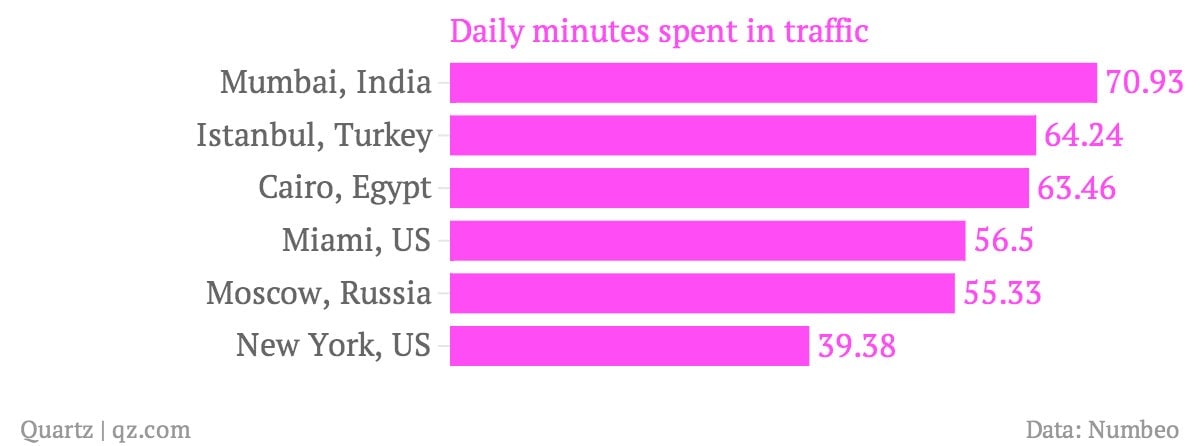
Most New Yorkers don’t drive. But they take taxis and sometimes those taxis get stuck in traffic. It’s awful, which is why New Yorkers always know what route the taxi should take to avoid ending up in a jam. Such routes also often fail because—see?—traffic is everywhere.
And while traffic is everywhere—parking? None in sight. Except for the 4.4 million free parking spaces (and 81,875 metered ones) around town.
If you had to pick only one word about New York to carry with you on a desert island, “busy” would be it. People are busy. Places are busy. Train cars are busy.
Because there are just too many people in New York.
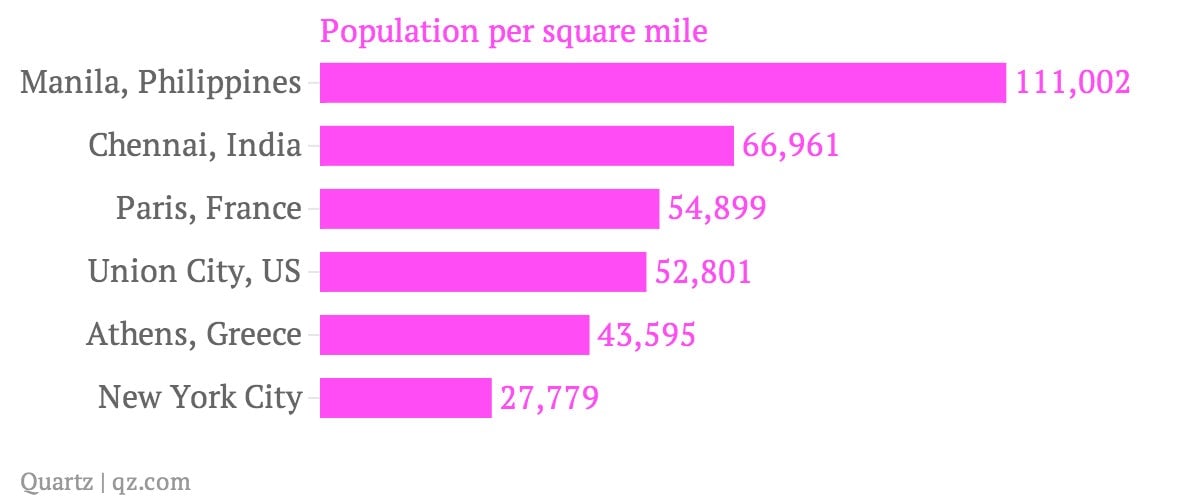
In 2012, 52.7 million tourists (both domestic and international) visited New York. That’s about 6.5 tourists a year for every New Yorker.
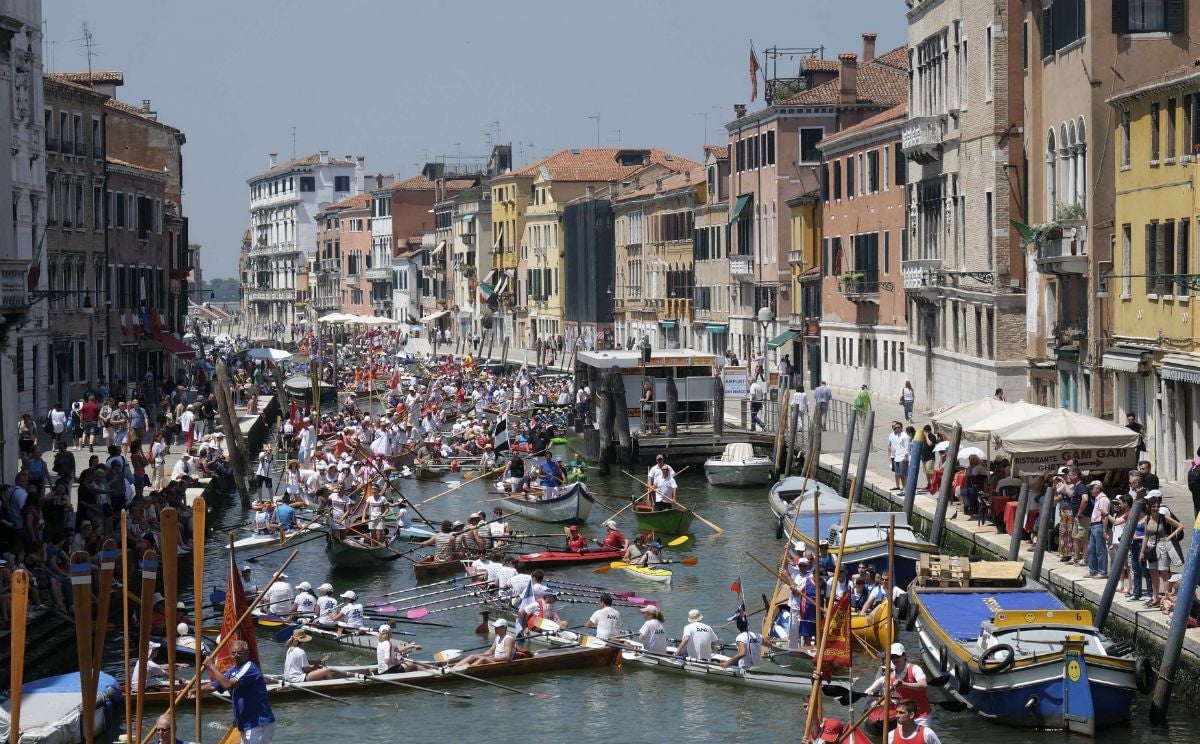
But it could be a lot worse. It could be Venice, where there are 50,000 residents and 22 million tourists a year.
That’s 440 tourists per person.